



The commercial real estate sector is heading into a major market correction, with multifamily real estate taking center stage as a brewing financial disaster that could ultimately present a generational buying opportunity for disciplined investors. While residential housing, equities, and commodities continue to hover at elevated price points, commercial real estate has experienced notable corrections. Across the broader commercial landscape, prices have dropped by at least 20%, while office sectors have seen declines of up to 50%. According to market experts, these downward trends are expected to intensify over the next few years, creating a distressed buying environment reminiscent of the residential market crash in 2007 and 2008.
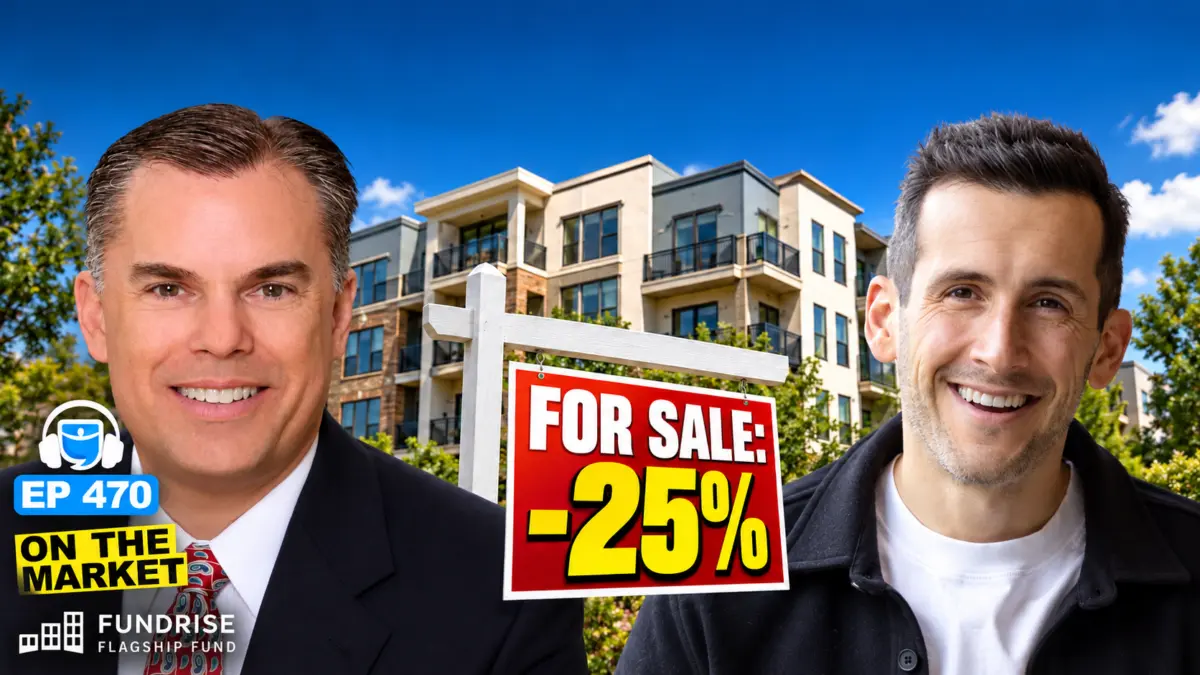
Dave Meyer, host of the On the Market podcast, recently addressed the shifting economic landscape alongside real estate investor and multifamily expert Brian Burke. Discussing the trajectory of the market, Meyer noted that the 2027 to 2028 timeframe could mirror the pivotal years following the Great Financial Crisis, offering investors a rare entry point akin to purchasing residential properties in 2010 and 2011. While the growing distress in the multifamily sector points to difficult times for current owners and operators, it simultaneously signals the opening of a long-awaited window for well-capitalized buyers.
Describing the current state of the apartment market with characteristic bluntness, Burke characterized the situation as a severe market collision that has been building momentum for years. Rather than a sudden shock, Burke compared the ongoing distress to a slow-moving crisis where participants have felt the gradual heating of the economic environment until realizing the magnitude of the problem. For years, many market participants anticipated that Federal Reserve rate cuts would intervene and rescue overleveraged properties. However, analysts point out a widespread misunderstanding of macroeconomic mechanisms, emphasizing that the Federal Reserve controls overnight interbank borrowing rather than the 10-year Treasury bond yield, which dictates long-term multifamily debt rates.
The initial phase of the market correction began when the central bank raised overnight borrowing rates, driving up the Secured Overnight Financing Rate (SOFR) and heavily impacting floating-rate debt structures. Subsequently, the rise in the 10-year Treasury yield created a secondary wave of pressure. Property owners attempting to escape expensive short-term floating debt by refinancing into long-term fixed loans discovered that long-term debt had become prohibitively expensive. This dynamic has triggered cap rate decompression, making it mathematically impossible to trade multi-family real estate at historical four to five percent cap rates in a five-percent-plus treasury yield environment.
Market observers note that traditional broker-led valuations often struggle to reflect these economic realities as sellers attempt to secure higher pricing from prior years. Consequently, properties priced with negative leverage—where the capitalization rate falls below the cost of borrowing—fail to attract rational buyers. During the pandemic boom, rampant investor enthusiasm and cheap capital fueled aggressive acquisitions driven by the belief that hard assets would continuously outperform other classes. As sentiment shifts and capital dries up, transactions have slowed significantly, forcing the market toward a necessary price discovery phase.
The underlying fundamentals of the apartment sector have experienced a structural shift. The primary demographic for rental housing, individuals aged 18 to 30, faces a shrinking pool of potential renters due to nearly two decades of declining birth rates. Furthermore, historic lows in population growth combined with a massive surge in new apartment construction—particularly in fast-growing markets like Austin and Denver—have created a pronounced supply-demand imbalance. While higher interest rates contributed to the downturn, experts stress that demographic shifts and overbuilding played an equally critical role in the four-way traffic collision of cap rates, interest rates, rent growth, and occupancy levels.
Despite the gloomy outlook for current owners, the impending fallout is expected to clear a path for disciplined investors. Historical data indicates that double-digit declines in commercial real estate prices are rare, having occurred only twice in the past fifty years—once following tax law changes in the 1980s and again during the 2008-2009 financial crisis. In both historical instances, the significant price corrections were followed by multi-year bull runs lasting longer than a decade. Analysts suggest that investors do not need to time the absolute bottom of the market perfectly; waiting for clear indicators of stabilization still allows participants to capture substantial long-term upside while significantly mitigating downside risk.
Navigating the recovery phase requires careful observation of operational indicators rather than speculation on macroeconomic policy. Investors are advised to monitor metrics such as declining rental concessions, positive lease trade-outs where incoming tenants pay higher rents than departing occupants, decreasing vacancy rates, and recovering market rent growth. For large-scale syndicators raising institutional capital, market timing remains critical. Conversely, long-term retail investors purchasing smaller properties for personal retirement portfolios may find more flexibility through dollar-cost averaging, provided they maintain conservative underwriting standards.
Securing favorable transactions in the coming years will depend heavily on relationships, preparation, and financial readiness. Industry veterans recommend forging direct connections with local property management companies and commercial brokers who maintain visibility into lender-controlled assets, receiverships, and distressed portfolios long before properties reach public listings. Additionally, prospective buyers must position themselves as reliable solutions for lenders and asset managers under pressure to offload troubled properties quickly. This requires establishing verified access to capital and cultivating robust investor networks well in advance of making offers.
As the commercial real estate sector continues to absorb the impact of elevated interest rates and shifting supply fundamentals, the transition period is expected to persist. Rather than relying on speculative forecasts regarding monetary policy or debt rate reductions, experienced operators advocate for conservative underwriting that assumes higher-for-longer financing costs. By focusing on fundamental asset performance, maintaining disciplined capital reserves, and preparing operational systems ahead of time, market participants can position themselves to capitalize on the distress and navigate the unfolding opportunities within the multifamily landscape.