



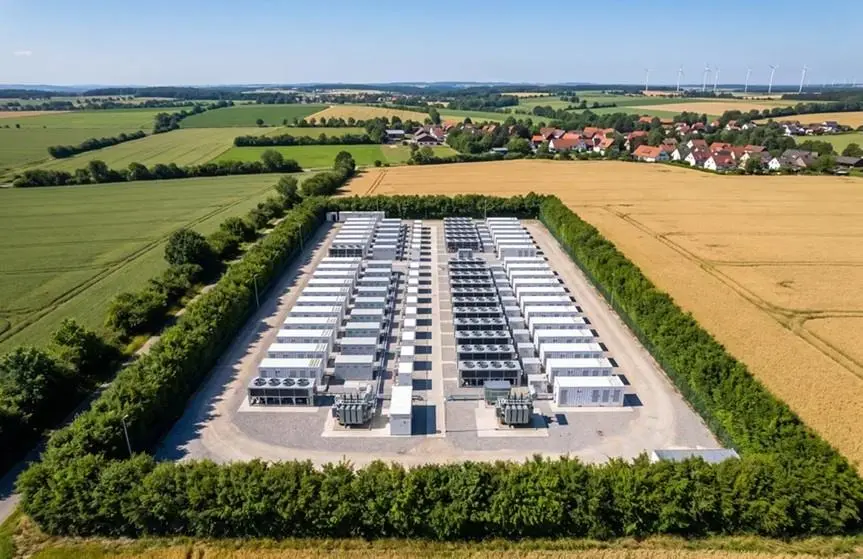
Amsterdam-based energy storage provider Return has secured €835 million, equivalent to approximately $936 million, in comprehensive portfolio financing underwritten by major financial institutions Deutsche Bank and Rabobank. The significant capital injection is specifically aimed at aggressively expanding the company’s advanced battery storage capacity across Germany, marking a major milestone for the region’s evolving energy transition and sustainable infrastructure development.
Founded in 2021 and headquartered in Amsterdam, Return operates as a specialized energy solutions provider focused on ensuring that renewable energy generated from intermittent sources is efficiently stored and deployed precisely where and when it is needed. The company builds, owns, and operates large-scale energy storage solutions, including its sophisticated high-tech battery energy storage system (BESS). This proprietary infrastructure connects storage sites across multiple countries, offering real-time insight into electricity availability and demand to help alleviate severe grid congestion and dramatically strengthen overall power network stability.
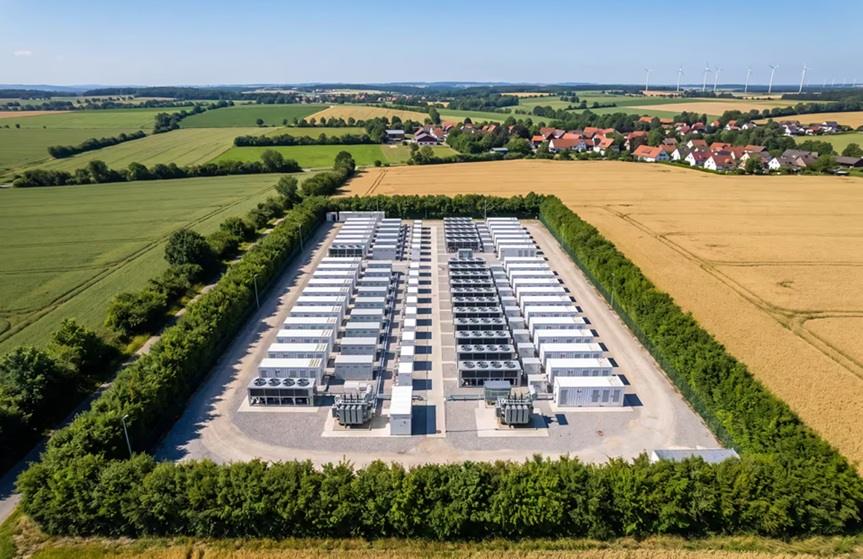
The announcement of this substantial financing package comes at a critical juncture for Germany, a nation that increasingly relies on wind and solar power to meet its ambitious climate and decarbonization goals. As the share of renewables on the grid continues to climb, energy companies face mounting pressure to demonstrate greater operational flexibility in managing the inherent fluctuations in electricity generation caused by changing weather conditions. Without adequate storage infrastructure, excess renewable power frequently goes to waste or causes severe localized grid bottlenecks, making large-scale battery deployment an absolute necessity for modern power systems.
The newly established financing framework immediately covers three major battery storage projects currently under construction across Germany, which boast a combined capacity of 117 megawatts (MW). To put this scale into perspective, assuming four-hour batteries operating at two full cycles per day, these facilities are projected to discharge enough stored electricity annually to match the typical power consumption of approximately 100,000 German households. Furthermore, the flexible structure of the financing agreement means that additional upcoming projects are expected to be seamlessly integrated into the framework through 2027 as they successfully progress toward their financial close.
Weighing in on the strategic importance of the transaction, Dominik Thumfart, Head of Infrastructure and Energy Origination at Deutsche Bank, emphasized the critical role that storage infrastructure plays in the broader European energy landscape. Battery storage plays a crucial role in Germany’s energy transition, he noted, by assisting with optimizing the revenue potential of intermittent power generation plants and ensuring long-term grid stability. He added that Deutsche Bank is pleased to support Return with a financing structure that is built specifically to scale and meticulously structured to meet the capital expenditure needs of the company’s expanding German BESS project pipeline.

Looking ahead, Return has laid out aggressive growth targets for the coming years. The company aims to install at least 1 gigawatt (GW) of battery storage capacity annually in Germany beginning in 2027. Achieving this milestone will require substantial capital deployment, representing planned annual investments ranging between €750 million and €1.2 billion, depending on prevailing market conditions and regulatory environments.
Detailing the operational strategy behind the financing, Daniel Witvoet, Chief Financial Officer at Return, highlighted how the capital will transform the company’s capabilities. As demand for energy flexibility continues to grow rapidly across the continent, he explained, the company needs to scale not just its physical battery storage capacity, but also the sophisticated ways in which it finances that growth. By bringing together traditional physical infrastructure financing and their innovative virtual flexibility model, Return can expand its footprint much more efficiently and respond dynamically to the evolving needs of its customers.
The partnership between Return, Deutsche Bank, and Rabobank underscores a broader financial trend across Europe, where institutional lenders are increasingly channeling multi-million-dollar investments into the sustainable finance and green energy sectors. As regulatory frameworks tighten and the urgency to phase out fossil fuels intensifies, robust financial backing for grid-balancing technologies like BESS will remain a cornerstone of Europe’s sustainable transition, paving the way for a more resilient, reliable, and decarbonized energy future.