




Gold and silver are attempting to regain their footing this week after enduring a brutal month of October. As markets digest the recent wave of selling pressure, investors now have a significant new variable to consider: a dramatic shift in the political landscape following Tuesday’s midterm elections.
A Democratic blue wave has swept through Washington, handing the party control of both chambers of Congress and setting the stage for an era of intense political gridlock with President Donald Trump over the final two years of his term.
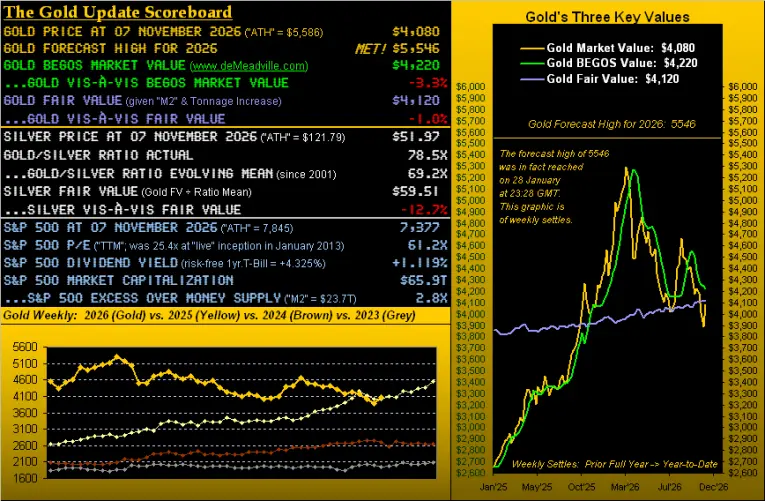
The election results initially gave precious metals a much-needed lift, with gold climbing back above $4,000 an ounce and silver recovering above $52. But whether this modest enthusiasm can translate into a sustained rally remains to be seen as traders weigh domestic political friction against stubborn global inflation and shifting monetary policy.
So, what does a divided Washington actually mean for gold and silver? And could the political shakeup help relieve some of the structural pressures that have been weighing heavily on precious metals? To understand the road ahead, it helps to first look closely at how the markets are currently behaving.
Market Update: Stabilization After Relentless Selling
Gold is currently trading at $4,073 an ounce, having successfully recovered from last week’s steep plunge below the $4,000 threshold. The yellow metal is up nearly $200 since last Friday’s low close, posting a 4.8% gain for the week.
Silver checks in at $52.41, similarly bouncing off its recent lows. Often referred to as "poor man’s gold," the white metal is up more than $2.50 this week, translating to a 5.3% increase with just a few trading hours left in the day.
Despite these encouraging bounces, both metals remain well below their earlier highs, and neither has convincingly broken out of its recent trading range. However, after weeks of relentless selling, there are clear signs that the market may finally be stabilizing.
Gold’s technical picture has improved somewhat, with the recent decline increasingly looking like a healthy correction rather than a complete breakdown of the longer-term structural trend. Gold has encountered heavy selling pressure around the $4,150 mark, but buyers have consistently shown renewed interest whenever prices dip.
Silver’s outlook remains a little more complicated. The white metal continues to underperform gold on a relative basis, and its longer-term technical indicators remain weak. Even so, after falling below $50, silver has shown encouraging signs of recovering some upward momentum over recent days.
For now, the overarching question facing the market is whether this marks the beginning of a meaningful rebound or merely a temporary bounce in a sector that remains under intense pressure.
The Midterm Elections and the Return of Political Gridlock
That uncertainty brings market participants to the biggest headline of the week: the midterm elections.
Democrats scored sweeping victories on Tuesday, taking decisive control of both the House and Senate. This dramatic shift means President Trump will face a significantly more hostile Congress during the final two years of his administration.
Observers can certainly expect a flurry of congressional investigations, heated political battles, and high-stakes showdowns over federal spending and the looming debt ceiling.
However, the most intriguing angle for precious metals investors is that political gridlock could actually prove to be somewhat favorable for gold and silver. As pointed out in recent commentary by market analysts like Mike Maharrey, the new balance of power in Washington could make it significantly harder for the federal government to enact additional major tax cuts or expansive new spending initiatives.
While that dynamic might sound like a welcome recipe for fiscal restraint, historical precedent suggests nobody should expect Congress to suddenly discover true fiscal responsibility.
Both Democrats and Republicans have repeatedly demonstrated a remarkable willingness to spend money the government simply does not have; they largely just disagree on where and how to spend it. The national debt is already approaching the staggering milestone of $40 trillion, and annual interest expenses are consuming an increasingly large share of total federal revenues.
Those massive structural obligations are not going to disappear simply because one political party won an election. In fact, the next two years could bring even more political brinkmanship and uncertainty surrounding government funding bills and federal borrowing limits.
Historically, uncertainty regarding Washington’s ability to manage its national finances has consistently encouraged investors to seek the relative safety and stability of physical gold.
Analysts at Metals Focus believe the election results could be modestly bullish for precious metals over the medium term. Their core reasoning is that persistent political gridlock may limit additional fiscal stimulus, which could ultimately slow economic growth and reduce the upward pressure on the Federal Reserve to keep raising interest rates.
Such a scenario could eventually lead to lower bond yields and a weaker U.S. dollar, both of which are traditionally supportive environments for gold and silver.
The Catch: Stubborn Inflation and Monetary Policy Obstacles
Of course, there is a catch. The Federal Reserve is still grappling with stubborn inflation, and central bank policymakers remain deeply concerned that rising energy costs could continue pushing consumer prices higher. Traders are actively pricing in the possibility of another interest-rate hike in December, with potential for another increase early next year.
So, even with the midterm elections now behind us, monetary policy remains a major obstacle for precious metals in the near term. Much of that ongoing inflation problem is directly tied to complex developments overseas.
Oil prices have retreated recently, falling about 1% on Tuesday to touch their lowest level in nearly four weeks as investors weighed the possibility of diplomatic progress in conflict zones like Ukraine and Iran.
Any meaningful diplomatic progress toward ending these conflicts could help ease the severe structural pressure on global energy prices. That outcome would undoubtedly be welcome news for central bankers at the Federal Reserve.
The ongoing war involving Iran has contributed to a major energy shock this year, driving up crude oil prices and making the broader inflation problem significantly harder to contain. Ironically, geopolitical instability that might ordinarily boost safe-haven demand for gold has instead contributed to selling pressure.
This counterintuitive dynamic occurs because higher energy prices drive up inflation expectations, which in turn encourage the Federal Reserve to keep interest rates elevated for longer. Higher interest rates typically weigh heavily on non-yielding precious metals, at least in the short run.
A lasting diplomatic settlement with Iran could alter that equation by reducing global energy costs, easing persistent inflation concerns, and giving the Fed more operational room to eventually lower interest rates.
Silver could benefit especially from such a development, as lower energy costs and improved broader economic conditions would also support robust industrial demand for the metal.
Naturally, there is no guarantee that these international diplomatic efforts will succeed. Even if active fighting were to cease, damaged infrastructure and heavily disrupted global supply chains will not be repaired overnight.
Nonetheless, the mere possibility of easing geopolitical tensions represents one more critical factor that investors are beginning to factor into their models.
Global Central Banks Face Similar Dilemmas
Meanwhile, the European Central Bank is facing its own complex inflation dilemma. The ECB opted to leave interest rates unchanged during its policy meeting, but signaled that another rate hike could still be on the table for December as elevated energy costs continue to threaten regional price stability.
This challenge is clearly not just an American problem. Central banks around the world are struggling to delicately balance persistent inflation risks against the mounting economic damage caused by higher borrowing costs.
This global reality brings the discussion back to the bigger picture for gold and silver. Financial markets have spent the past several weeks reacting frantically to every new inflation report, every shift in interest-rate expectations, and every fresh geopolitical headline. Yet, the foundational problems underlying the global monetary system have not gone away.
Governments remain deeply indebted. Federal budget deficits remain enormous. And central banks face growing, nearly impossible pressure to keep the broader financial system functioning smoothly without allowing inflation to get completely out of hand.
It is an extraordinarily difficult balancing act. The Federal Reserve may be talking about the necessity of additional rate hikes today, but market participants must ask how long the central bank can maintain that hawkish stance if economic growth slows sharply, financial markets stumble, or Washington’s borrowing costs become even more burdensome.
That is the core dilemma facing policymakers today. And it is precisely why the longer-term investment case for owning physical gold and silver remains compelling, regardless of which political party happens to control Congress.
Gold Versus Silver: Divergent Paths in the Current Market
Market observers also note that there is an important technical and functional distinction between the two precious metals right now.
Gold continues to benefit heavily from strong central bank demand and its well-established historical role as a premier monetary safe haven. Silver, on the other hand, is significantly more sensitive to cyclical industrial demand and has consequently suffered considerably more during the recent market correction.
However, silver also possesses the historical potential to outperform gold dramatically when broader investment demand returns to the sector.
The gold-to-silver ratio remains elevated following silver’s recent sharp collapse, suggesting that the white metal is relatively inexpensive compared to gold on a historical basis. That statistical observation does not guarantee an immediate rebound, as silver’s short-term technical picture remains uncertain and further volatility is entirely possible.
For investors with a longer time horizon, however, the unique combination of silver’s monetary appeal, critical industrial applications, and historically volatile price behavior remains worth watching closely.
The bottom line is that this week’s election results may have changed the political balance of power in Washington, but they have not fundamentally altered the nation’s underlying financial predicament.
The federal government is still spending far more money than it collects in tax revenues. The national debt continues its relentless climb. And the Federal Reserve remains caught in a difficult bind between fighting inflation and supporting an increasingly debt-dependent economy.
Political gridlock in Washington may slow the pace of new federal legislation, but it will not make those structural economic problems disappear. And while gold and silver investors have endured a rough stretch of trading recently, the underlying reasons for holding sound money remain very much intact.
Elections come and go, and political majorities will inevitably rise and fall. But Washington’s appetite for borrowing and spending remains one of the few constants in modern finance—a reality that precious metals investors would do well to remember.