



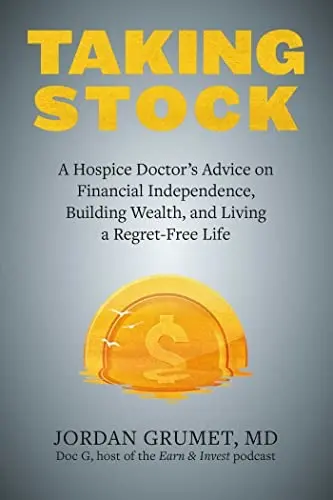
For years, Dr. Jordan Grumet sat beside patients facing the end of their lives, engaging in deep conversations about philosophy, regret, and the practical realities of human existence. But long before he compiled his insights into his book Taking Stock, Grumet learned one of his most profound lessons from an unexpected source: a patient who worked as an undertaker.
As Grumet often observed during his medical career, when an undertaker speaks about mortality, you listen. Those who make death and dying their daily business may seem like unlikely investment advisers. Yet, spending extensive time in close proximity to human mortality grants a remarkably clear perspective on what is truly worth investing in during a lifetime. These lessons were not gathered from studying the portfolios of the ultra-wealthy, nor were they pulled from the secret journals of high-powered corporate executives. Instead, they represent straightforward, unvarnished truths gathered from walking a lonely path alongside people who were reluctant to make the final journey.
Perhaps the most startling realization from the bedside of the dying is that most of what truly matters in investing has absolutely nothing to do with money.
Invest in Yourself
Personal investment takes many forms, but chief among them, according to Grumet’s observations, is the practice of self-forgiveness. Remorse is a universal human experience, haunting both the living and the dying, and its psychological toll can be devastating. Whether the source of regret is an action taken or avoided, a relationship fractured or salvaged, or a material purchase made or missed, the human capacity for self-blame appears limitless. People routinely spend vast emotional resources dwelling on things they wish they had handled differently.
While self-blame can occasionally serve as a tool for introspection and future improvement, it frequently leaves a trail of emotional destruction in its wake. It is nearly impossible to look forward when an individual is constantly looking backward. The key to breaking this cycle lies in changing what can be changed and finding a way to forgive oneself for the rest.
Grumet recalls a patient named Gerald, whose eventual diagnosis of chronic liver disease was preceded decades earlier by a turbulent exit from corporate America. That job loss triggered a downward spiral into alcoholism, leading to the collapse of his marriage and an estrangement from his ex-wife and his daughter, Sandy. While Gerald eventually achieved sobriety and secured employment, the damage done to his body was irreversible, as was the emotional distance between him and his daughter.
During the end-of-life review process, Gerald and a social worker spent considerable time exploring his grief over losing his daughter. Eventually, Gerald found a modicum of peace and managed to forgive himself. In hindsight, he realized that had he granted himself that grace much earlier in life, he might have found the strength to quit alcohol long before his liver suffered catastrophic damage.
Beyond emotional reconciliation, investing in oneself means slowing down. Society often encourages relentless ambition and immediate results, but slow, incremental gains frequently prove more sustainable. Much like the fable of the turtle and the hare, making steady progress toward a major goal by just a small margin each month compounds into phenomenal long-term outcomes. This principle applies universally, whether an individual is trying to master a skill, nurture a relationship, or build a career. Overcoming limiting beliefs is essential to ensuring that personal fears do not restrict long-term growth.
Furthermore, investing in experiences yields exponential returns over time, much like financial assets. As individuals learn and grow, they hone capabilities that enhance their value both as professionals and as human beings. Career growth, much like compound interest, is rarely linear; it accelerates exponentially for those who commit to continuous personal development.
Invest in Education
Education remains a cornerstone of self-investment, though the methods of acquiring knowledge have evolved far beyond traditional institutions. While formal degrees offer undeniable advantages, the modern world provides a multitude of educational avenues, ranging from independent reading and public discourse to online courses and vigorous debates.
Knowledge functions as a vital emergency fund designed to protect and sustain personal well-being. When all other resources are exhausted, accumulated knowledge provides the resilience needed to secure employment, navigate crises, or make critical decisions under pressure. Skimping on self-improvement or hesitating to invest financially in education is counterproductive, as the capital spent on learning compounds directly into durable skills and intellectual adaptability.
Embracing new experiences often requires a willingness to say yes—even when hesitation or discomfort sets in. Exploring unfamiliar territory is the primary mechanism for discovering hidden passions and expanding one’s worldview. Moreover, intellectual curiosity plays a remarkable role in how people experience their final days. Grumet observed countless patients facing the end of life with an unfinished book on the nightstand or an active intellectual debate on their mind. Inquisitive individuals often approach the end of their lives much as they lived them: engaged, curious, and fully present.
Invest in Other People
When evaluating the true measure of a person’s success—regardless of their financial status—the most reliable indicator is found in the people they leave behind. Grumet notes that he could instantly gauge whether a dying patient had successfully invested in human relationships simply by walking into their hospital room. Successful investors were invariably surrounded by photographs, letters, cards, and a steady stream of visiting friends.
Long before reaching the patient’s door, the atmosphere in the hallway often revealed the truth. Laughter, chatter, and the mingling of smiles and tears testified to a life rich in human connection. Investing in people generates a compound interest of love and happiness that reverberates long after an individual has passed away.
For Grumet himself, realizing this truth took years. Initially navigating the medical community as a doctor searching for a sense of belonging, he eventually discovered a community of like-minded individuals through writing and podcasting in the personal finance space. These connections provided the courage necessary to redefine his professional identity and personal purpose.
Invest in Children
For those who have children, investment extends beyond financial provision to encompass time, emotional presence, and guidance. Guiding the next generation involves imparting knowledge, humility, and kindness while modeling resilience and integrity. Teaching children how to navigate financial realities helps them understand both what money can achieve and its inherent limitations in helping them attain a meaningful life.
Investing in children produces a lifetime of dividends. They become the emotional anchor during difficult times and the eventual stewards of an individual’s enduring dreams. While a single human life is brief, the legacy carried forward by descendants ensures that an individual’s impact ripples across generations. Grumet recalls how colleagues at the hospital occasionally and accidentally called him by his late father’s name during rounds, demonstrating how a parent’s legacy can shape a child’s career and passions decades after they have passed.
Invest in Physical and Mental Health
The mind and body operate as an interconnected framework, and true financial well-being is impossible without physical and mental stability. Managing wealth and planning for the future requires deliberate decision-making, which cannot be executed effectively if an individual is unwell.
Mental health requires active investment through rest, recovery, and stress reduction. Practices such as meditation, regular physical activity, and engaging with creative arts help quiet internal anxieties. Seeking guidance from mental health professionals offers an objective perspective that can restore emotional equilibrium.
Physical health similarly extends both longevity and emotional resilience. Maintaining a routine does not require extreme athleticism; consistent, moderate activities like a daily thirty-minute walk can profoundly impact physical and emotional well-being without feeling burdensome. Conversely, habits dependent on artificial or excessive substances often obscure personal goals and undermine long-term health.
Invest in the Market
While a hospice doctor’s perspective emphasizes non-monetary wealth, basic financial security remains a necessary component of a stable life. Grumet acknowledges that personal finance fundamentals, including investing in the stock market, are essential tools.
Ultimately, mastering the mechanics of money is designed to provide the stability required to focus more heavily on the non-financial pillars of a well-lived life. Financial literacy is necessary, but it is far from sufficient.
Final Thoughts
The overwhelming majority of lessons gathered from the bedside of the dying have little to do with bank accounts. How individuals allocate their time, energy, and relationships ultimately dictates their perspective during their final days. Building a life of purpose, deep connections, and personal resilience requires the same intentionality and commitment as building a financial portfolio.
As Grumet emphasizes, preparing for life requires the same level of deliberate care as preparing for death. By investing wisely in oneself, education, relationships, and health, individuals can build a foundation capable of weathering any unexpected challenge.