



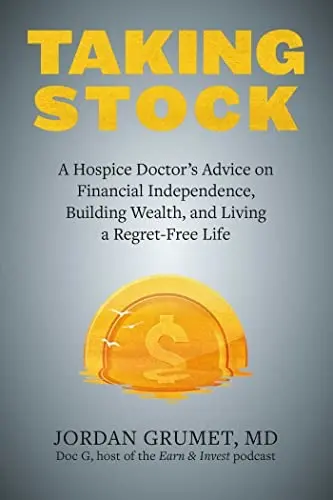
When Jordan Grumet, a practicing physician and author, spent years interacting with patients nearing the end of their lives, he did not expect to redefine his understanding of wealth. Yet, through countless bedside conversations with individuals facing their final days, Grumet came to a striking realization: the most profound lessons on investment often have nothing to do with money.
Drawing from his book Taking Stock, published by Ulysses Press, Grumet explores how prolonged proximity to mortality grants a unique lens on what truly holds value. While financial stability remains a fundamental pillar of modern life, the insights gathered from the bedside suggest that true wealth encompasses much more than a traditional net worth calculation. These revelations were not compiled from the portfolios of the ultra-wealthy, but rather from the quiet reflections of everyday people navigating the ultimate journey.
Invest in Yourself
Personal investment takes many forms, but one of the most critical and frequently overlooked components is self-forgiveness. Remorse is a universal human experience, cutting across all walks of life. Whether tied to an action taken, a missed opportunity, a fractured relationship, or a regretted purchase, the human capacity for self-blame is virtually limitless. People spend countless hours harboring guilt over the past, creating a heavy psychological burden that makes it difficult to look forward.
Grumet illustrates this through the poignant story of a patient named Gerald. Decades before receiving a terminal diagnosis of chronic liver disease, Gerald’s departure from corporate America triggered a devastating downward spiral into alcoholism. His marriage disintegrated, leading to deep estrangement from his ex-wife and his daughter, Sandy. While Gerald eventually achieved sobriety and secured employment, the damage inflicted upon his body was irreversible, and the relationship with his daughter remained fractured.
During his life review process with a social worker, Gerald spent considerable time grappling with the loss of connection with Sandy. He eventually found a modicum of peace and learned to forgive himself, recognizing that granting himself that grace earlier in life might have enabled him to address his struggles with alcohol before irreversible physiological damage occurred.
Beyond emotional release, investing in oneself involves slowing down. In a culture obsessed with immediate gratification and audacious goals, slow and incremental gains often pave the way to long-term success. Progressing toward a major objective by even a small margin each month compounds into phenomenal returns over the years, whether applied to mastering a skill or nurturing a relationship. Furthermore, investing in personal experiences allows growth to compound exponentially over time, much like Benjamin Franklin’s famous principles of compound interest.
Invest in Education
Education remains a cornerstone of self-improvement, extending far beyond traditional academic institutions. While formal degrees offer distinct advantages, the modern world provides a multitude of avenues for continuous learning through reading, discussions, online coursework, and active debate. Knowledge serves as an essential emergency fund that protects an individual’s well-being. When all other resources are depleted, accumulated knowledge helps secure employment, solve complex problems, and guide critical decisions at pivotal moments.
Grumet emphasizes the importance of openness and intellectual curiosity. Embracing new experiences, engaging with unfamiliar activities, and saying yes to opportunities—even when uncomfortable—fosters personal growth and deepens relationships. Despite this, many people remain surprisingly resistant to acquiring basic financial literacy, often scared away by the misconception that financial subjects are overly complex. Observing patients facing their final days with unfinished intellectual pursuits highlights the enduring human desire to learn and remain inquisitive until the end.
Invest in Other People
When evaluating a person’s life, the ultimate measure of success is often found in the people they leave behind. Walking into the room of a dying patient immediately reveals whether they have invested in human connection. Those who have prioritized relationships are typically surrounded by physical mementos, photographs, letters, and a steady stream of visiting friends and family members. Their final days are marked by a bittersweet mix of shared laughter, tears, and celebration.
Investing in others yields a form of compound interest that multiplies into a lifetime of love and happiness. Long after an individual is gone, their essence survives in the memories and character of those they impacted. Grumet notes that discovering his own community through writing and podcasting in the personal finance space allowed him to connect with like-minded individuals, providing the courage to redefine his identity and purpose.
Invest in Children
Beyond general community connections, investing time, love, and mentorship in children lays the foundational blocks for their future adulthood and happiness. Passing down knowledge, humility, and virtuous examples provides the next generation with a blueprint for success and freedom. Guiding children through financial literacy helps them understand both the utility and limitations of money in achieving their life goals.
The time spent nurturing the next generation produces lifelong dividends. Children carry forward a parent’s spark, ensuring that their influence echoes across generations. Grumet recalls how colleagues occasionally slip and call him by his late father’s name during hospital rounds, illustrating how parents continue to live on through the careers and values of their children.
Invest in Physical and Mental Health
Physical and mental well-being form the foundational framework upon which all other aspects of life are built. True financial well-being is difficult to achieve without concurrent mental and physical health, as managing money and long-term futures requires conscientious forethought and emotional stability.
Mental health investments require intentional recovery, utilizing practices such as meditation, regular exercise, and moments of quiet relaxation. Seeking professional psychological counseling provides an outside perspective that helps quiet internal conflicts and restore personal peace. Similarly, physical health plays a vital role in extending and enriching quality of life. Engaging in moderate physical activity, such as a daily thirty-minute walk, strengthens both body and mind without becoming an overwhelming burden. Conversely, reliance on artificial stimulants or excessive substance use often clouds judgment and detracts from long-term personal goals.
Invest in the Market
While non-monetary pursuits dominate the broader picture of a well-lived life, practical financial stewardship remains necessary. A comprehensive approach to personal finance must include traditional investing in the stock market. Securing financial basics provides the stability required to focus more heavily on personal growth, relationships, and health. Financial literacy is a necessary tool, though it remains only one piece of a much larger puzzle.
Ultimately, the lessons gleaned from a career in hospice care point to a singular truth: money is often the easiest part of the human equation. How individuals choose to allocate their time, energy, and emotional resources dictates their perspective when facing the twilight of life. Building a meaningful existence requires intentional preparation, resilience in the face of unexpected challenges, and a commitment to investing wisely in every dimension of human experience.