



Running the numbers on a potential real estate investment only to find negative cash flow can feel like a dead end for many aspiring buyers. Faced with spreadsheets that show a deal will never work on day one, countless beginners simply walk away from rental properties altogether. However, industry experts and seasoned investors argue that with smarter assumptions, the right strategy, or a shift in target markets, what looks like a losing proposition can be transformed into a profitable asset.
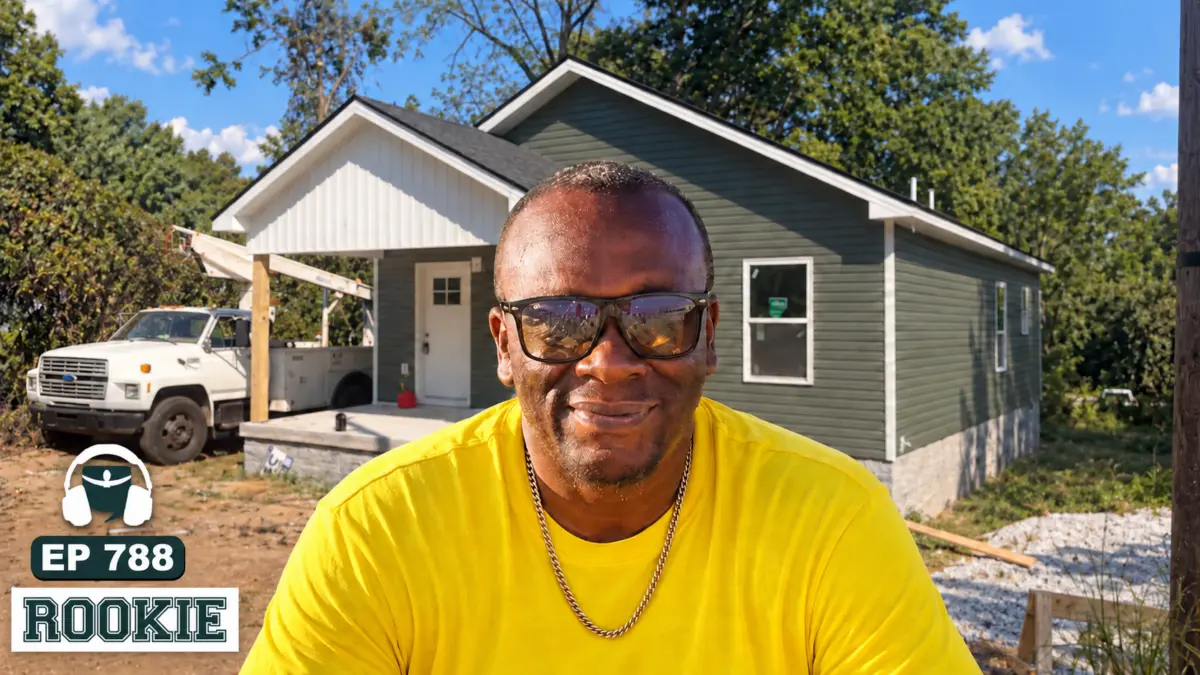
This core challenge of real estate analysis recently took center stage on an episode of the Real Estate Rookie Podcast, hosted by Ashley Kehr and Tony J. Robinson. During the segment addressing common rookie hurdles—such as overly conservative expense estimates, unreachable 1% rules, and the need to stress-test vacancy, maintenance, and capital expenditure numbers—the hosts welcomed guest Reginald Calloway to share his remarkable journey from financial hardship to building a multi-million-dollar commercial and residential portfolio.
From Miami Hardship to Kentucky Entrepreneurship
Calloway’s path into real estate investment was anything but conventional. Originally from Miami, Florida, he relocated to a small town in Kentucky in 2009 during the height of the Great Recession. Seeking a fresh start as job opportunities dried up in South Florida, Calloway arrived alongside his fiancée, Jennifer. Even in those early days of economic uncertainty, Jennifer pointed to a local building and declared that she would own it one day, despite having no background in real estate or mortgages.
Upon arriving in Kentucky, Calloway initially attempted to launch a mobile car wash business, hoping to leverage his entrepreneurial drive. However, he quickly discovered that a small-town market viewed a dirty truck as a badge of honor rather than a problem requiring immediate service, making the venture far less lucrative than anticipated. Undeterred, the couple sought out educational opportunities funded by retraining programs during the economic downturn.
It was during a college economics course taught by professor Mel Evans—who was also an active real estate investor—that Calloway’s perspective on money began to shift. Evans frequently challenged Calloway with a blunt question: why wasn’t he investing in real estate? When Calloway cited his grandmother’s traditional financial advice to "make a dollar, save a quarter," the professor critiqued the philosophy, arguing that simply saving money in a traditional account is a trap that prevents middle-class and working-class individuals from achieving true growth. Evans famously argued that rich families invest heavily rather than just hoarding cash, teaching Calloway that "you can’t save yourself to rich; you have to invest."
The Accidental Acquisition of a Commercial Campus
Armed with this new mindset regarding leverage and investment, Calloway eventually found himself involved in Jennifer’s ambition to run a childcare center. After facing numerous obstacles, the couple secured a modest warehouse space to launch their first daycare facility. To get the business off the ground, they exhausted their meager savings and relied on a specialized loan program designed for individuals with poor credit and limited capital, facilitated by a local mentor named Henry Snorton.
With the daycare operational, Calloway decided to test a lesson he had learned about seller financing and land contracts: that property owners are often waiting for creative buyers to approach them. At the time, the couple was renting the daycare building from a landlord named Mr. Grace, operating under a three-year lease agreement with escalating monthly payments. Going in to make a scheduled payment, Calloway posed a single question to the landlord: what would he sell the building for?
Mr. Grace stated a price of $124,000. Recognizing an opening, Calloway proposed a creative structure. He suggested purchasing the property at that price, but having the previous year’s rent payments—totaling $12,000—credited as a cash down payment, effectively reducing the purchase price to $112,000 while satisfying the seller’s valuation. To Calloway’s astonishment, after a tense few minutes of deliberation, Mr. Grace agreed.
Operating on a land contract—where the seller acts as the lender, bypassing traditional bank restrictions on credit scores and cash reserves—Calloway secured the property with no money out of pocket for the initial acquisition. Over the next few years, as the childcare business grew, this single transaction expanded. Mr. Grace owned neighboring properties, and through subsequent conversations and additional creative negotiations, Calloway acquired two more adjacent buildings.
What began as a single rented space transformed into an interconnected childcare campus consisting of a baby house, a preschool, and an afterschool center. Eventually, Calloway initiated a refinancing process to pay out Mr. Grace and fund further renovations, successfully valuing the commercial campus at approximately $1.3 million by 2017—all stemming from an initial lease payment credit strategy.
Venturing into Residential Flips and Direct Mail
Buoyed by his early commercial success, Calloway eventually expanded into residential real estate, initially targeting home flips. His entry into the residential market, however, came with steep learning curve lessons. Diving into a property auction sight unseen, he became emotionally attached to a 1,785-square-foot home and engaged in a fierce bidding war, ultimately paying $157,000—significantly higher than market estimates.
The property required an extensive gut renovation totaling nearly $100,000. Financing the rehab through credit cards with promotional zero-interest periods, Calloway faced unexpected delays when a severe flood hit the area just as the home went on the market. Although the property itself remained on dry ground, market hesitation surrounding the broader neighborhood’s flood zone status extended his holding period. When the promotional zero-interest periods on his financing expired, the unexpected carrying costs ate heavily into his margins, teaching him a critical lesson: receiving a check at a closing table does not automatically mean a profit has been realized.
Determined to refine his approach, Calloway sought further mentorship by joining a real estate mastermind group led by experienced investor Henry Washington. Through this community, he adopted direct mail marketing campaigns to source off-market properties directly from owners, bypassing competitive public auctions.
Despite facing initial resistance and hostile responses from cold calls, Calloway eventually connected with an elderly seller who wanted $69,000 for a property. Utilizing his newly developed understanding of scopes of work and after-repair values, Calloway countered at $55,000. After a brief period of self-doubt and anxious second-guessing during which he nearly negotiated against himself by offering a higher price, the seller accepted the initial $55,000 offer. Upon inspection and appraisal by a local bank, the property was valued at $142,000, leaving Calloway with substantial built-in equity. Rather than flipping the house, he chose to retain it as a rental property, inheriting a long-term tenant who had occupied the home for over a decade.
Reflecting on his trajectory from struggling entrepreneur in a new state to a seasoned commercial and residential investor, Calloway emphasizes resilience. He attributes his ability to push past fear and initial failures to a mindset shaped by overcoming adversity, viewing past setbacks not as permanent roadblocks, but as necessary sacrifices required for personal and financial growth. Today, Calloway continues to manage his commercial childcare campus, expand his real estate portfolio, and share his experiences through writing and mentorship, hoping to guide other newcomers through their own initial real estate breakthroughs.