



When Stanford design professors Bill Burnett and Dave Evans published their groundbreaking book, Designing Your Life, they introduced a novel concept to the public: applying the iterative, empathetic problem-solving framework of design thinking to the human experience. Rather than treating career paths and life goals as fixed destinations, the authors argued that individuals can prototype, test, and design multiple versions of a fulfilling existence.
Following a recent deep dive into the book, a multi-week collaborative experiment has begun to put these theories into practice. Working alongside a long-term partner and a college classmate, the project explores the foundational exercises outlined in the text, beginning with an honest assessment of current circumstances and moving toward the creation of a personal compass.
Start Where You Are
The foundational premise of the life-design framework is remarkably straightforward: start where you are. This initial directive mirrors a core philosophy often applied to financial turnarounds, emphasizing that meaningful change cannot occur without an accurate, unvarnished baseline of one’s current reality.
In the context of life design, this requires a comprehensive self-assessment across four critical domains: health, love, play, and work. Rather than treating these categories as actionable targets for immediate disruption, the exercise functions as a snapshot in time. Much like calculating net worth, it establishes a current coordinate on the metaphorical map of life, allowing individuals to recognize their standing before attempting to chart a new course.
Once this baseline snapshot is complete, the process transitions from evaluation to direction-finding. According to the text, navigating this terrain requires the construction of a metaphorical compass, which is forged through structured reflection and explicit statements of personal purpose.
Building a Compass: Workview and Lifeview
The second phase of the life-design process asks readers to draft two distinct mini-essays: a Workview and a Lifeview. These reflections serve as foundational statements of purpose, functioning similarly to personal mission statements.
To explore these concepts collaboratively, discussions via video conferencing help evaluate visions of work and life alongside peers. Sharing these reflections often reveals profound alignments in core values, even among individuals who have pursued different paths since their university days.
Workview
Examining individual perspectives on labor reveals how people conceptualize the role of work in their daily existence. For some, work is valued primarily as a fair exchange of time for compensation, though long-term satisfaction ultimately relies on continuous experience, learning, and growth. When work is driven exclusively by status or financial accumulation, it can become weighed down by competition and greed. Consequently, finding a sense of "right livelihood"—work that is fair, sustains life, and avoids permanent harm to natural systems—becomes a central aspiration. Tangible production, such as growing food or creating physical tools, often provides a deep sense of satisfaction, while the ultimate application of labor may focus on the restoration of natural systems.
For others, work functions as a multi-faceted instrument that simultaneously generates income, fosters personal fulfillment, and contributes positively to society. This dual objective—improving one’s own life while bettering the lives of others—reflects the Japanese concept of ikigai, or finding a reason for being. Maintaining this balance ensures that passion and purpose remain at the forefront of professional decisions, transforming platforms and enterprises into accessible, reliable resources for those seeking financial and personal mastery.
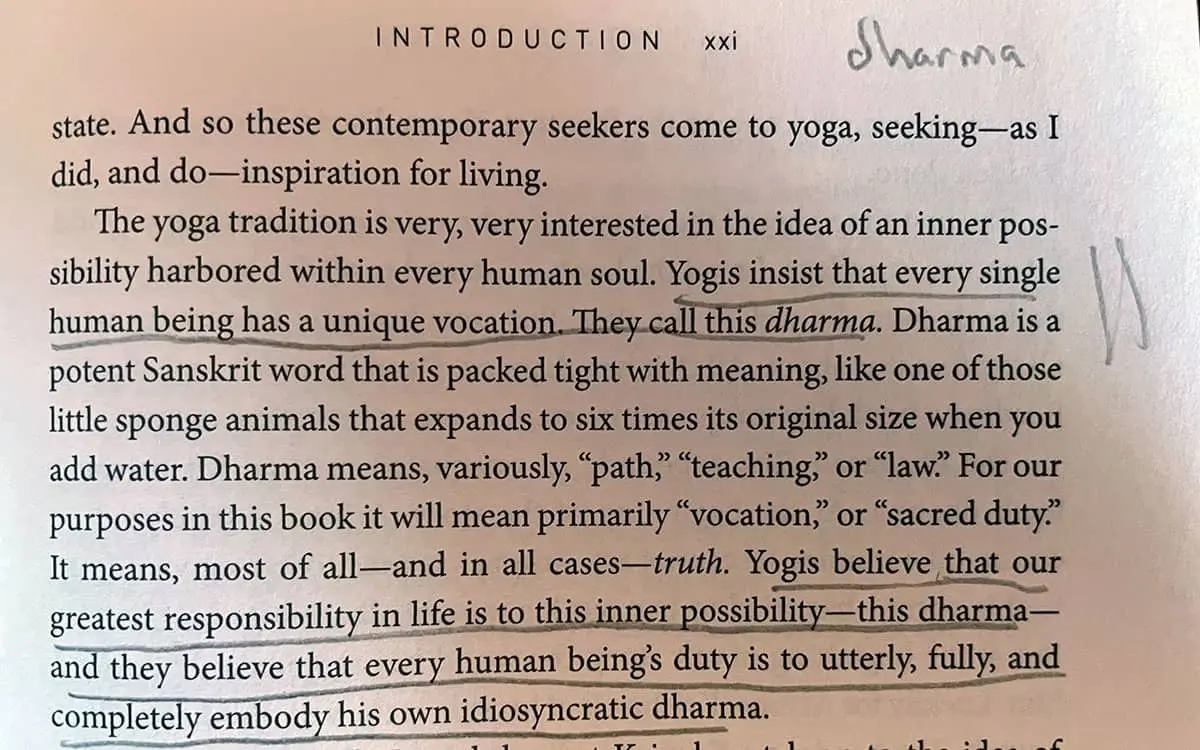
Despite minor variations in perspective, common threads unite these views. Both approaches acknowledge that work is a necessary mechanism for financial sustainability, yet both insist that labor must be personally fulfilling and socially beneficial. These reflections naturally intersect with philosophical frameworks like the Buddhist notion of right livelihood, the Japanese principle of ikigai, and personal dharma, ultimately pointing toward a shared desire to foster abundance and achieve mutually beneficial outcomes for both the individual and society.
Lifeview
Reflecting on the broader meaning and purpose of existence uncovers striking parallels in personal philosophy. One perspective posits that life possesses no inherent meaning, a realization that could foster despair or hedonism, but instead serves as an open opportunity to construct individual purpose and morality. Within this framework, morality is measured entirely by interpersonal conduct—specifically how one treats others, navigates power imbalances with vulnerable populations, and engages productively with those holding opposing viewpoints. Values such as curiosity, knowledge, kindness, and mutual support become paramount, driven by the belief that individual growth stems from deep community connections rather than ideological conformity. This approach emphasizes working from the center outward: practicing rational self-centeredness to secure one’s own needs, supporting close partners and family, and gradually extending that positive impact outward to improve the world at large.
An alternative perspective shares a similar foundational ethos, asserting that humanity’s search for meaning can imbue traditional rituals with value, even in the absence of a supreme deity. This worldview finds comfort in the sheer vastness of space and time, viewing human existence as a brief moment within an enduring natural cycle. Stewardship of natural systems, the sharing of knowledge and comfort, and the use of humor as a defense against life’s uncertainties form the bedrock of this philosophy.
When these Lifeviews are examined side by side, they highlight a shared concern over the decline of social capital in modern society. Whether tracing these concerns back to sociological examinations like Bowling Alone or observing contemporary cultural shifts, both viewpoints underscore the importance of fostering genuine human connection and rebuilding community bonds.
Not Unto Ourselves Alone Are We Born
The remarkable alignment between these worldviews is not entirely coincidental. Shared formative experiences at Willamette University appear to have left a lasting imprint on multiple individuals who attended the institution during the same era. The university’s historic motto—non nobis solum nati sumus, translating to "not unto ourselves alone are we born"—clearly resonates through these articulated approaches to work and life.
As outlined in Designing Your Life, the primary function of a defined Workview and Lifeview is to serve as a navigational compass. When individuals reach a crossroads or lose their direction, consulting these foundational statements helps clarify which path to pursue. This exercise proves remarkably potent, offering practical tools that complement existing workshops and presentations on finding personal purpose.
The journey of life design continues with upcoming chapters focused on maintaining a detailed activity log—known as a Good Time Journal—to evaluate engagement and energy levels across daily tasks. Subsequent mind-mapping sessions will analyze these findings, continuing a structured exploration of personal growth, purpose, and intentional living.