



The widely tracked gold-silver ratio is expanding once again, a technical development that market analysts suggest could be setting the stage for silver to ultimately resume its broader bull market run. However, despite the potential for a dramatic market reversal down the line, a formidable wall of economic headwinds continues to buffet the precious metals sector in the near term, keeping both silver bulls and institutional observers on high alert.
What Is the Gold-Silver Ratio?
To understand the current market dynamics, it is essential to examine the metric itself. The gold-silver ratio measures the relative value of the two precious metals, indicating precisely how many ounces of silver it takes to purchase a single ounce of gold based on their prevailing spot market prices. In essence, it functions as a gauge of gold’s price denominated in ounces of silver.
Historically, through the modern era, the ratio has tended to average within a range of 40-to-1 to 60-to-1. When macroeconomic pressures or market panics cause the ratio to stretch far beyond these historical boundaries, it has a long-standing tendency to eventually snap back toward its statistical mean, a reversion that can occasionally occur with breathtaking speed.
A prime example of this phenomenon unfolded in 2020, when the gold-silver ratio spiked to a record-shattering 123-to-1 as global hysteria surrounding the onset of the COVID-19 pandemic gripped financial markets. That extreme divergence proved unsustainable. As central banks around the world aggressively cranked up their money creation apparatuses to cushion the blow of widespread economic lockdowns, the ratio plunged precipitously back toward 60-to-1. During that exact window between March and August 2020, silver staged a phenomenal rally, surging approximately 157 percent as prices climbed from $11.64 to $29.86 per ounce.
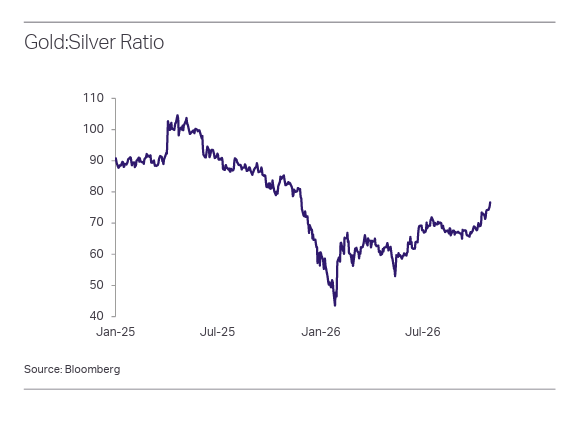
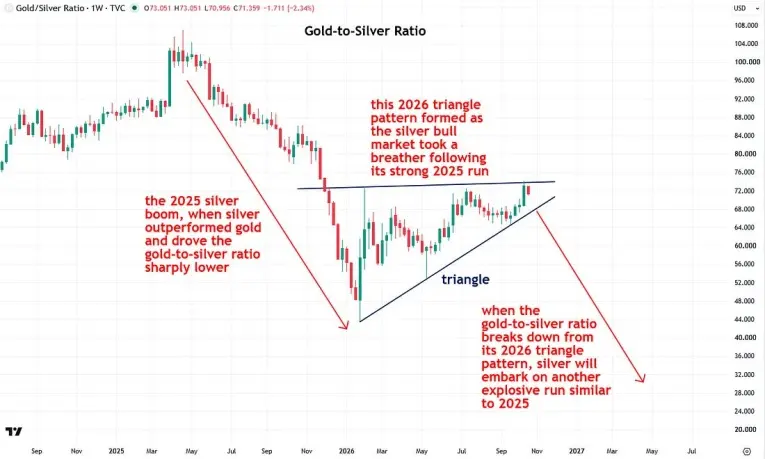
More recently, extreme volatility has continued to characterize the metric. The gold-silver ratio dropped from roughly 82-to-1 in October 2025 down to an impressive 46-to-1 around the time silver reached a dramatic peak of $122 in January. Just prior to that, in April 2025, the ratio had peaked near 105-1 as the market laid the technical groundwork for a powerful bull run later that year.
What Is the Gold-Silver Ratio Today?
In the months following the January highs, the gold-silver ratio spent considerable time trading in a relatively range-bound corridor between 60-to-1 and 70-to-1 since June. While that positioning sat just above the higher end of the modern historical average, the metric has recently begun to widen once more. Current market readings place the ratio at approximately 77-to-1.
This ongoing expansion begs a critical question for commodities traders and investors alike: what is causing silver to underperform relative to gold in the current macroeconomic environment?
At present, both precious metals are encountering substantial headwinds driven by rising bond yields and growing market expectations for additional Federal Reserve interest rate hikes. Because gold and silver are non-yielding assets that do not generate dividends or interest payments, they historically struggle to attract capital when high-yield environments offer attractive, risk-free returns elsewhere in the financial system.
Even so, the gold market continues to find resilient foundational support from aggressive central bank gold-buying programs and strong retail demand from Asian investors, with Chinese buyers playing a particularly prominent role. Silver, by contrast, occupies a fundamentally different space in the global economy. As analysts at Metals Focus pointed out, silver is viewed much more heavily as an industrial commodity and does not enjoy the exact same quasi-monetary attributes or central bank accumulation patterns that gold commands.
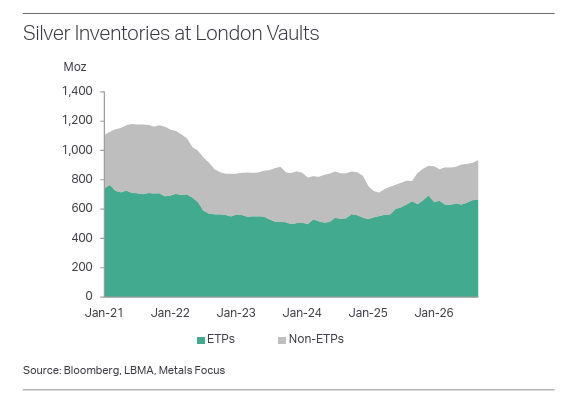
Furthermore, the acute physical market tightness that successfully drove silver prices higher during two distinct supply squeezes in October 2025 and January 2026 has noticeably eased. According to data from Metals Focus, silver inventories stored in London vaults reached a four-year high of 932 million ounces by the end of September, recovering significantly from the record lows registered late last year.
Market analysts noted that excluding metal locked away in physically backed exchange-traded products, free-float London inventories stood at roughly 267 million ounces. This figure represents nearly double the depressed inventory levels recorded in October 2025 and brings stockpiles almost back to where they stood prior to the market disruptions caused by tariff policies.
Additional data reveals that inventories held at key commodity exchanges across the United States, China, and India also experienced modest growth in recent months. The primary catalyst behind this improving market liquidity was the rapid cooling of retail and institutional investor interest following the dramatic price peaks seen in January.
During 2025, substantial capital inflows into silver exchange-traded products quickly absorbed available liquidity in London. However, silver ETP holdings have declined by roughly 60 million ounces year-to-date, effectively releasing metal that had previously been tied up in institutional vaults. Initially, these outflows reflected routine profit-taking as spot prices achieved a series of historic record highs. While those net liquidations eventually subsided, a broader lack of conviction regarding the near-term price outlook has since acted as a damper on fresh investment capital entering the silver space.
Market analyst Jesse Colombo observed that a significant portion of the prevailing bearish sentiment in silver stems from late-arriving retail investors who chased the market upward. These market participants piled into positions near the very top—often just weeks or even days before silver peaked at $121—only to lose interest when the inevitable market correction occurred, as overheated assets invariably do. Many of these transient investors simply rotated their capital into whichever speculative asset class happened to be capturing public attention at the moment, whether heavily hyped artificial intelligence stocks or speculative cryptocurrencies.
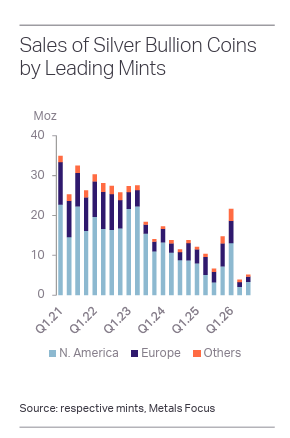
Reflecting this cooling retail enthusiasm, physical coin sales in Western markets have remained remarkably subdued. Metals Focus reported that following a sharp surge in the first quarter of 2026, sales of primary silver bullion coins by major sovereign and private mints plunged by over 80 percent quarter-over-quarter in the second quarter, hitting their lowest quarterly volume since comprehensive survey data began in 2010. While sales recovered modestly during the third quarter, overall trading volumes remained depressed, falling by 22 percent compared to the same period a year earlier.
Meanwhile, international trade flows also shifted, with Indian silver imports dropping sharply. Earlier in the year, the Indian government adjusted import duties on precious metals in an intentional effort to curb excessive imports and support the domestic currency. According to Metals Focus, this notable reduction in Indian silver demand played an important role in alleviating broader physical liquidity pressures centered in London.
What’s Ahead for the Silver Market?
Looking toward the immediate horizon, analysts at Metals Focus anticipate that physical demand for silver will likely remain constrained. Alongside sluggish investment activity, elevated price levels are creating friction for luxury jewelry manufacturing while simultaneously accelerating industrial thrifting and material substitution as manufacturers seek cheaper alternatives.
Nevertheless, the underlying structural fundamentals of the silver market present a compelling counter-narrative. Silver has remained entrenched in a persistent structural market deficit for five consecutive years, meaning that global consumption and industrial demand have continuously outstripped combined mining production and recycling output. Last year alone, total demand exceeded supply by 40.2 million ounces, pushing the cumulative five-year market deficit to an astonishing 716 million ounces. To put that figure in proper perspective, total global silver mining output last year stood at 846 million ounces.
As near-term demand pressures weigh on the market, Metals Focus expects the annual market deficit to moderate further, potentially flipping the market into a temporary surplus by 2027. Such a shift would naturally reduce the immediate probability of another acute supply squeeze in the very near term.

Against this complex backdrop, analysts suggest that silver will likely continue taking its primary directional cues from gold over the coming 12 months. With ongoing macroeconomic headwinds stemming from stubbornly high interest rates and robust Treasury yields, precious metals as an asset class are expected to remain under some degree of pressure in the near term. Furthermore, silver’s characteristic higher beta suggests there is distinct scope for it to experience continued underperformance relative to gold while these conditions persist.
Despite these cyclical headwinds, Metals Focus maintains a decidedly bullish long-term outlook for the white metal. Once global financial markets begin scaling back expectations for aggressive monetary tightening heading into 2027, silver is positioned to outperform. Renewed upward price momentum during such a shift would naturally encourage sidelined investors to aggressively rebuild their market exposure.
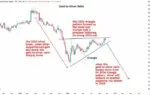
When that structural rotation occurs, market observers expect the gold-silver ratio to snap back toward its historical mean once again. From a technical analysis perspective, Colombo noted that the current consolidation of the gold-silver ratio appears to be tracing out a classic triangle pattern—a familiar geometric formation that frequently materializes while asset prices pause, digest previous gains, and consolidate their base.
In technical analysis, triangle patterns routinely function as continuation structures. This implies that once the necessary cooling-off and consolidation phase has completely run its course, the underlying primary trend is likely to resume in the original direction, setting the stage for a powerful repeat of prior market moves.
When this technical pattern ultimately breaks down, Colombo anticipates that it will ignite the next major phase of the overarching bull market. At that juncture, silver is expected to break out of its current consolidation range and mount a renewed challenge toward its previous record high of $121 per ounce and beyond.