




For decades, consumer habits followed a predictable path defined by physical geography and retail availability. When a household item wore out, shoppers would visit a local department store or browse an online catalog, evaluating whatever inventory happened to be on hand. But as the retail landscape has evolved alongside consumer maturation, a growing number of buyers are discovering that the traditional approach to acquiring goods often leads to compromise, buyer’s remorse, and unnecessary clutter.
By altering a fundamental philosophy of consumption—shifting away from what retail shelves dictate and moving toward a hyper-intentional search for exact personal specifications—shoppers are finding a renewed sense of satisfaction in the items they bring into their daily lives.
The Evolution of Consumer Habits
In earlier decades, retail options were strictly bounded by physical limitations. Growing up in a small town in rural Oregon with limited family resources, a young consumer had very few choices when a specific item was needed. Available selections were restricted entirely to the stock on hand at local variety stores or neighborhood pharmacies. The shopping paradigm was straightforward: identify a general need, visit a storefront, and select the best possible match from the available inventory.
This model can be defined as "store-centered shopping." Under this traditional framework, the marketplace dictates the universe of available options. If a local department store stocked forty different wallets, the consumer’s choice was effectively limited to those forty options, regardless of whether any of them truly suited personal preferences or daily habits.
However, the proliferation of global e-commerce combined with personal life experience has changed this dynamic entirely. Today’s mature consumers possess greater patience, increased financial stability, and, most importantly, the borderless reach of the internet. Rather than accepting the limitations of local inventory, shoppers now have the technical capability to locate virtually any specialized product manufactured anywhere in the world—provided they are willing to invest the time to track it down.
A Case Study in Minimalism: Buying a Wallet
The contrast between store-centered and self-centered shopping is starkly illustrated by the common experience of replacing a worn-out wallet. For more than thirty years, one consumer followed the conventional routine: wait for a wallet to fall apart, head to a nearby department store, browse the standard display of leather bi-folds and tri-folds, and select the least objectionable option to serve for the next half-decade.
By 2019, that routine had grown wearisome. Approaching the purchase with a sense of dread, the shopper recognized a fundamental truth: standard department store wallets simply did not work for their lifestyle. Rejecting the bulky, cash-heavy utility associated with classic archetypes like George Costanza’s overloaded billfold, the consumer identified a distinct set of personal criteria. The ideal wallet needed to be compact, pocket-friendly, free of unnecessary bulk, and constructed without traditional leather, prioritizing card accessibility above all else.
An accidental encounter with a Secrid store in Amsterdam—a Dutch manufacturer known for minimalist metal card protectors—sparked a deeper exploration. While the Secrid Cardprotector was admirably sleek, it proved slightly too minimal for everyday requirements, holding only six cards. Rather than settling for a compromise right off the showroom floor, the shopper flipped the script. Instead of accepting marketplace limitations, they adopted a self-centered shopping strategy by first drafting a precise list of required specifications before resuming the search.
Scouting through major online retailers and outdoor gear outlets revealed countless minimalist wallets and knock-offs, but none hit the exact marks. The breakthrough came when the search turned to Tom Bihn, a company renowned for durable travel gear and efficient spatial design, whose Synapse 19 backpack was already a trusted staple for international travel. The brand’s specialized minimalist wallet offered precisely three pockets, matched the footprint of the Secrid product, but weighed half as much. Fulfilling every pre-determined requirement, the purchase proved to be an immediate success, later inspiring a family member to adopt the same item in place of a traditional purse.
The Mechanics of Self-Centered Shopping
This shift toward self-centered shopping involves a deliberate inversion of the standard retail process. Instead of browsing aisles or web pages to see what is available, the consumer defines their precise requirements in advance—often literally writing out a checklist on an index card to maintain focus during the hunt.
While this meticulous approach can occasionally require a higher financial investment or a greater expenditure of time, proponents argue that the long-term dividends are well worth the effort. As consumers age, tolerance for poor quality diminishes. Everyday items are expected not merely to function, but to provide a genuine sense of utility and ease, echoing Marie Kondo’s philosophy that everyday possessions should actively serve a practical and pleasing purpose.
Crucially, this method serves as a powerful antidote to impulse spending. Market research and psychological studies frequently highlight how impulse purchases are primarily driven by ambiguity—shoppers buy things on a whim because they do not genuinely know what they are looking for or what they actually need. When a consumer operates with a strict, pre-defined set of criteria, random retail temptations lose their appeal.
Furthermore, self-centered shopping effectively neutralizes the psychological phenomenon known as the paradox of choice. Entering a traditional retail environment and facing dozens of variations of a single product often leads to decision fatigue and subsequent post-purchase regret. By contrast, narrowing the field down to a single item that matches rigorous personal specifications eliminates overwhelming choices. Once the perfect match is found, the search concludes successfully, leaving no lingering doubts about alternative options.
Cultivating Product Loyalty and Long-Term Value
An unexpected side effect of adopting a self-centered shopping methodology is the development of intense product loyalty. When a consumer invests the time to find an item that is an exact fit for their lifestyle, they tend to replicate that purchase indefinitely when replacement time arrives.
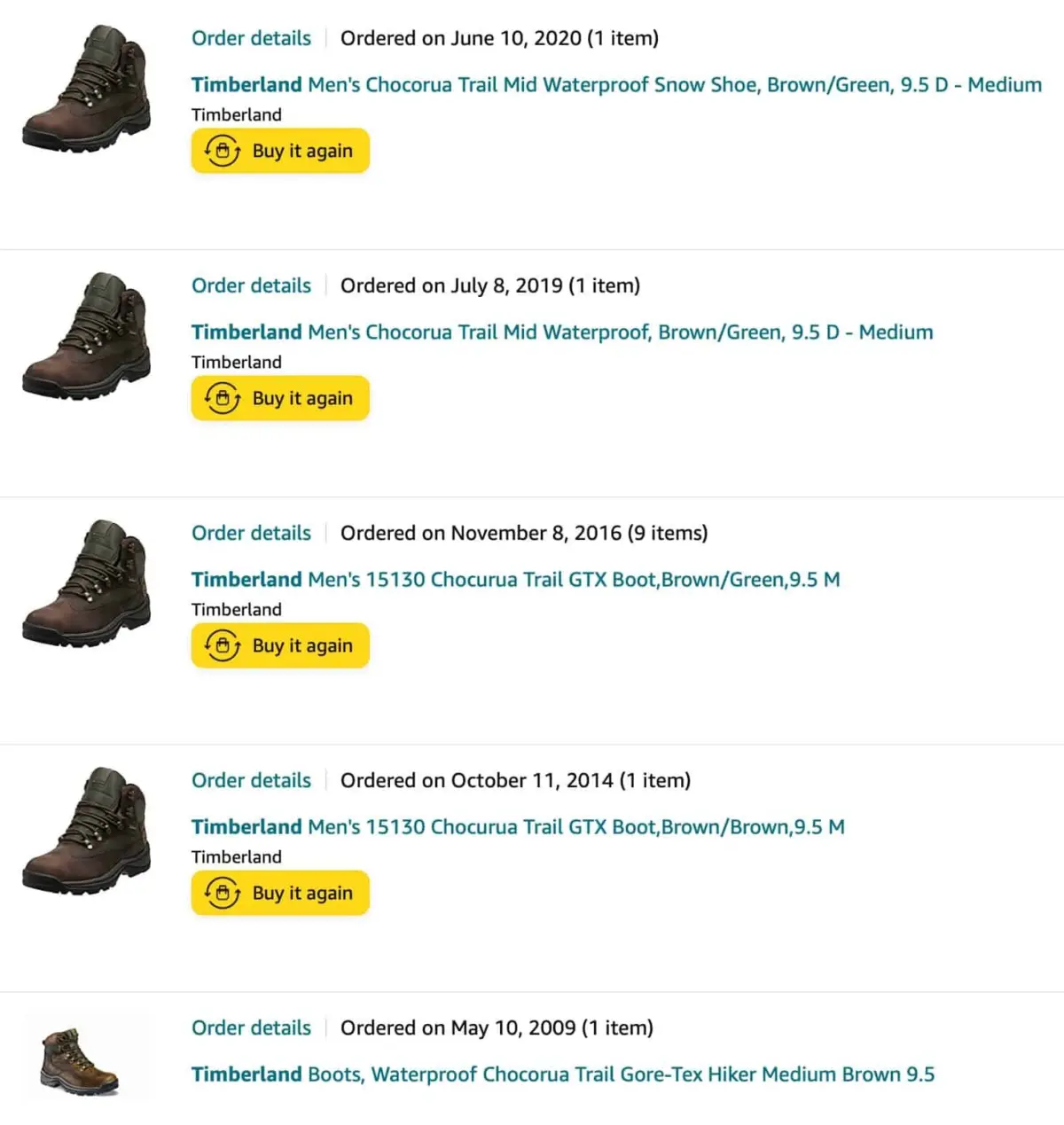
This pattern is evident in everyday items that anchor a workspace or outdoor routine. For instance, rather than experimenting with new footwear every few years, a dedicated hiker consistently replaces their worn Timberland Chocorua boots with the exact same model, maintaining two pairs in rotation—one designated for labor and another for general wear—with each pair lasting up to seven years of heavy daily use.
A similar intentionality applies to larger home office investments. After enduring a decade of frustration with an inefficient, disorganized budget desk, a thorough assessment of an ideal workspace led to the acquisition of a traditional L-shaped desk from a local furniture store during a relocation. Meanwhile, older peripheral tools at the desk, such as a microphone and a secondary monitor acquired through legacy methods, remain in use simply because they are adequate, though they are slated to be replaced through the same rigorous, self-directed search process when the time eventually comes.
Ultimately, transitioning from store-centered convenience to self-centered intentionality reframes the entire consumer experience. By prioritizing personal needs and investing patience into the search for quality, buyers are able to bypass the paralysis of endless retail choices and curate a collection of possessions that consistently deliver long-term satisfaction.