




Marking a major personal milestone, the creator of the Financial Independence Podcast recently reflected on what life looks like ten years after leaving the traditional workforce. Celebrating a full decade of post-financial independence (FI) life, the host shared deep insights into how his mindset around money, career security, lifestyle inflation, and personal goals has radically evolved since walking away from a standard developer job.
Today, he finds himself more content with his life and finances than ever before, yet remarkably more unsure about what the distant future holds. The overarching sentiment, however, remains one of profound gratitude. On a daily basis, he appreciates the luxury of spending entire days with his children, witnessing their developmental milestones firsthand, and being a central pillar in their daily lives.
That sense of gratitude extends deeply into the financial and professional spheres, particularly when looking at the modern technological landscape. As a former software developer, he long held the assumption that he could easily re-enter the workforce as a fallback option if financial conditions ever required it. Today, however, he admits he no longer knows if that safety net exists. Having spent recent months diving deep into artificial intelligence tools—such as experimenting with Claude Code to explore his curiosity and build software—he recognizes the massive disruption currently hitting the tech market. For someone who loves building things but embraces a certain laziness, these tools are incredible, but they also signal a dramatic structural shift. If he were still relying on a software developer salary to survive and invest, he confesses he would feel a genuine sense of anxiety. Instead, he views his current position with immense relief, thankful that his survival is no longer tethered to a traditional tech job.
Reflecting on his journey to financial independence, he also expressed gratitude for the way his savings strategy ultimately unfolded. While he originally planned around a strict lean FIRE lifestyle—with the safety net of software development work if he ever wanted to inflate his lifestyle—fat FIRE happened organically over the years. Rather than forcing a bare-bones existence to escape an uninspiring job, he ended up accumulating more than expected.
Consequently, his primary advice for those currently on the path to financial independence, particularly software developers, is to rethink the rigid pursuit of lean FIRE. If an individual is in a reasonably high-paying job that is not completely soul-crushing, and if they can find ways to improve their daily work experience, he suggests staying in the workforce a bit longer than strictly necessary. This strategy provides a dual benefit: it buffers against the profound uncertainty that AI introduces to various professional job markets, and it allows for the much more enjoyable reality of an asset-driven, expanded lifestyle later on.
From the outside, his current lifestyle may not scream "fat FIRE," but mentally, the shift has been complete and liberating. The core transformation is the feeling of living an unlimited lifestyle within current parameters, which drains away a tremendous amount of mental energy and daily stress. Price tags are rarely considered anymore because his portfolio comfortably covers an upper-middle-class standard of living. This does not mean flying on private jets or purchasing yachts, but rather enjoying the freedom to buy the finest morning coffee every day or treating the family to appetizers, cocktails, and desserts at dinner without worrying about needle-moving expenses.
Through trial and error, he realized that money is no longer the limiting factor in his life; rather, boundaries are set by time, energy, and the natural stage of family life. Going out to eat with two young children can occasionally be stressful, so fine dining is naturally replaced by simpler outings, like heading to a local pub for a burger. Similarly, space constraints in the home and the logistical hassle of travel dictate their movements rather than a strict budget. This realization has validated conversations he had years ago with Ramit Sethi, author of I Will Teach You to Be Rich. Concepts that once sounded baffling—such as asking "Why spend less when you can spend more?"—now resonate deeply. With a limited imagination for everyday purchases, when he does decide to buy something, he opts for the highest quality item in that category because it brings more daily utility, lasts longer, and adds genuine value.
This evolution has also meant unlearning a lifelong obsession with efficiency and learning to accept waste and sunk costs. He noted recent examples from family trips to Canada and Italy, where they consciously chose to cut their vacations short and fly home early. On a trip to Canmore, Canada, after sharing a phenomenal weekend with his visiting brother and fiancée, they faced another nine days of travel. Rather than forcing themselves to stay out a sense of obligation to a pre-booked itinerary, they bought one-way tickets home, ending the trip on an absolute high note while inadvertently saving money on unneeded Airbnb bookings.
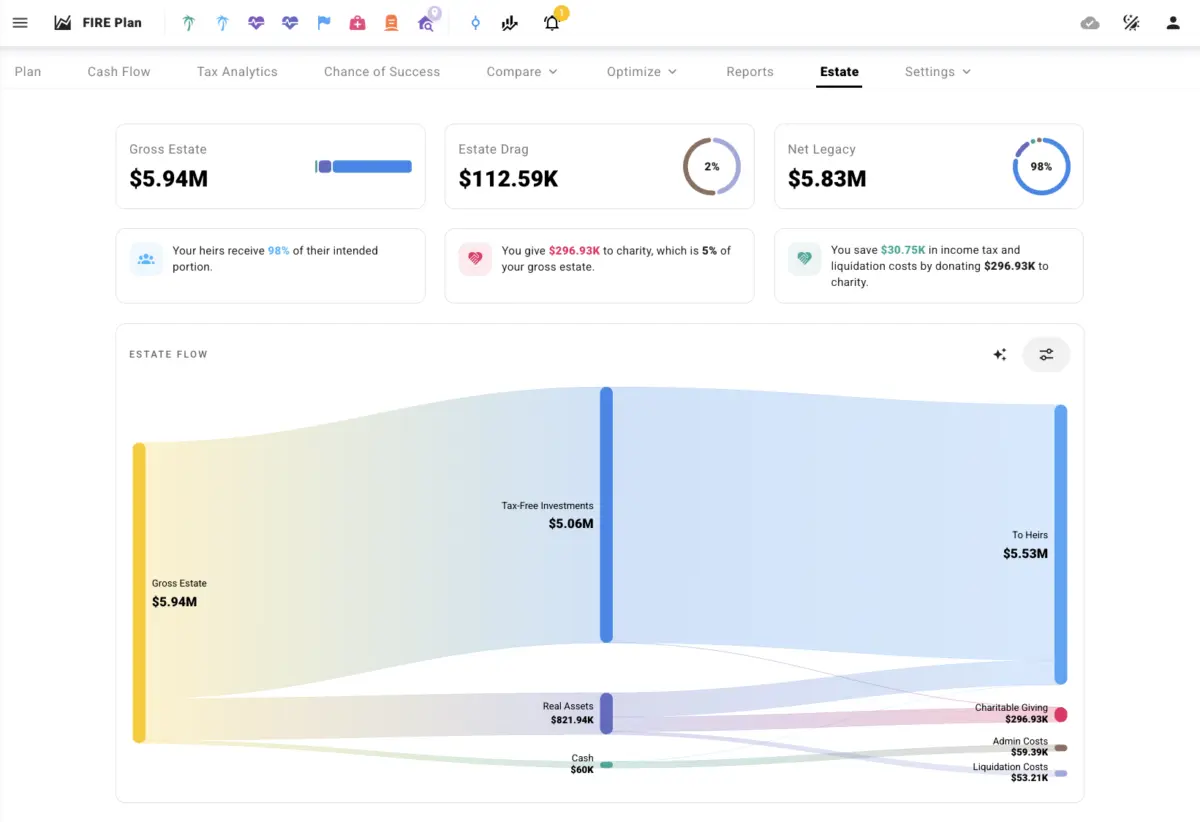
These mental shifts have naturally increased his annual spending, transforming lifestyle creep into a positive, asset-driven phenomenon. Traditional warnings about lifestyle creep focus on the danger of inflating spending after a salary raise without boosting savings, leaving individuals vulnerable to job loss. However, when lifestyle inflation is driven directly and sustainably by growing investment assets—such as enjoying an extra $8,000 in annual spending power generated by portfolio growth under the 4% rule—it feels entirely secure and enduring. This realization inspired him to build Wealth Machines, a software project designed to help people better recognize and utilize their surplus wealth to enhance their present lives rather than hoarding every penny for a distant future.
Simultaneously, simplicity has decisively overtaken optimization as a core financial value. While his early blogging days on the Mad Fientist were defined by complex tax optimization strategies, he has shed those layers of friction. He no longer bothers with backdoor Roth contributions, choosing to bypass the minor admin tasks and potential stress they add to his to-do list. Furthermore, he has streamlined his investment portfolio, eliminating individual stock picking and fun accounts to focus entirely on a handful of core funds that require minimal tracking and maintenance.
In a recent adjustment to lower his risk profile now that financial independence has effectively been won, he reallocated a portion of his stock holdings into 30-year Treasury Inflation-Protected Securities (TIPS). Locking in near-historic real yields close to 3% with securities that adjust for inflation and mature right around the time he reaches standard retirement age—coinciding with anticipated required minimum distributions from retirement accounts—provides a reliable spending floor for his seventies. With his asset allocation locked in, the financial machine runs largely on autopilot.
Despite enjoying complete freedom in daily spending, travel, and dining, he and his family are still not spending up to the absolute limit of what their portfolio permits. This has sparked ongoing discussions about how to best utilize those remaining resources to maximize the next fifteen years—a window he identifies as his peak spending years. With his parents, his wife’s parents, and his grandmother all still alive and healthy, and his children at an age where they actively enjoy spending time with family, he recognizes this as life’s golden era.
Consequently, the primary remaining financial frontier involves finding and establishing a permanent home base. They are actively researching locations on the East Coast and conducting long-term Airbnb experiments to find an ideal community with great weather, walkability, and outdoor activities. The goal is to build what he describes as "gravity"—a deeply integrated, beautiful home base that provides ample space for visiting family and friends, anchors their children in a thriving community, and creates an enduring gravitational pull that ensures their children will want to return home even as they grow into adulthood.
Reaching this stage has also introduced a completely new psychological challenge: the absence of long-term financial goals. For his entire adult life, he has been driven by structured, distant objectives, chief among them the pursuit of financial independence itself. Now that those goals have been fully accomplished, he finds himself navigating the uncharted territory of living entirely in the present. Rather than forcing himself through grueling cardio workouts he dislikes, he plays tennis for sheer enjoyment, shifting his focus from optimizing the future to maximizing the quality of today.
As he looks back on a decade of post-FI life, the path forward is defined not by spreadsheets and tax strategies, but by presence, family, and shared memories. With his spending normalized, his investments simplified, and his focus turned toward the present, he enters his next decade of freedom with open curiosity and deep appreciation for the journey so far.