





Cambridge Heavy Industries (CHI), an emerging developer in the fusion technology sector, has officially stepped out of stealth mode to announce the successful completion of a $6.2 million seed funding round. The newly secured capital is earmarked for a critical milestone in the company’s operational roadmap: the construction of its very first compact fusion reactor at its Massachusetts-based facility. By utilizing innovative approaches in shockwave science and laser technology, CHI aims to radically reduce both the physical footprint and the prohibitive costs traditionally associated with conventional laser-based fusion systems, positioning itself uniquely within the broader energy transition and private equity landscape.
Founded in 2025 as a spinout from the prestigious Massachusetts Institute of Technology (MIT), Cambridge Heavy Industries was established by a multidisciplinary team of co-founders, including CEO Dr. Yun Kai, Raffi Freeman, Professor Keith Nelson, and Dr. Steve Kooi. From its inception, the company has focused on developing compact, laser-based fusion systems engineered to produce tritium alongside a variety of other rare isotopes, with a long-term vision toward eventually generating clean, limitless fusion energy. Unlike gargantuan projects that often rely on massive, highly expensive infrastructure, CHI leverages commercially available lasers to generate fusion reactions through modular, benchtop-scale technology.
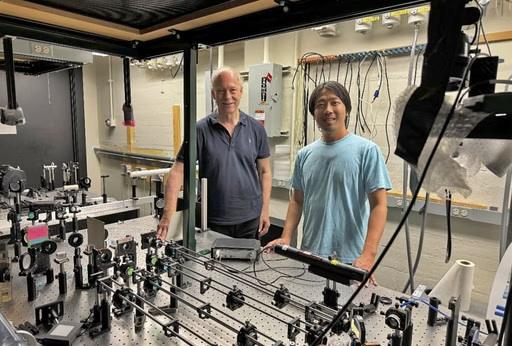
The economic and operational implications of this modular approach are substantial. According to representations made by Cambridge Heavy Industries, its underlying technology drastically accelerates testing and development cycles. Where conventional fusion research programs typically require years-long cycles for R&D iterations, testing, and system upgrades, CHI’s platform allows for weekly testing and continuous improvements. This agile methodology drastically alters the capital expenditure profile typically demanded by nuclear fusion research.
Furthermore, the company reports that its significant advances in shockwave science have enabled compression efficiencies that are an astounding 400 times higher than previous laser-based fusion approaches, and all achieved at a mere fraction of the capital expenditure. Demonstrating the tangible progress of this design, the company’s prototype—which boasts a physical footprint roughly equivalent to the size of just two standard dinner tables—has successfully achieved extreme pressures reaching 350 gigapascals while utilizing only tens of millijoules of energy.
While the ultimate horizon for the broader fusion industry remains zero-carbon baseload energy generation, Cambridge Heavy Industries has established a pragmatic and high-value commercial stepping stone for its initial systems: the production of tritium. Tritium is a rare, radioactive isotope of hydrogen that serves as an essential fuel source in experimental fusion research reactors globally. However, the substance currently faces severe international supply constraints, creating a major bottleneck for the sector. Due to these acute shortages, tritium commands an exceptionally high market value, currently selling for approximately $33 million per kilogram. Beyond addressing this critical fuel shortage in the fusion market, CHI also identifies immediate commercial and industrial potential for its proprietary neutron sources, anticipating applications in material defect engineering and advanced neutron imaging.

With the fresh injection of $6.2 million from its seed funding round, Cambridge Heavy Industries is immediately moving forward with infrastructure development. The capital will directly support the construction of its inaugural compact fusion reactor in Massachusetts. This project involves the procurement of specialized equipment, including an ultrafast laser system, high-grade optical components, and sophisticated neutron diagnostics. Additionally, the funding will enable the company to actively expand its engineering and scientific team to support its accelerated growth phase.
Dr. Yun Kai, co-founder and Chief Executive Officer of Cambridge Heavy Industries, emphasized the immediate market need for the company’s technology, noting that leaders across the fusion power sector are grappling with a severe tritium supply crisis that threatens to impede the industry’s collective growth trajectory. Pointing to the company’s strategic positioning, Dr. Kai expressed gratitude to the investor syndicate for providing both the financial backing and operational guidance necessary to reach this vital organizational milestone.
The seed funding round was led by Azolla Ventures, drawing strong participation from a diverse group of specialized investors and institutions, including Overlay, the Mass Clean Energy Center, the Neta Foundation, the Rothrock family, and P3A.

Matthew Nordan, co-founder and General Partner at Azolla Ventures, highlighted the distinctive nature of CHI’s engineering model. Nordan observed that the company’s technology can be successfully demonstrated on a simple benchtop and assembled within days utilizing readily available, standard optical components. Drawing a parallel to other cutting-edge sectors, Nordan noted that this rapid test-fail-fix framework has historically driven breakthroughs in modern space and defense technologies, suggesting that a similar agile model offers a highly promising pathway to finally making commercial fusion a viable reality.