




Cambridge Heavy Industries (CHI), an emerging fusion technology developer spun out of the Massachusetts Institute of Technology, has officially emerged from stealth mode with the announcement of a $6.2 million seed funding round. The fresh capital is earmarked for a pivotal milestone in the company’s young history: the construction of its very first compact fusion reactor at its Massachusetts research facility. Unlike traditional, capital-intensive fusion projects that require massive infrastructure and years of development, CHI is pioneering a modular, benchtop-scale approach designed to drastically reduce both the physical footprint and the overall cost of conventional laser-based fusion systems.
The company was founded in 2025 by a team of leading scientists and researchers, including co-founders CEO Dr. Yun Kai, Raffi Freeman, Professor Keith Nelson, and Dr. Steve Kooi. Coming directly out of MIT’s rigorous academic and research ecosystem, the founders set out to tackle some of the most stubborn bottlenecks holding back the commercial viability of fusion energy. While the long-term corporate vision centers on eventually generating clean and limitless fusion energy, CHI’s immediate technical architecture focuses on producing tritium and other rare, highly sought-after isotopes using commercially available lasers to trigger fusion reactions.
Traditional nuclear fusion research has long been defined by multi-billion-dollar budgets, massive facilities, and grueling research and development cycles that can stretch across many years or even decades. In stark contrast, Cambridge Heavy Industries is leveraging advanced shockwave science to upend this paradigm. According to the company, its proprietary technology achieves a compression efficiency that is roughly 400 times higher than previous laser-based fusion approaches, and it does so at a tiny fraction of the capital expenditure usually required in the sector.
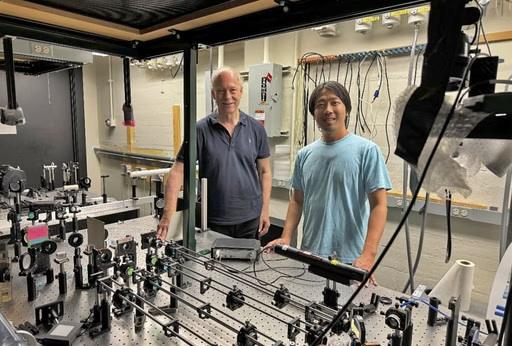
Demonstrating the remarkable scale of their hardware, CHI’s current prototype is roughly the size of just two ordinary dinner tables. Despite its modest physical dimensions, the benchtop system has already successfully achieved staggering pressures of 350 gigapascals while utilizing only tens of millijoules of energy. This breakthrough in scale and efficiency translates directly into unprecedented speed for the engineering team. While legacy fusion programs must wait years between iterations, CHI’s modular design allows for rapid, weekly testing and continuous hardware upgrades. This agile build-test-fix framework mirrors the rapid innovation cycles historically seen in the modern space and defense industries, bringing a fresh, software-like velocity to hard-tech energy development.
The newly secured $6.2 million seed financing will directly fund the physical realization of CHI’s next phase of growth. The capital will be deployed to construct the company’s inaugural compact fusion reactor in Massachusetts, a process that includes procuring an advanced ultrafast laser, specialized optical components, and precision neutron diagnostics. Furthermore, the company plans to utilize a portion of the funds to expand its specialized technical team, bringing in top-tier engineering and physics talent to accelerate its development roadmap.

While the ultimate promise of fusion power is a carbon-free energy grid, CHI has identified a critical, immediate bottleneck in the existing nuclear fuel supply chain: a severe global shortage of tritium. Tritium is a rare, radioactive isotope of hydrogen that serves as an essential fuel source for ongoing fusion research reactors worldwide. Because of its scarcity and the immense difficulty of sourcing it, tritium currently commands a staggering market price of approximately $33 million per kilogram.
Dr. Yun Kai, co-founder and Chief Executive Officer of Cambridge Heavy Industries, emphasized the strategic importance of addressing this niche before scaling toward full-scale energy production. Fusion power leaders face a looming tritium supply bottleneck that threatens to severely slow down the growth and testing schedules of the entire sector. By positioning its technology to produce this critical isotope locally and efficiently, CHI believes it can unlock a major revenue stream while directly supporting the broader advancement of the global fusion industry. Beyond tritium production, the company has also highlighted promising commercial applications for its compact neutron sources, particularly in the fields of material defect engineering and advanced neutron imaging.
The oversubscribed seed funding round was led by Azolla Ventures, a prominent venture capital firm focused on scaling high-impact climate and energy technologies. The round also drew participation from a diverse group of strategic investors, including Overlay, the Mass Clean Energy Center, the Neta Foundation, the Rothrock family, and P3A, signaling strong institutional confidence in both the founding team and the underlying physics of the company’s approach.

Matthew Nordan, co-founder and General Partner at Azolla Ventures, pointed to the simplicity and elegance of CHI’s engineering philosophy as a primary driver for the firm’s investment. He noted that Cambridge Heavy Industries’ technology possesses the rare advantage of being easily demonstrated on a benchtop and rapidly assembled in mere days using standard, readily available optical components. By applying a rapid test-fail-fix model to the notoriously difficult physics of nuclear fusion, Azolla Ventures and the broader investor syndicate see a highly promising, capital-efficient pathway toward making commercial fusion a tangible reality.