





Founded in 2017 and headquartered in San Francisco, Optivolt specializes in the development of sophisticated power electronics and intelligent panel technologies. The company’s core innovation involves tightly integrating power management, continuous monitoring, and vital safety functions directly into the architecture of solar panels themselves. This streamlined approach minimizes the reliance on bulky, separate hardware components and simplifies deployment across both residential rooftops and massive utility-scale solar installations.
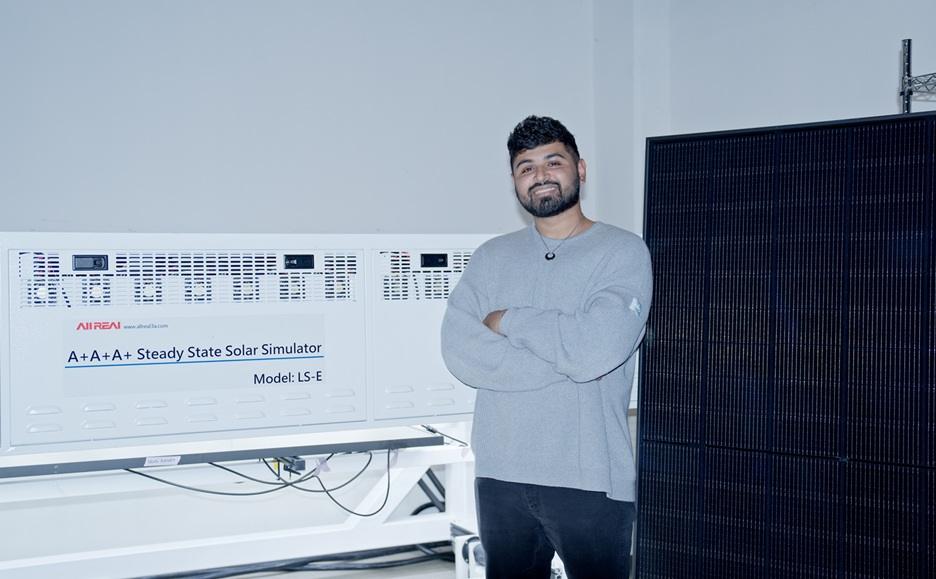
For decades, the fundamental architecture of conventional solar panels has remained largely passive, leaving them vulnerable to significant energy losses when individual cells underperform due to shading, accumulated dust, or natural degradation. In standard configurations, when a fraction of a solar panel experiences reduced sunlight or obstruction, the performance of the entire connected series can be dragged down, resulting in disproportionate power drops. Optivolt’s signature Power Balancer technology directly tackles this persistent industry challenge by dynamically redistributing energy among groups of cells in real time.
By replacing conventional system architectures with its integrated approach, Optivolt’s technology simultaneously builds in rapid shutdown mechanisms and granular monitoring capabilities. This removes the industry’s historical need for separate power optimization and safety equipment, streamlining both installation and ongoing maintenance. According to internal testing conducted by the company, solar panels equipped with Optivolt’s technology delivered up to six times as much power as traditional panels utilizing bolted-on optimizers when subjected to defined shade scenarios.

The newly announced $32 million in Series A funding will be deployed primarily to scale up manufacturing operations and accelerate the commercial rollout of the company’s technology across a broad spectrum of residential and utility-scale projects. Notably, these expansion plans include specialized projects aimed at supplying clean, highly efficient power to artificial intelligence data centers, which face unprecedented energy demands and require ultra-reliable power backbones.
Reflecting on the milestone, Rohit Kalyanpur, CEO and founder of Optivolt, emphasized the lengthy journey and first-principles engineering behind the platform. For nine years, the company has worked to rebuild the solar panel from the ground up, embedding aerospace-grade power electronics capable of responding to the natural world as it actually exists, rather than under the sterile, idealized conditions of a laboratory. The resulting system represents the market’s first solar panel array that is capable of thinking for itself—adapting seamlessly to shade, shifting weather patterns, dust accumulation, and long-term degradation in real time to capture energy that conventional systems typically leave behind.

The Series A funding round was led by VXI Capital, a specialized hard tech fund established by the former Chief Technology Officer of the Defense Innovation Unit of the U.S. Military. The financing round also featured strategic participation from RA Capital, Valo Ventures, and Atlas Innovate. With this latest injection of capital, Optivolt has now raised a cumulative total of $42 million since its inception.
Orin Hoffman, Managing Director at VXI Capital, underscored the broader implications of the investment for the future of the energy sector, noting that the upcoming era of global power generation will not be built simply by deploying more of the same passive solar panels that have dominated the market for years. Instead, Hoffman noted that the transition will rely on making solar technology intelligent enough to serve as the foundational backbone of the modern global power grid. Having spent nearly a decade developing the foundational architecture for that future, Optivolt is now positioned to transition from a technical breakthrough into the primary platform upon which the next generation of solar energy systems will be constructed.