





Cambridge Heavy Industries (CHI), an emerging developer of advanced fusion technology, has officially emerged from stealth mode with the announcement of a $6.2 million seed funding round. The fresh capital is earmarked for a transformative goal: the construction of the company’s first compact, modular fusion reactor. By reimagining traditional laser-based fusion architectures, CHI aims to dramatically reduce the physical footprint and capital expenditure typically associated with nuclear fusion research, setting the stage for a new era of clean energy transition and industrial isotope production.
Founded in 2025 as a spinout from the Massachusetts Institute of Technology (MIT), Cambridge Heavy Industries was established by a multidisciplinary team of co-founders, including CEO Dr. Yun Kai, Raffi Freeman, Professor Keith Nelson, and Dr. Steve Kooi. Together, the founding team set out to tackle some of the most persistent bottlenecks in the fusion sector. While the company’s ultimate, long-term vision is to generate scalable and reliable fusion energy, its immediate technological focus centers on developing benchtop-scale, modular systems that utilize commercially available lasers to drive fusion reactions.
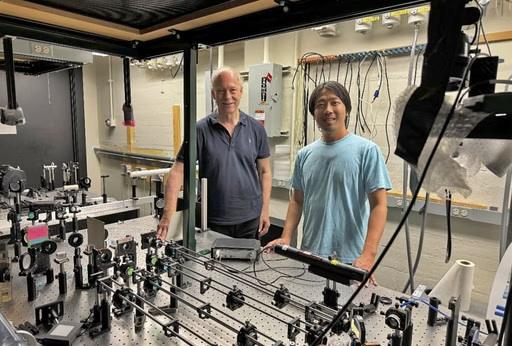
Unlike traditional magnetic confinement or massive inertial confinement facilities that require sprawling complexes and years of dedicated engineering for a single experimental campaign, CHI’s modular approach relies on standard optical components. According to the company, this design philosophy fundamentally transforms the research and development lifecycle. Traditional fusion development programs often grapple with years-long development cycles and prohibitive costs. In contrast, Cambridge Heavy Industries has engineered a system that enables rapid, iterative testing and upgrades on a weekly basis.
At the heart of this capability are major advances in shockwave science achieved by the startup. CHI reports that its technology enables compression efficiency that is roughly 400 times higher than previous laser-based fusion approaches, and it achieves these milestones at a fraction of the capital expenditure required by legacy systems. Demonstrating the efficacy of this approach, the company’s prototype system—which occupies a physical footprint roughly the size of just two dinner tables—has successfully achieved staggering pressures of 350 gigapascals while consuming only tens of millijoules of energy.
While the pursuit of commercial fusion power remains a monumental global challenge, Cambridge Heavy Industries has strategically positioned its initial systems to address a more immediate and pressing bottleneck within the nuclear science community: the production of tritium. Tritium is a rare, radioactive isotope of hydrogen that serves as an essential fuel source for fusion research reactors worldwide. However, the global supply of tritium is exceptionally constrained, leading to severe supply shortages that threaten to decelerate the broader fusion sector. Currently, the isotope commands an astronomical market price of approximately $33 million per kilogram. By deploying its compact fusion technology specifically for tritium production, CHI hopes to alleviate a critical supply chain vulnerability that could otherwise stall the commercialization of fusion energy.

Beyond tritium, the company has identified several other valuable commercial applications for its high-performance neutron sources. These include material defect engineering, where intense neutron fluxes are used to test and analyze the structural integrity of advanced materials destined for extreme environments, as well as advanced neutron imaging techniques used across various industrial and scientific sectors.
The newly secured $6.2 million in seed funding will provide the financial runway necessary to accelerate these ambitions. The capital will be deployed directly toward the construction of CHI’s inaugural compact fusion reactor at its primary research facility in Massachusetts. Specific expenditures will include the procurement of an advanced ultrafast laser system, precision optical components, and sophisticated neutron diagnostic equipment. Additionally, the funding will enable the startup to expand its specialized technical team, bringing in top-tier engineering and physics talent to support the next phase of prototype scaling and testing.
Dr. Yun Kai, co-founder and Chief Executive Officer of Cambridge Heavy Industries, emphasized the strategic importance of the company’s mission in addressing the broader industry’s infrastructure gaps. Noting the severity of the market dynamics, Dr. Kai highlighted that leaders across the fusion power landscape are currently confronting a profound tritium supply crisis that threatens to impede industry-wide progress. By focusing on compact, accessible, and high-efficiency systems, CHI believes it is uniquely positioned to resolve this challenge, expressing gratitude to its financial and operational partners for supporting the company through this pivotal milestone.

The seed funding round was spearheaded by Azolla Ventures, a prominent venture capital firm focused on climate solutions and breakthrough technologies. The financing also attracted a diverse group of strategic investors, including Overlay, the Mass Clean Energy Center, the Neta Foundation, the Rothrock family, and P3A, reflecting broad confidence from both public-sector innovation agencies and private climate tech investors.
Matthew Nordan, co-founder and General Partner at Azolla Ventures, underscored the distinctive nature of CHI’s engineering paradigm. Nordan pointed out that the company’s technology stands out because it can be demonstrated on a simple benchtop and assembled in a matter of days using readily available, standard optical components. Drawing a parallel to other fast-moving technology sectors, Nordan noted that the same rapid test-fail-fix iteration model has historically driven breakthroughs in modern space exploration and defense technologies, expressing optimism that this agile philosophy could finally unlock commercial viability for fusion energy.
With its funding secured, laboratory space expanding, and prototype architecture validated under extreme pressures, Cambridge Heavy Industries is poised to accelerate its development timeline. As the startup transitions from its stealth origins into active construction and deployment, its progress will be closely watched by clean energy advocates, investors, and the global scientific community eager for practical solutions to the world’s most complex energy transition challenges.