





Cambridge Heavy Industries (CHI), an emerging force in nuclear fusion technology and a spinout from the Massachusetts Institute of Technology, has officially emerged from stealth mode. The company announced today that it has successfully raised $6.2 million in a seed funding round. The freshly secured capital will be channeled directly into constructing its first compact fusion reactor at its Massachusetts facility. This milestone development aims to validate a novel technological approach designed to radically decrease both the physical size and the capital expenditure associated with conventional laser-based fusion systems.
Founded in 2025, CHI is led by a team of visionary co-founders, including CEO Dr. Yun Kai, Raffi Freeman, Professor Keith Nelson, and Dr. Steve Kooi. The enterprise was born out of advanced research conducted at MIT with the ultimate long-term ambition of generating clean, limitless fusion energy. However, unlike traditional approaches that require massive infrastructure and multi-year development timelines, CHI’s strategy relies on commercially available lasers to drive fusion reactions through modular, benchtop-scale technology.
Reinventing the Fusion Development Cycle
One of the most significant bottlenecks in the nuclear fusion sector has historically been the agonizingly slow pace of research and development. Traditional magnetic confinement and large-scale laser fusion facilities often require years to build, test, and upgrade, leaving researchers waiting extended periods between experimental runs. Cambridge Heavy Industries aims to upend this paradigm entirely.
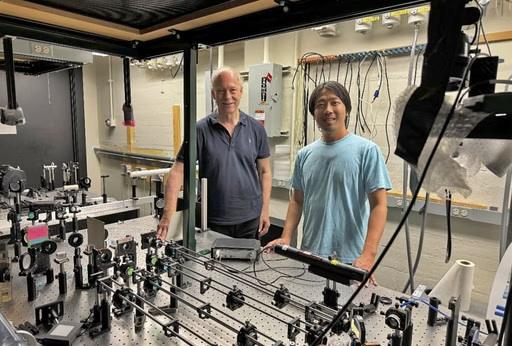
According to the company, its proprietary technology enables dramatically accelerated testing and development cycles. CHI’s modular benchtop approach allows engineers to conduct testing and implement upgrades on a weekly basis, a stark departure from the traditional multi-year R&D cycles that have constrained the industry for decades.
This agility is underpinned by breakthrough advancements in shockwave science. CHI reports that its systems achieve compression efficiency up to 400 times higher than previous laser-based fusion approaches, and they do so at a fraction of the capital cost. Demonstrating the efficacy of this approach, the company’s current prototype—which occupies an area roughly the size of just two standard dinner tables—has successfully achieved extreme pressures of 350 gigapascals while utilizing only tens of millijoules of energy.
Targeting the Critical Tritium Supply Crunch
While the ultimate horizon for fusion technology is clean power generation, Cambridge Heavy Industries has established a pragmatic, near-term commercial strategy. Its initial systems will focus heavily on producing tritium, an ultra-rare, radioactive isotope of hydrogen that serves as an essential fuel source for ongoing fusion research reactors worldwide.
The commercial rationale for this focus is stark. According to CHI, the global fusion sector faces a severe tritium supply shortage that threatens to create a major bottleneck for the entire industry. Currently, tritium commands an astronomical market price of approximately $33 million per kilogram. By positioning itself as a reliable producer of this scarce resource, CHI intends to solve an immediate supply chain vulnerability while simultaneously advancing its core fusion technology.

Beyond tritium production, the company has identified secondary commercial applications for its high-performance neutron sources. These include advanced material defect engineering and sophisticated neutron imaging, opening up additional revenue streams and industrial use cases for its compact technology.
The new infusion of capital will enable CHI to scale its operations substantially. The company plans to use the $6.2 million to build its inaugural compact fusion reactor at its Massachusetts headquarters, procure critical hardware including an ultrafast laser system, acquire specialized optical components, build out advanced neutron diagnostics, and expand its engineering and scientific team.
Addressing Industry Bottlenecks
Dr. Yun Kai, co-founder and Chief Executive Officer of Cambridge Heavy Industries, emphasized the strategic importance of targeting the tritium shortage during this critical phase of the company’s growth.
"Fusion power leaders have a tritium supply problem that could significantly slow down the sector’s growth," said Dr. Kai. "Our technology is in the unique position to solve this challenge. We are appreciative of our investors for their financial and operational support in bringing us to this important milestone."

The seed funding round was spearheaded by Azolla Ventures, a prominent venture capital firm focused on climate solutions and breakthrough technologies. The round also saw strong participation from a diverse group of strategic investors, including Overlay, the Mass Clean Energy Center, the Neta Foundation, the Rothrock family, and P3A, signaling robust confidence from both public and private backers in the viability of CHI’s engineering model.
Matthew Nordan, co-founder and General Partner at Azolla Ventures, highlighted the unique advantages of CHI’s hardware philosophy, drawing parallels to successful paradigms seen in other high-tech sectors.
"Cambridge Heavy Industries’ technology can be demonstrated on a benchtop and assembled in days using standard optical components," noted Nordan. "The same rapid test/fail/fix model is what brought us modern space and defense technologies; we see it as a promising approach to make fusion viable."