


The EUR/USD currency pair recently managed a modest recovery after briefly edging lower to test the 1.1111 level. However, upward momentum has proven fragile and remains clearly capped underneath the stubborn 1.1276 resistance barrier. As the foreign exchange market navigates the current trading week, the initial technical bias for the major currency pair remains predominantly neutral, with further downside movement appearing increasingly favored by prevailing market dynamics.
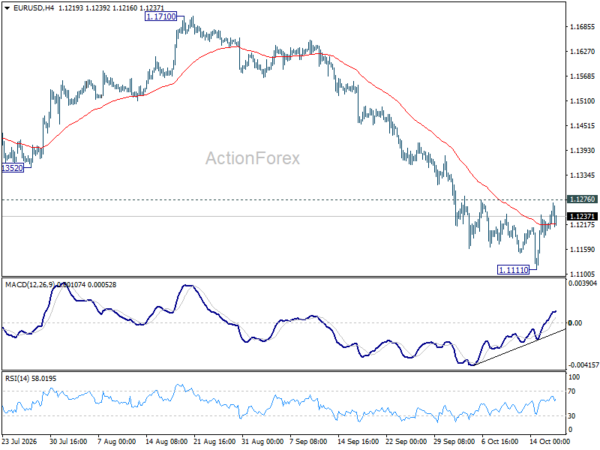
Market participants closely monitoring the pair note that a decisive break below the 1.1111 threshold would invalidate the recent minor recovery and extend the larger downward correction originating from the medium-term top of 1.2081. Such a decline would open the door for a deeper descent toward the 1.0904 Fibonacci retracement level. Despite this bearish near-term bias, technical analysts have highlighted a notable bullish divergence currently forming in the 4-hour Moving Average Convergence Divergence (MACD) indicator. This technical condition suggests that selling pressure could encounter exhaustion if buyers manage to muster sufficient momentum. Consequently, a firm and sustained break above the 1.1276 resistance level would signal that a short-term bottoming process is underway, potentially triggering a stronger corrective rebound toward the 55-day Exponential Moving Average (EMA), which is currently situated near the 1.1410 mark.
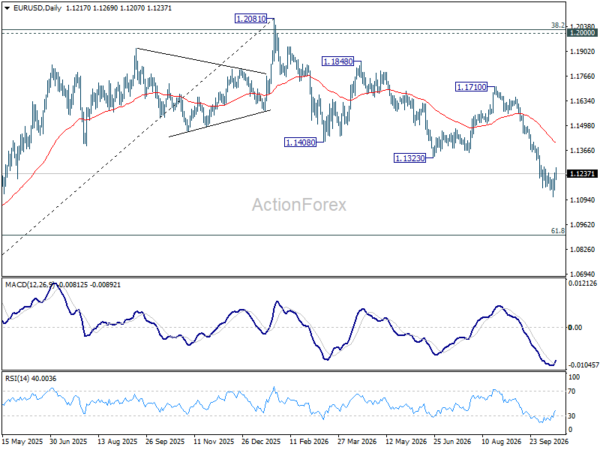
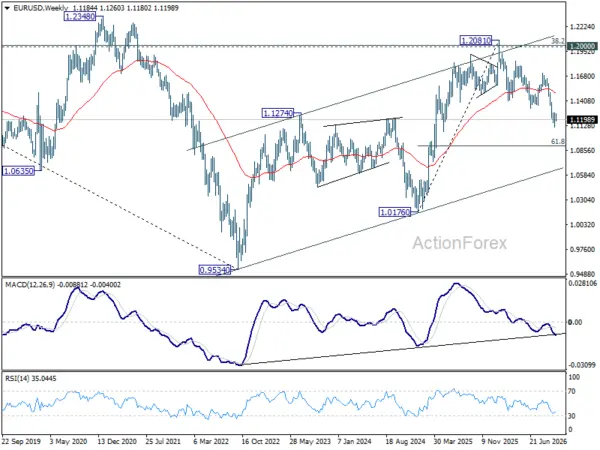
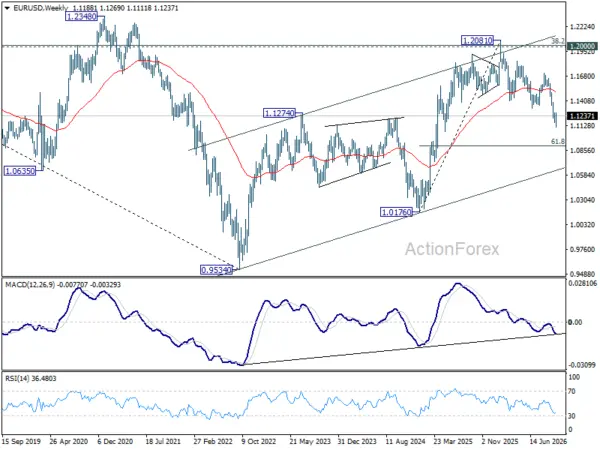
Expanding the analytical lens to examine the broader medium-term picture, recent price developments indicate that the persistent downward correction from the 1.2081 medium-term peak could be actively reversing the preceding broader recovery phase. This particular rise had previously originated from the 2025 low of 1.0176, and potentially even traces its roots back to the significant 2022 low of 0.9534. As the downward structure unfolds, deeper losses remain anticipated, with the market increasingly eyeing the 61.8% retracement level of the entire upswing from 1.0176 to 1.2081, which converges squarely at 1.0904. For the time being, overall market risk will firmly stay skewed to the downside as long as the crucial 1.1710 resistance ceiling remains intact during any potential relief rallies or temporary market rebounds.
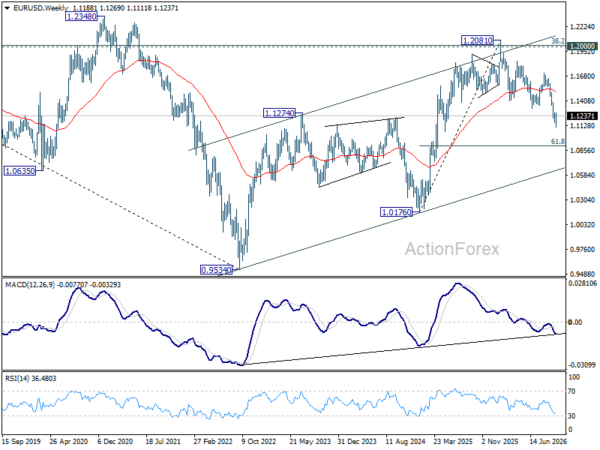
Looking further out at the long-term historical charts, immediate technical focus within the foreign exchange landscape has shifted toward the 55-month Exponential Moving Average, which is presently tracked at 1.2246. A sustained and definitive break below this crucial long-term moving average would provide substantial technical backing to the argument that the entire recovery sequence from the 2022 low of 0.9534 has fully completed its cycle as a three-wave corrective move, topping out at the 1.2081 peak. This crucial rejection materialized near the 38.2% retracement of the massive historical decline from the 2008 high of 1.6039 down to the 0.9534 low, a zone calculated at 1.2019 and sitting comfortably close to the major psychological milestone of the 1.2000 level. Should this bearish scenario unfold, it would serve to keep the broader, long-term secular downtrend extending downward from the 2008 peak of 1.6039 firmly intact and dictating the overarching trajectory for the euro against the US dollar in the long run.