



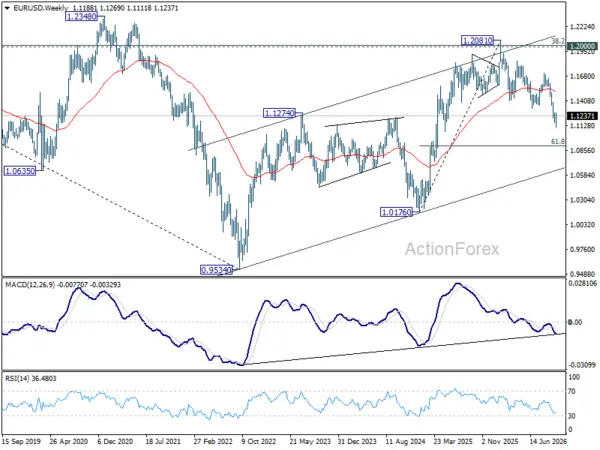
The EUR/USD currency pair recently found a measure of support and attempted a modest recovery after briefly edging lower to test the 1.1111 level. Despite this minor bounce, the broader upside momentum for the euro remains tightly capped, with immediate resistance holding firm at the 1.276 area. As the foreign exchange market navigates the current trading week, the initial bias for the major currency pair remains predominantly neutral, leaving the door open for further downside pressure in the near term.
Market participants closely monitoring the technical landscape note that a decisive break below the 1.1111 floor would likely trigger an extension of the larger downward trajectory that began at the 1.2081 medium-term peak. Such a move would pave the way for a deeper slide toward the 1.0904 Fibonacci retracement level, a crucial technical marker that traders are watching to gauge the extent of the currency pair’s current correction.
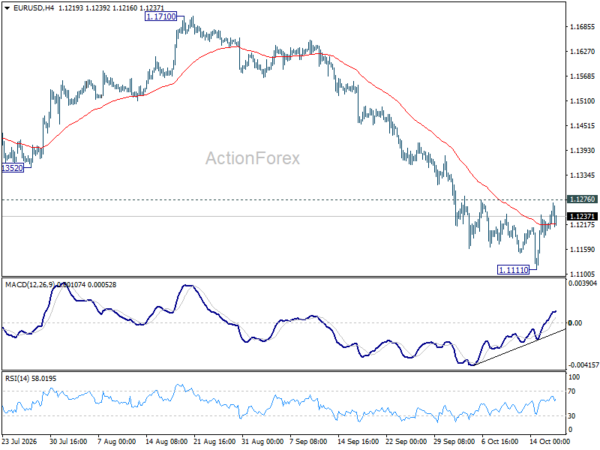
However, currency strategists advise caution against prematurely discounting the potential for a bullish reversal. Within the shorter-term timeframe, specifically on the four-hour charts, a noticeable bullish divergence condition has emerged in the Moving Average Convergence Divergence (MACD) indicator. This technical signal suggests that underlying selling momentum may be losing steam. Consequently, should the exchange rate achieve a firm and sustained break above the 1.1276 resistance barrier, it would serve as an early technical indication that a short-term bottoming process is underway. A breakthrough of this magnitude could subsequently catalyze a much stronger rebound, potentially driving the pair toward the 55-day exponential moving average, which is currently positioned at the 1.1410 mark.
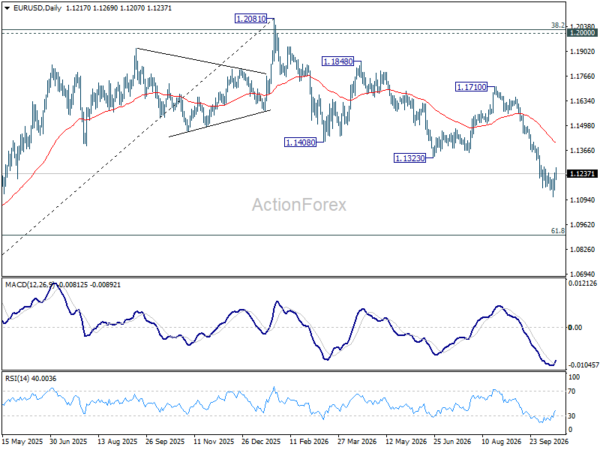
Zooming out to examine the bigger picture, the recent price developments surrounding the EUR/USD indicate that the downward correction from the 1.2081 medium-term top may be actively reversing the preceding upward trend. This broader rise originated from the 2025 low of 1.0176, and analysts suggest the current correction might even be challenging the longer-term recovery that started at the 2022 low of 0.9534. As long as the overhead resistance at 1.1710 remains intact during any potential relief rallies, overall market risk will continue to lean heavily toward the downside, setting the stage for the anticipated descent toward the 61.8% retracement level of the 1.0176 to 1.2081 move, located at 1.0904.
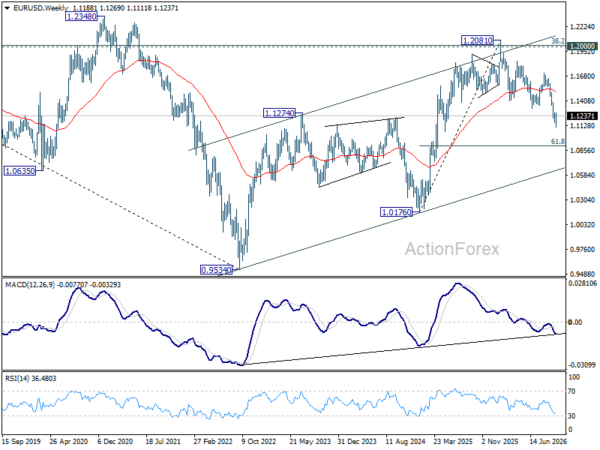
From a long-term perspective, market attention is increasingly converging on the 55-month exponential moving average, which currently stands at 1.1246. A sustained and definitive break below this crucial monthly indicator would carry significant technical implications. Specifically, it would strongly argue that the extensive recovery rally from the 2022 low of 0.9534 has officially reached its conclusion. In this scenario, the move to 1.2081 would be classified as a completed three-wave corrective pattern. This corrective wave stalled precisely upon encountering heavy selling pressure near the 38.2% retracement of the monumental 1.6039 to 0.9534 decline, which sits at 1.2019—comfortably close to the psychologically significant 1.2000 parity threshold. Should this bearish scenario unfold, it would leave the overarching long-term downtrend extending all the way back from the 2008 high of 1.6039 firmly intact, dictating the broader macroeconomic trajectory for the world’s most heavily traded currency pair.