



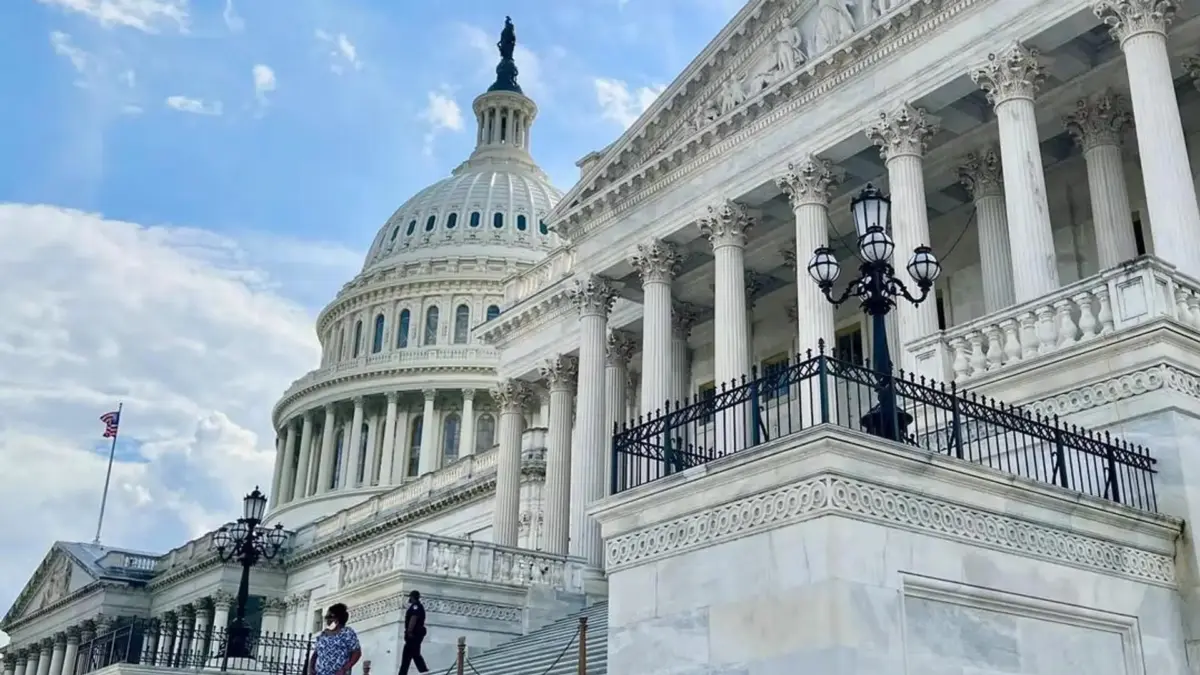
The United States Supreme Court has not yet indicated whether it will wade into a high-profile legal battle surrounding prediction markets, but the legal and regulatory pressure is mounting rapidly. A wave of influential amicus briefs has flooded the nation’s highest court, while the Commodity Futures Trading Commission (CFTC) has moved swiftly to cement its own regulatory stance through an interim final rule and a separate proposal.
The core dispute centers on a deeply divisive question: whether sports-based prediction market contracts legally qualify as "swaps" under federal law, or if they are simply gambling products that should remain under the exclusive purview of state and tribal regulations.
The brewing conflict has set up a massive test of federal regulatory power versus state authority, drawing in heavyweights from the political arena, professional sports leagues, financial regulatory agencies, and tribal nations. With a clear circuit court split now defining the legal landscape—featuring two federal appellate courts ruling that sports-focused prediction markets are gambling products subject to state rules, and one ruling that the matter falls firmly under CFTC jurisdiction—observers are watching closely to see if the Supreme Court will step in to resolve the chaos.
The Legal Battleground and the Dodd-Frank Debate
Last week, numerous parties lined up to submit amicus briefs to the Supreme Court, overwhelmingly urging the justices to take up the case and side with the states. Among the most prominent filings were those submitted by former U.S. Senator Chris Dodd and former CFTC and Securities and Exchange Commission Chair Gary Gensler, both of whom played pivotal roles in shaping the very financial legislation at the center of the current debate.
The controversy heavily revolves around the 2010 Dodd-Frank Wall Street Reform and Consumer Protection Act. Proponents of state-level oversight argue that the landmark financial reform law was never intended to give the CFTC sweeping authority to usurp state governments and preempt local laws governing gambling.
In his amicus brief, former Senator Dodd argued sharply against the notion that the statute granted federal regulators carte blanche over consumer-facing wagering products. He took direct issue with a recent ruling by a Third Circuit Court of Appeals panel, which voted 2-1 to hand the CFTC jurisdiction over swaps and prediction markets covering sporting events. The Third Circuit majority drew a line distinguishing financial derivatives from traditional sports wagers, a distinction that Dodd and other legal experts have strongly challenged.
Dodd’s filing pointed to complex modern betting products to illustrate the absurdity of classifying them as legitimate financial hedging tools. Parlays that chain together multiple wagers—such as those tied to point spreads or player performances across different games, cities, and sports—do not facilitate hedging or genuine price discovery, the filing argued. Furthermore, such arrangements lack the potential financial, economic, or commercial consequences required to qualify as swaps under the Commodity Exchange Act (CEA).
Addressing the CFTC’s persistent claims of "exclusive jurisdiction," Dodd’s brief emphasized that the statutory grant of exclusive regulatory authority for covered financial instruments does not act as an express preemption provision capable of immunizing every single contract listed on a designated contract market (DCM) from otherwise applicable state and tribal laws.
Gary Gensler, who helped implement the regulatory framework of the Dodd-Frank Act, echoed these sentiments in a separate brief. Gensler has consistently maintained that the federal statute does not give the CFTC the mandate or the authority to override state-level gambling regulations, a position he has previously advanced during earlier stages of appellate litigation.
Broad Coalition Pushes Back Against Federal Preemption
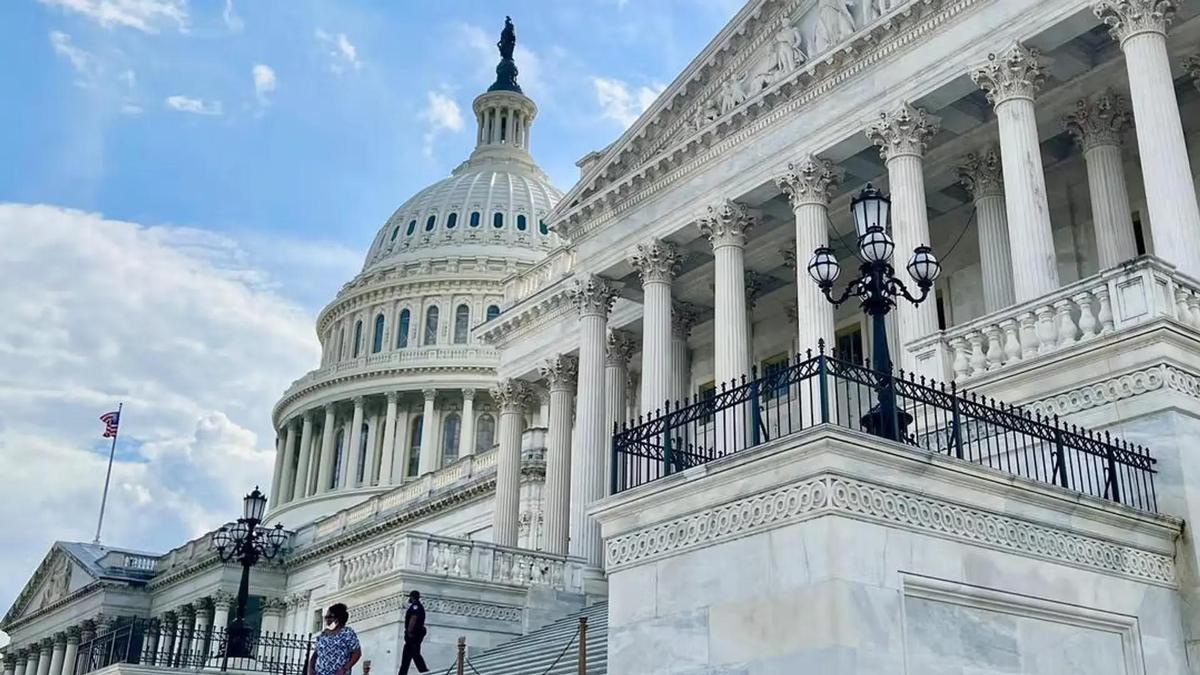
The pushback against federal preemption has attracted a remarkably diverse array of interests, all warning the Supreme Court of the destabilizing consequences of allowing prediction market platforms to operate outside of state gambling frameworks.
The National Football League (NFL) formally entered the fray with its own amicus brief, signaling the immense financial and operational stakes professional sports organizations hold in the outcome. The league sharply criticized what it characterized as the CFTC’s "laissez-faire" regulatory approach to event contracts. The NFL pointed to a dangerous regulatory divergence between how traditional sports betting companies are strictly supervised by state authorities and how prediction market providers operate under looser federal designated contract market licenses.
At the same time, a massive coalition consisting of 39 states, the District of Columbia, and 145 tribal nations filed joint briefs urging the Supreme Court to intervene. These entities argued that unregulated or federally preempted sports prediction markets threaten local consumer protections, undermine established state gaming compacts, and siphon critical tax revenues away from local governments and indigenous communities. They were joined by prominent gaming industry groups, including the Casino Association of New Jersey and the American Gaming Association, which warned that failing to curb these platforms under state gambling laws creates a fragmented regulatory environment ripe for evasion.
The CFTC Doubles Down With New Rules
As the legal pressure mounts in the judicial branch, federal regulators are simultaneously working to solidify their regulatory perimeter. On Friday, the CFTC responded to the unfolding legal crisis by releasing two distinct regulatory actions.
The agency issued an interim final rule—which is already in effect—alongside a separate rule proposal designed to clarify its definitive interpretation of how event contracts fit into the statutory definition of a "swap." Under the newly articulated framework, the CFTC draws a distinction between traditional casino-style gambling, which it concedes falls outside its purview, and event contracts, which it insists remain squarely within its regulatory jurisdiction.
Through these proposals, the federal regulator is seeking to formally codify its authority over event contracts tied to sports, politics, cultural phenomena, and weather-related events. By explicitly incorporating these categories into the definition of swaps regulated under the Commodity Exchange Act, the agency is attempting to reinforce its legal standing amidst ongoing courtroom challenges.
Next Steps in the Judicial Process
Despite the flurry of amicus briefs and regulatory maneuvering, the Supreme Court has yet to announce whether it will grant certiorari and formally hear the underlying case. The timeline for the court’s initial deliberations was extended after Kalshi, a prominent prediction market platform central to the litigation, requested and received an extension to file its response.
Kalshi’s formal response to the petition is now scheduled to be submitted to the Supreme Court by November 9, 2026. Until that response is filed and the justices review the extensive arguments laid out by the states, federal regulators, sports leagues, and financial architects of the Dodd-Frank Act, the ultimate fate of prediction markets in the United States remains hanging in a precarious judicial balance.