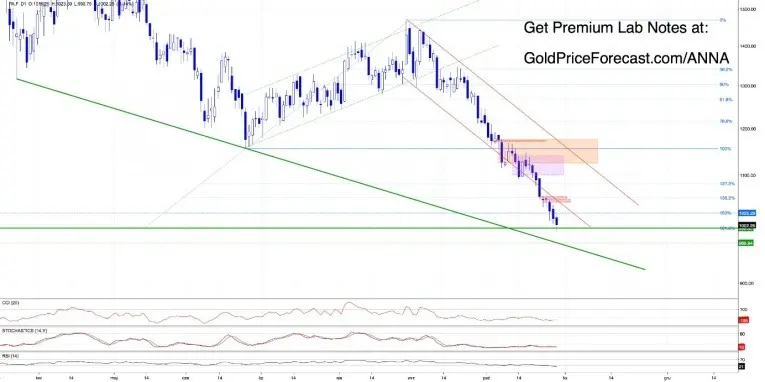




Gold and silver are finding their footing once again. And while the broader financial markets have been rattled lately, the underlying systemic problems driving investors toward precious metals haven’t gone away.
Gold has recovered more than 1% in recent trading, climbing to around $4,200 an ounce, while silver is showing even more relative strength, jumping almost 3% to trade near $61.50 an ounce. This resurgence comes as the U.S. dollar’s recent rally has stalled and Treasury yields have declined for two consecutive sessions, giving both safe-haven metals some much-needed breathing room after a difficult stretch.
Recently, rising interest rates and a stronger dollar delivered a punishing one-two punch to precious metals. Higher yields made interest-bearing government debt more attractive to yield-hungry investors, while a stronger dollar made dollar-denominated gold significantly more expensive for buyers holding foreign currencies overseas.
Now those immediate headwinds have eased, leaving analysts and traders to wonder whether this rebound can gather meaningful momentum, or if the next round of economic headlines will simply knock the metals back down. That inevitable uncertainty brings the conversation right back to the Federal Reserve and the increasingly uncomfortable position central bankers find themselves in as they try to balance inflation control with economic stability.
The latest Federal Reserve meeting minutes leave another interest rate hike firmly on the table. Next week’s upcoming consumer and producer inflation reports could easily give policy officials more ammunition to keep monetary policy tight for longer, which would potentially put renewed downward pressure on gold and silver prices.
However, market observers point out that there is a fundamental flaw in treating every uptick in interest rates as inherently bad news for gold. Investors must ask the critical question of why those rates are rising in the first place.
Gold Newsletter editor Brien Lundin highlighted this dynamic in a commentary published by Money Metals this week. If investors are demanding higher yields because they are genuinely worried about mounting government debt, stubborn inflation, and depreciating fiat currencies, those exact same macroeconomic concerns also provide them with compelling reasons to own physical gold.
A higher interest payment does not automatically make a government IOU safer. Instead, it frequently means that investors simply require more financial compensation to take on the escalating risk of holding sovereign debt.
Lundin also noted that Western investors, leveraged traders, and automated algorithmic trading systems are currently playing a much larger role alongside traditional central-bank buyers in driving market activity. That shifting dynamic can mean both bigger rallies during times of stress and sharper, more volatile corrections when market sentiment shifts.
Washington officials would certainly like the public to believe that the right interest-rate decision from the central bank can somehow magically make up for years of reckless fiscal spending. But a Federal Reserve policy announcement cannot force Congress to balance its books, and another reassuring press conference from monetary authorities cannot return the purchasing power that everyday Americans have already lost to inflation.
That fundamental disconnect is why long-term savers need to look far beyond the next central bank meeting and critically consider what the current financial system is doing to the value of their money.
And speaking of a misplaced confidence in government institutions, another astonishing gold-related story broke this week that is almost hard to believe. Money Metals reporter Ken Silva covered major new developments in the federal case of former CIA officer David Rush, who pleaded guilty to one count of wire fraud after creating a fake spy program specifically designed to siphon government funds.
Upon investigating the scheme, federal authorities discovered roughly $40 million worth of physical gold bars stored directly at his home.
The recovery involved approximately 303 individual gold bars, each weighing about a kilogram. That is quite an extraordinary stash for an individual supposedly carrying out legitimate government business. Furthermore, the investigative report details how Rush directed about $145 million in misappropriated funds to a private holding company, which he subsequently used to acquire four luxury residential properties in Florida.
But the revelations regarding the case go far beyond simply stolen taxpayer money.
New plea documents filed in the case describe his disclosure to a foreign government official of sensitive information regarding a clandestine human intelligence source. Federal prosecutors warned during proceedings that the unauthorized disclosure could severely endanger the source and the American intelligence officers working directly with that individual.
Rush now faces up to 20 years in federal prison on the single wire-fraud count to which he pleaded guilty. According to anonymous sources cited in Silva’s report, the federal government ultimately struck the plea agreement in large part to avoid exposing sensitive Central Intelligence Agency secrets in open court.
The situation leaves taxpayers in the frustrating position of funding the initial intelligence operation, absorbing the massive financial losses, and still being left to wonder how much of the full story they will ever be allowed to hear.
Secrecy unquestionably plays a legitimate role in national security and intelligence work. At the same time, that very same secrecy makes institutional accountability especially important. A government security credential or official title should never be treated as an acceptable substitute for basic honesty or effective independent oversight.
There is also a very practical, everyday reminder embedded in this bizarre case for anyone who owns valuable physical assets: take personal security seriously, maintain careful records of your acquisitions, and remain discreet about the nature and location of your holdings. Owning gold is one crucial part of protecting your personal wealth against systemic risk, but properly safeguarding it is entirely another.
As markets head into the new week, gold and silver have a solid rebound to build upon, major new inflation reports are fast approaching, and the Federal Reserve remains a persistent source of economic uncertainty.
Traders will inevitably react to every incoming news headline, and many will reverse their market positions before the ink on the daily reports is even dry. For everyday savers, however, a sound financial strategy should always maintain a much longer attention span.
Building a precious metals position deliberately, keeping sufficient liquidity on hand for everyday living expenses, and holding reliable financial insurance in the form of physical gold and silver remain prudent courses of action. Because whatever the Federal Reserve decides to do next, your long-term financial future deserves considerably more than Washington’s empty promises.