




In a significant move aimed at accelerating the decarbonization of one of the world’s most carbon-intensive industrial sectors, green building materials manufacturer Fortera and tech giant Meta announced a multi-year partnership centered on the purchase of environmental attribute certificates. Under the newly unveiled agreement, Meta will acquire environmental credits tied to the production of low-carbon cement that boasts a carbon footprint roughly 70 percent lower than traditional ordinary Portland cement (OPC).
The collaboration is designed to tackle a critical bottleneck in clean technology finance. According to Fortera, the multi-year deal provides the long-term revenue visibility required to secure vital commercial financing for the development of new, large-scale production facilities. By establishing a robust corporate demand signal for sustainable building materials, the arrangement demonstrates how major technology companies can leverage their purchasing power to catalyze physical infrastructure investments in heavy industry.
The challenge of decarbonizing the cement sector cannot be overstated. Cement production stands as one of the most formidable hurdles in global climate action, accounting for approximately 8 percent of global carbon dioxide emissions. The traditional manufacturing process releases vast amounts of greenhouse gases both through the chemical reactions involved in heating limestone and through the combustion of fossil fuels required to reach extreme kiln temperatures. Because modern infrastructure, housing, and commercial real estate development rely heavily on concrete, finding scalable alternatives to traditional cement without compromising structural integrity or drastically inflating costs has become a paramount priority for climate strategists and industrial engineers alike.
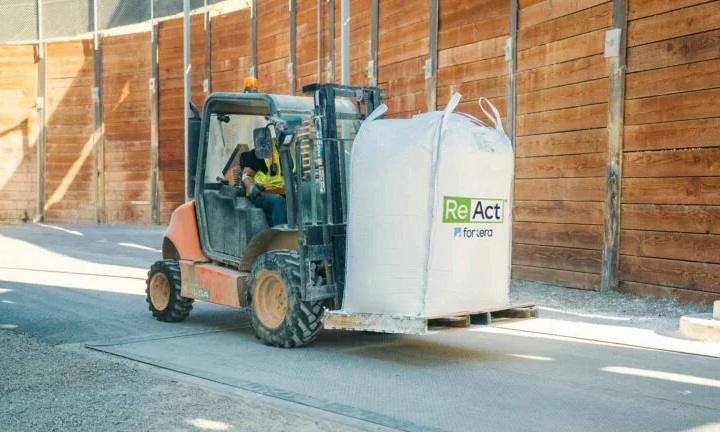
Founded in 2019 and headquartered in California, Fortera has emerged as a prominent player in this space by developing proprietary technology specifically engineered to slash emissions at the source. The company’s innovative ReCarb process captures industrial CO2 emissions directly from manufacturing plants and transforms that waste gas into a valuable chemical feedstock. This captured carbon is then utilized in the production of Fortera’s flagship product, ReAct cement. According to company specifications, ReAct achieves a carbon footprint approximately 70 percent lower than ordinary Portland cement while maintaining cost parity.
Crucially, Fortera’s technology is designed to integrate seamlessly into existing cement and lime manufacturing facilities. Rather than requiring companies to abandon their multi-million-dollar infrastructure, the ReCarb system allows traditional manufacturers to retain their established kilns and distribution networks. This retrofit capability lowers the economic barrier to adoption, enabling industrial operators to transition toward cleaner production methods while remaining competitive in established regional markets.

Ryan Gilliam, Chief Executive Officer of Fortera, emphasized the broader economic and industrial implications of the agreement, noting that leveraging waste carbon as a primary manufacturing ingredient fundamentally shifts the dynamics of industrial sustainability. He explained that turning cement decarbonization into a new economic engine helps safeguard communities whose local economies have historically relied on cement and lime production, ensuring they remain economically resilient throughout the green transition.
Under the terms of the agreement with Meta, the tech company will purchase environmental attribute certificates associated with approximately 200,000 tons of Fortera’s low-carbon cement. The use of environmental attribute certificates—or EACs—allows corporate buyers to address supply chain and scope 3 emissions by financially supporting the creation and expansion of lower-carbon manufacturing capacity, even if the physical products are utilized elsewhere in the supply chain or construction market. In addition to purchasing the certificates, Meta retains the option to directly utilize Fortera’s sustainable cement in its own corporate construction projects and holds provisions to expand both the volume and the duration of the partnership in future years.
The financial backing provided by the agreement carries immediate, tangible impacts for Fortera’s operational roadmap. The company confirmed that Meta’s commitment plays a direct role in supporting the development of the Fortera Cement Plant located in Ste. Genevieve, Missouri. For Meta, the partnership bridges its corporate demand for sustainable building materials with the intentional cultivation of domestic supply chains in regions where the company actively expands its physical footprint. Company representatives noted that the arrangement serves as a practical blueprint for how long-term corporate purchasing commitments can successfully accelerate the integration of alternative materials into traditional construction supply chains.

Devon Lake, Head of Net Zero Strategy at Meta, highlighted the critical role that multi-year corporate commitments play in heavy industry infrastructure development. Lake explained that securing a long-term purchase agreement is precisely what enables heavy industrial projects like a cement plant to successfully secure commercial financing. By helping move the Ste. Genevieve facility from the planning phase into active production, the agreement not only facilitates the creation of local construction and long-term manufacturing jobs in Missouri but also ensures that low-carbon cement becomes commercially accessible to builders and developers operating well beyond Meta’s own corporate portfolio.