



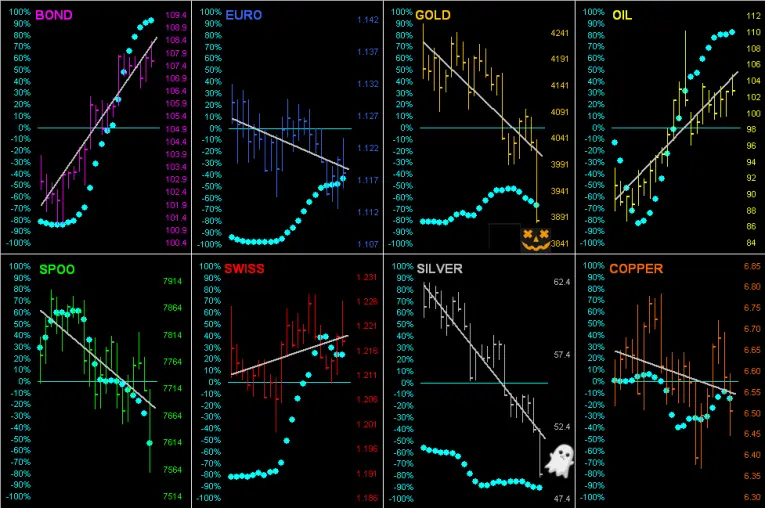
As the trading books for October close out the first ten months of 2026, precious metals investors found little cause for celebration this Halloween. Both gold and silver experienced sharp corrections, extending a difficult period for the sector even as fundamental indicators suggest both metals are trading well below their calculated fair values.
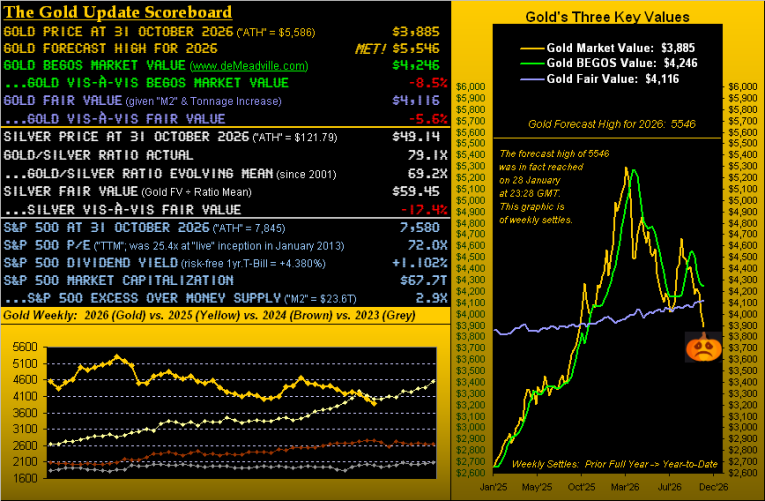
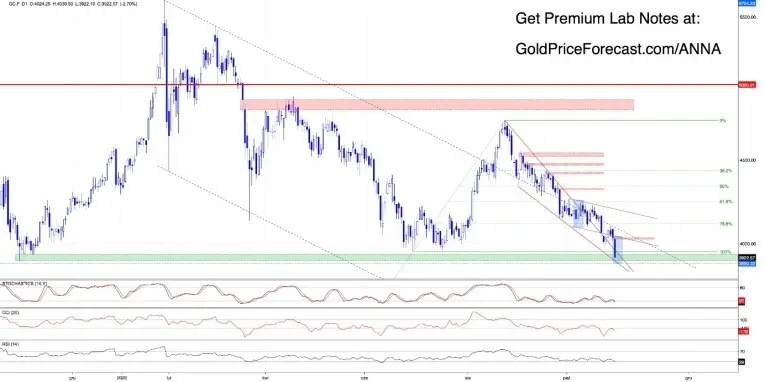
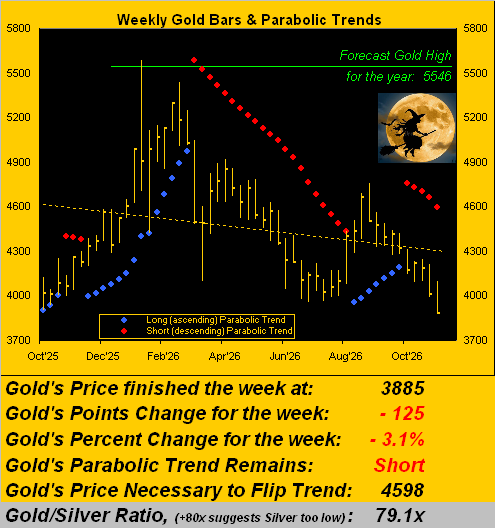
Gold settled the final trading session of October at 3,885, marking a significant 30.5 percent decline from its all-time high of 5,586 reached on January 29. Sister metal silver endured an even steeper drop, closing the month at 49.14, which places it 59.6 percent below its comparable January peak of 121.78. Market analysts had previously pointed to the psychological and structural support level of 4,000 as a crucial floor for gold, positing that the metal would look toward its next upturn as long as the 3900s held firm. However, those expectations faced an immediate setback when gold dipped as low as 3,879 during the final stretch of the month.
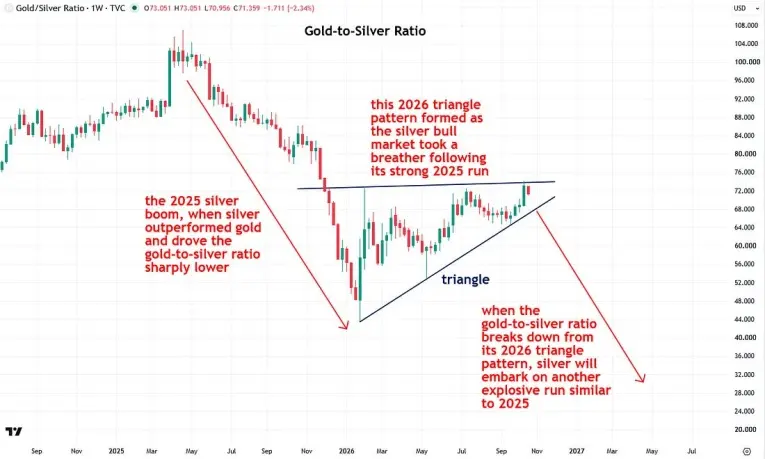
Despite the prevailing downward pressure and concerns over potential further lurches lower, technical and fundamental indicators suggest that both gold and silver are becoming heavily oversold. From a fundamental perspective driven by dollar debasement, gold’s current price of 3,885 sits roughly 5.6 percent below its calculated fair value of 4,116. Silver presents an even more pronounced discount, trading at 49.14, which is an attractive 17.4 percent below its fair value mark of 59.45.
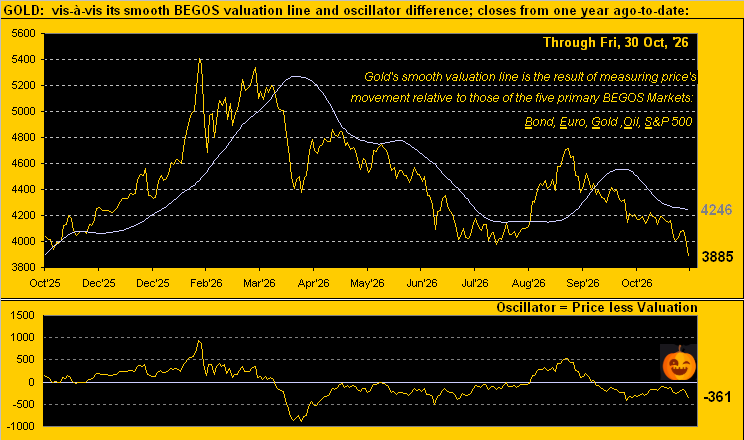
Market historians note that trading significantly below fair value is not unprecedented for the precious metals complex. During the prolonged four-year market cycle from September 2011 into December 2015, gold was widely dismissed by mainstream investors as a valueless relic, with capital heavily favoring high-flying equities of the era. Similar discounting occurred around the COVID-19 pandemic, where gold frequently traded at roughly a 50 percent discount to fair value before staging a massive, historic recovery.
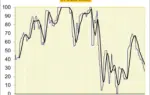
Looking at broader historical performance, gold’s century-to-date return stands at an impressive 1,319 percent at 3,884, outpacing the S&P 500, which sits at 7,680 for a 768 percent gain when including total dividend reinvestment throughout the period. Furthermore, combined technical metrics incorporating Relative Strength, Stochastics, and Bollinger Bands indicate that both gold and silver have reached oversold territory over the final 25 trading sessions extending from late September through the end of October. When evaluated against the broader BEGOS markets, gold is currently priced at an 8.5 percent discount to its aggregate market value of 4,246, leaving traders watching closely to see if the metal can muster enough momentum to reclaim the critical 4,000 floor.

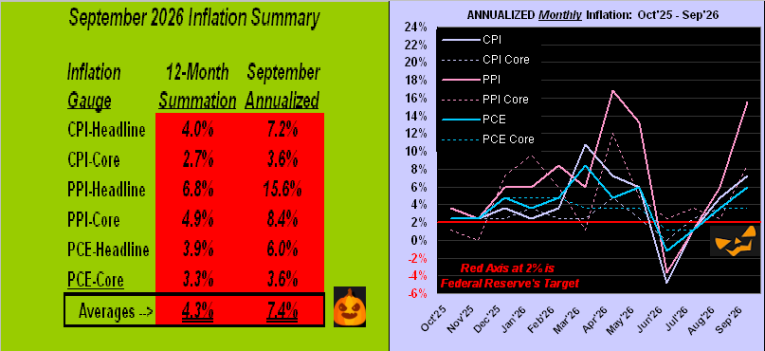
At the same time, conventional macroeconomic sentiment remains weighed down by geopolitical tensions—frequently referred to by market observers as the "Hormuz Blues"—and looming monetary policy decisions. The Federal Open Market Committee faces potential pressure to consider a 50-basis-point funds rate increase in its upcoming December policy statement, a move that could grant the U.S. dollar additional interest rate appeal. Following the FOMC’s decision not to adjust rates during its recent meeting, the release of September personal consumption expenditures data underscored that ongoing inflation remains stubbornly above the central bank’s targeted red-line threshold of two percent. While the vast majority of committee members opted against an immediate rate adjustment, dissenting votes from Fed officials Cook and Hammack highlighted the persistent concerns surrounding lingering inflationary pressures.
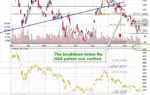
In terms of market structure, gold recently completed its fifth consecutive week within a red-dotted parabolic short trend. From its initial breakout point of 4169, prices have pulled back by as much as seven percent based on recent lows, marking the second-worst performance among the past ten parabolic short trends extending back to September 2022.
When compared to key mining equities over the past year, gold has experienced minor contraction while major sector participants have shown mixed results. Over the trailing twelve-month period, Agnico Eagle Mines has advanced five percent, the Global X Silver Miners exchange-traded fund has gained seven percent, and both Pan American Silver and the VanEck Vectors Gold Miners ETF are up eight percent. Meanwhile, Franco-Nevada has climbed 21 percent, and Newmont has emerged as a sector leader with a 34 percent gain. However, measuring performance from the peaks observed in late February presents a starkly different and more challenging picture for equity valuations.
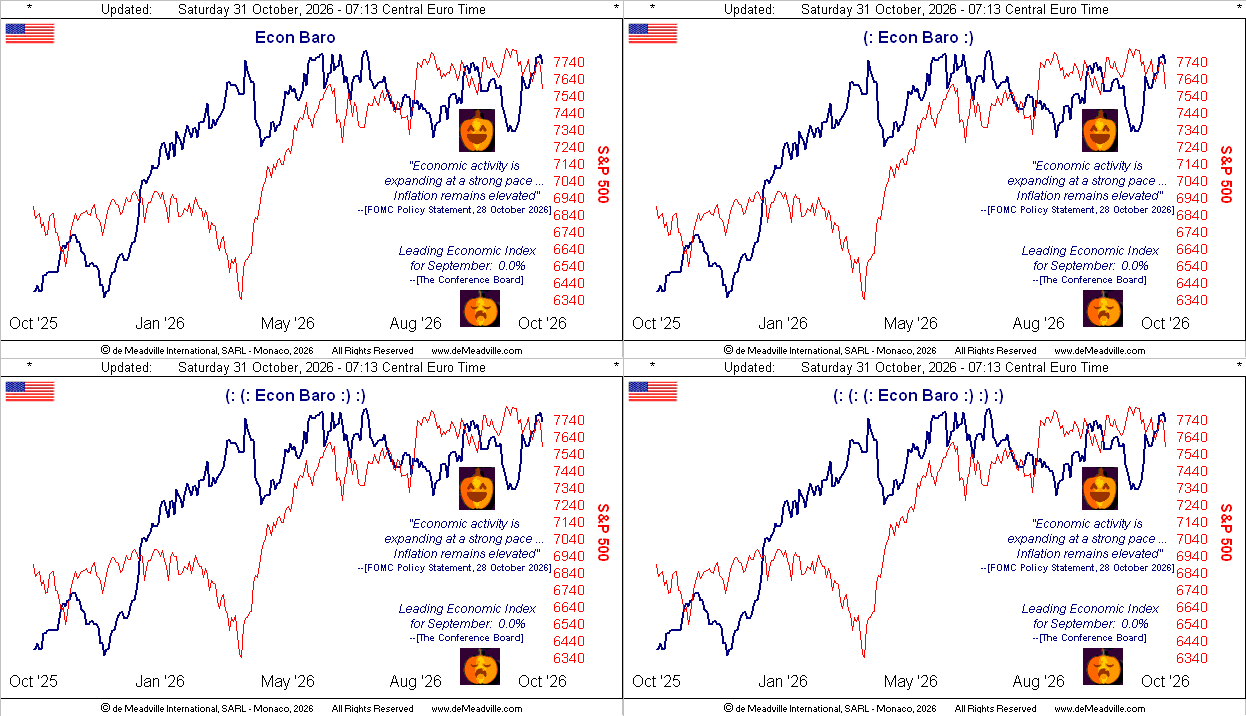
The broader BEGOS market standings for 2026 reflect a stark rotation from the early part of the year, when precious metals dominated the performance podium. While the S&P 500 has managed to maintain a positive year-to-date gain of 10.7 percent, market participants continue to debate whether this resilience represents enduring strength or the precursor to a broader market unraveling. From its record high of 7,845 on October 6 down to recent lows near 7,528, the equity index has experienced a relatively modest four percent correction, keeping investors focused on the potential risks ahead.
The perennial question making the rounds during periods of metals price volatility remains centered on just how low the market might go. While breaching the subjective 3,900 threshold down to 3,879 carries psychological weight, analysts suggest that the next major zone of underlying structural support rests considerably lower, potentially near the 3400s—a congested trading range that served as a major consolidation area from April through August of the previous year.
Seasonality, however, has historically offered a more encouraging backdrop for the final two months of the year. Over the nine-year span from 2017 through 2025, gold failed to settle the year above its October closing price in only one instance, occurring in 2024. Furthermore, looking across the completed years of the current century, gold has finished the year higher than its October close in 18 out of 25 instances.
As the market turns its attention toward the final months of 2026, gold finds itself at a critical technical crossroads. Reclaiming the foundational 4,000 level remains a primary objective, supported by a fair value calculation resting higher at 4,116, provided the Federal Reserve avoids aggressive contractions in the broader money supply. While the precise path and timeline for the recovery remain subject to market volatility, the fundamental thesis underpinning long-term precious metals ownership continues to draw strong conviction from market participants navigating the current cycle of macroeconomic adjustment.