

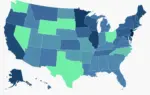



The 2026 midterm elections have officially concluded, providing a clear picture of how the next two years of American politics will unfold. With Democrats taking control of both the U.S. House of Representatives and the Senate, the incoming Congress will face a divided government starting in January, ending two years of full Republican control. Typically, political gridlock in Washington makes significant legislation a long shot ahead of a presidential election. However, housing affordability has emerged as a rare, cross-party crisis that bridges the partisan divide. As lawmakers look for solutions, the real estate market could see sweeping impacts on home prices, housing supply, property taxes, and federal tax codes.
Dave Meyer, chief investment officer at BiggerPockets, breaks down the election results and what they mean for homeowners, buyers, and real estate investors navigating the current political landscape. In an era of intense partisanship, housing stands out as an issue where both Democrats and Republicans are motivated to work together. This rare alignment was recently demonstrated when the 21st Century ROAD to Housing Act was signed into law on July 11, 2026, after passing by overwhelming margins—85 to 5 in the Senate and 358 to 32 in the House.
While the ROAD to Housing Act represents a significant milestone as one of the first major federal housing laws passed in recent memory, industry experts emphasize that it is not a silver bullet for the nation’s housing woes. The vast majority of housing policy, zoning laws, and land-use regulations are determined at the state and local levels. Furthermore, many traditional federal housing policies have historically focused on the demand side—such as lowering mortgage rates or offering buyer tax credits. While these measures can provide short-term relief, critics argue they often create artificial demand that ultimately drives home prices higher and exacerbates affordability issues.
In contrast, the ROAD to Housing Act focuses primarily on the supply side, which experts view as essential for any long-term solution to housing affordability. The legislation tackles governmental barriers that hinder new construction. Among its key provisions, the law establishes expedited environmental reviews for projects receiving Department of Housing and Urban Development funding. Environmental reviews can notoriously stretch from months to years depending on the jurisdiction, adding tremendous risk and cost for developers. Streamlining this process lowers financial risk and helps more residential deals pencil out.
Additionally, the legislation promotes pre-approved building designs to accelerate local permitting processes, allowing builders to bypass costly and time-consuming custom approvals. It also addresses outdated chassis requirements for manufactured and prefabricated homes, removing federal financing hurdles that previously disadvantaged these affordable housing options. Furthermore, the law includes programs to facilitate mortgages for homes priced under $100,000, updates income limits for government housing programs, and grants greater lending flexibility to community banks.
Although signed into law in July under full Republican control, much of the ROAD to Housing Act is scheduled to go into effect in 2027. Congress must still appropriate funds for several programs within the bill, setting the stage for upcoming fiscal negotiations. Notably, the legislation also included a high-profile provision concerning institutional investors, though its actual scope is frequently misunderstood. The law implements penalties of up to $1 million per home—or three times the purchase price—for real estate owners holding more than 350 single-family homes who acquire additional properties on the open market.
However, significant exceptions remain. Large institutional investors are still permitted to purchase properties on the open market if they are renovating them to rent—a model common among mom-and-pop retail investors as well. They are also allowed to engage in lease-to-own arrangements, trade properties among other institutions, and pursue build-to-rent developments. Because institutional owners account for only an estimated two to three percent of single-family rentals nationwide—concentrated heavily in specific markets rather than evenly distributed—analysts view the restriction largely as a popular political measure rather than a sweeping market disruption. Retail investors continue to own the vast majority of the rental housing market by a wide margin.
With the midterms concluded, Washington enters a lame-duck session with the White House and Congress still aligned under Republican control until January. Government funding is set to expire, raising the prospect of fiscal negotiations and potential shutdowns. Rumors also circulate that lawmakers might attempt to pass a third reconciliation bill during the final weeks of the session, with tax code adjustments—such as indexing capital gains to inflation—remaining a primary focus for real estate investors.
Indexing capital gains to inflation would fundamentally alter how profits from asset sales are taxed. Currently, taxable capital gains are calculated as the sale price minus the original purchase price plus improvement costs. If inflation indexing becomes law, the taxable gain would be reduced by the portion of the profit generated strictly by inflation rather than real appreciation. This change would effectively lower the tax burden for long-term buy-and-hold investors and property owners.
Looking ahead to January, when the new Congress is sworn in, single-party legislation will be off the table until 2029 due to the divided government. However, the bipartisan track record of the ROAD to Housing Act suggests that collaborative housing initiatives could continue. On October 5, the bipartisan Build America Caucus—comprising roughly 40 House members who helped negotiate the ROAD to Housing Act—released the "Build More Agenda." While currently a proposal rather than a formal bill, the agenda outlines three major initiatives aimed at boosting housing supply through federal levers.
The first proposal introduces "right to build zones," where cities could voluntarily designate areas for automatic housing approval if developments meet standardized zoning and permitting rules. In exchange, the federal government would provide financial support to cities for each new home built above recent construction baselines, countering local impact fees and reducing bureaucratic uncertainty for developers.
The second proposal establishes federally backed second mortgages for constructing accessory dwelling units, or ADUs. These loans would be based on the future value and projected rental income of the new unit, allowing homeowners to retain their existing low primary mortgage rates without refinancing. This policy aims to make ADU financing more accessible, thereby encouraging both individual homeowners and real estate investors to expand housing inventory.
The third initiative targets soaring construction costs. With building material expenses rising significantly faster than general inflation—increasing roughly 42 percent over a five-year period—and tariffs adding thousands to the cost of single-family homes, the agenda calls for targeted tariff relief on residential construction materials. It also proposes exempting affordable housing projects from certain "Buy America" procurement rules that can drive up costs by up to 25 percent.
Beyond congressional proposals, upcoming tax policy debates ahead of the 2028 election cycle could introduce further real estate provisions. Several tax provisions enacted in previous legislation are scheduled to expire after 2028, setting the stage for broader tax negotiations. Among the measures gaining attention is the More Homes on the Market Act, which has attracted bipartisan co-sponsors in both chambers.
The act proposes doubling the capital gains tax exclusion on the sale of a primary residence from $250,000 to $500,000 for single filers, and from $500,000 to $1 million for joint filers, while indexing those thresholds to inflation moving forward. Current exclusion limits have remained unchanged since 1997. Supporters argue that rising home equity leaves many long-term homeowners—particularly seniors—reluctant to sell due to potential tax liabilities, contributing to inventory constraints. Although the change would carry a substantial federal revenue cost and remains far from guaranteed, it serves as a prominent focal point for future tax reform discussions.
While federal policy shapes broad economic frameworks, the most immediate impacts on housing and real estate investing continue to originate at the state and local levels. Recent state ballot measures illustrate diverse approaches to property taxation and market regulation. In North Carolina, voters approved a constitutional amendment requiring lawmakers to establish statutory limits on how much local governments can increase property tax revenue collection, offering property owners greater predictability. In Florida, a constitutional amendment lowered the cap on annual assessment increases for rental properties from 10 percent to 5 percent, though local governments retain authority over tax rates.
As the political landscape shifts following the 2026 midterms, real estate professionals, homeowners, and investors face a mixed environment of federal legislative potential and localized regulatory changes. While divided government typically slows legislative momentum, housing affordability remains a rare area of bipartisan consensus, ensuring that real estate policy will stay at the forefront of national and local discussions in the years ahead.