


Marking a major personal and professional milestone, a prominent voice in the financial independence community recently reflected on what life looks like a decade after walking away from conventional employment. Celebrating ten years of post-Financial Independence (FI) life, the podcaster and software developer shared deep insights into how his perspective on wealth, career security, lifestyle inflation, and personal fulfillment has fundamentally evolved since leaving the workforce.
Today, the sentiment is defined by a unique mix of profound contentment and uncharted uncertainty. While financial security is stronger than ever, the rapid evolution of technology and the completion of long-term life goals have opened a brand-new chapter, pushing the former corporate worker to rethink long-held assumptions about money, career backups, and future planning.
Reflecting on the past ten years, gratitude remains the central theme. Everyday life offers simple yet invaluable rewards, chief among them being the ability to spend uninterrupted time with his children and witness their milestones firsthand. Beyond family life, financial security has insulated him from the sweeping disruptions currently reshaping the professional landscape—most notably, the rapid rise of artificial intelligence.
As a software developer, he once assumed that returning to the tech workforce would always remain a reliable safety net if financial circumstances ever required it. However, recent hands-on exploration with advanced AI coding tools like Claude Code has challenged that assumption. Describing the technology as an incredible medium for creative experimentation, he noted that it will undeniably transform the software development market. For those still relying on a developer’s salary to live and invest, the outlook requires caution. Looking back, he expressed immense relief that survival no longer depends on navigating an increasingly automated job market.
That realization ties directly into his evolving view on the scale of financial independence. Initially oriented toward a lean FIRE framework—maintaining a bare-bones budget with the safety net of future software work—he is now profoundly grateful that his savings naturally expanded into what is colloquially known as "fat FIRE."
Offering advice to others currently plotting their exit from unfulfilling jobs, he suggested that prospective retirees reconsider strict lean FIRE targets, particularly if they work in volatile industries like software development. If a high-paying job is tolerable and offers room for improvement, sticking it out a bit longer to build a larger cushion may be a wise strategy. The backup plan of easily picking up another tech job is simply not as robust as it was a decade ago, making a larger margin of safety invaluable.
Interestingly, embracing a fat FIRE lifestyle has proven far more enjoyable than anticipated, though it looks entirely ordinary from the outside. The shift has been primarily psychological rather than ostentatious. Rather than flying privately or purchasing luxury yachts, the freedom manifests as an unlimited upper-middle-class flexibility where day-to-day pricing is never a source of stress. Whether picking up premium morning coffee or ordering appetizers and desserts at a family dinner, the absence of financial friction frees up immense mental energy.
This realization followed a deliberate period of testing financial boundaries, which ultimately revealed that money is no longer the limiting factor in daily life. Instead, constraints are dictated by time, energy, and life stages. Dining out with young children, for instance, has its natural limits regardless of budget, and a casual trip to a local pub often brings far more collective joy than an expensive fine-dining excursion. Space limitations at home and the inherent logistical friction of travel have similarly redefined what luxury actually means, proving that sustainable, unrestricted spending brings peace of mind without requiring extravagant excess.
These insights mirror past conversations with financial author Ramit Sethi, whose advice once seemed counterintuitive but now resonates deeply. Concepts such as spending more instead of less—especially when purchasing high-quality items in categories where personal consumption is inherently limited—have added immense value. Because the desire to acquire goods is selective, investing in the highest-quality version of an occasionally purchased item ensures greater longevity and everyday enjoyment. Furthermore, shedding the obsession with absolute efficiency has allowed for a healthier relationship with sunk costs and financial waste. Recent experiences, such as cutting short long-anticipated trips to Canada and Italy when the journeys reached natural peaks rather than forcing extra days for the sake of getting one’s money’s worth, demonstrated the profound value of prioritizing well-being over strict economic optimization.
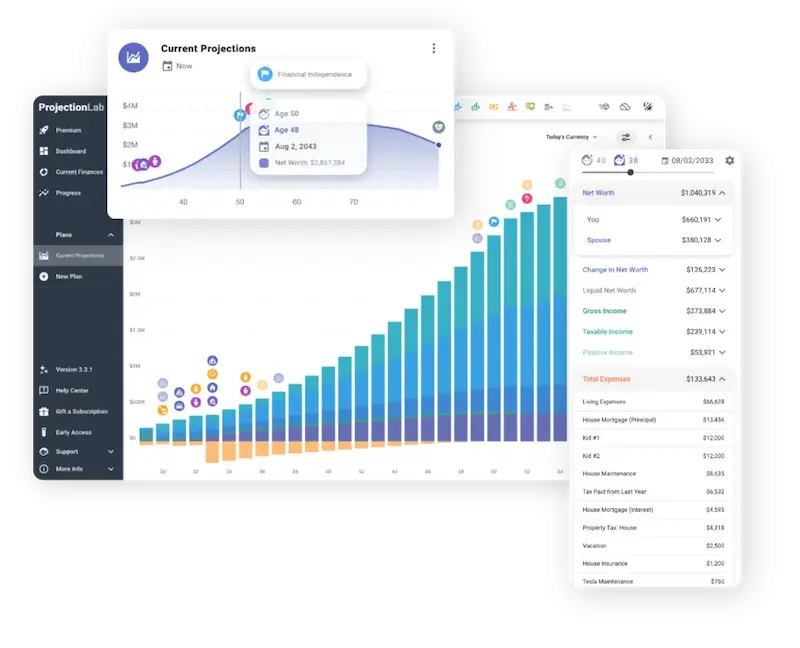
This mindset shift has fundamentally changed how he views lifestyle inflation. While traditional financial wisdom often warns against lifestyle creep as a dangerous trap following a pay raise, asset-driven lifestyle creep tells a different story. When gradual increases in spending power are safely backed by a growing portfolio—such as a modest annual bump enabled by a rising net worth—the resulting lifestyle expansion is sustainable indefinitely. This philosophy inspired the creation of Wealth Machines, a software project designed to help individuals better recognize and utilize surplus wealth to enhance their present lives rather than hoarding every penny for a distant future.
Simultaneously, simplicity has decisively overtaken optimization as a core financial philosophy. Where complex tax maneuvers like backdoor Roth contributions and individual stock picking once dominated his strategy, the desire to eliminate mental clutter has taken precedence. Today, investment portfolios have been streamlined into a handful of core funds, drastically reducing administrative overhead and emotional baggage.
To add a layer of financial defense, a recent portfolio adjustment involved swapping a portion of equities for 30-year Treasury Inflation-Protected Securities (TIPS). Locking in historically high real yields near three percent creates a reliable, inflation-adjusted spending floor designed to kick in during standard retirement age, coinciding with future required minimum distributions from retirement accounts. With asset allocation locked into a largely hands-off autopilot mode, the focus has shifted entirely toward living well.
With day-to-day spending comfortably sustained and optimized, current explorations center on maximizing the next fifteen years—widely recognized as peak life stages while parents are healthy, children are young and engaged, and family bonds are strongest. Current discussions with his spouse revolve around establishing a long-term home base in a walkable, community-oriented location with great weather and ample space for visiting family. The goal is to build deep community roots and create a place with enough "gravity" that growing children will naturally feel drawn to return in the future.
Entering this next phase brings an unfamiliar sensation: the absence of long-term financial or career goals. Having achieved all the milestones that motivated decades of planning, navigating a present-focused daily existence represents entirely uncharted territory. Rather than forcing high-intensity cardio exercises he dislikes, physical health is maintained through enjoyable activities like tennis, cementing a broader philosophical pivot toward maximizing present happiness without compromising future security.
As this ten-year milestone concludes, the journey stands as a testament to the true purpose of financial independence: removing excuses, providing time, and unlocking the freedom to be a present father, partner, and friend. With the mechanics of wealth firmly established, the path forward is dedicated entirely to enjoying the present moment and embracing whatever the next decade brings.