


For generations, a familiar and economically lopsided cycle has defined the global precious metals trade across the African continent: vast quantities of raw gold ore are extracted from the earth, loaded onto cargo planes, and shipped thousands of miles away to foreign refineries in Europe, Asia, and North America. Months later, that very same gold returns to Africa as imported finished goods, arriving back in the form of investment coins, standardized bullion bars, and high-end jewelry. In essence, African nations have routinely exported their raw natural wealth while importing back the finished products at a much higher cost, effectively surrendering manufacturing jobs, tax revenues, and broader economic development to foreign processors.
Now, a profound shift is underway. Across the continent, a growing movement among resource-rich nations is challenging this historical paradigm. Five African countries have recently opened state-of-the-art gold-refining facilities, marking a decisive turning point in how African governments manage their natural resources. By developing domestic processing capabilities, these nations are aiming to capture a significantly larger share of the economic value generated by their mining sectors, while simultaneously creating jobs, fostering industrial transformation, and formalizing vast networks of small-scale artisanal miners who have traditionally operated outside regulatory frameworks.
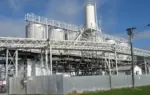
Zambia has emerged as the latest nation to welcome a high-purity gold-refining facility, signaling a major milestone for the country’s mining industry. According to reports from Business Insider Africa, the newly operational facility is operated by Minera Refineries Zambia Limited and boasts the technological capability to refine gold up to an exceptional 99.99 percent purity level. This level of refinement meets strict international standards, allowing the country to produce globally marketable bullion directly from its own soil.
The economic expectations surrounding the Zambian refinery are remarkably high. According to the Zambian Observer, leadership at Minera Refineries Zambia Limited projects that the facility will generate more than $1.8 billion in economic value over time. Furthermore, African Business Insider has highlighted that the new refinery is expected to achieve several critical strategic objectives: capturing more value from domestic gold production, formalizing small-scale mining operations, and diversifying the country’s broader mineral export portfolio. Currently, gold accounts for about $262 million in Zambian exports, representing roughly two percent of the nation’s total export earnings. While copper has historically dominated Zambia’s mining identity, officials believe the gold sector holds immense untapped potential for economic diversification.
A central challenge for Zambian authorities—and a major justification for the new refinery—is the prevalence of artisanal and small-scale mining. These operations are generally run by individuals, families, or small cooperative groups who rely on simple tools and minimal mechanization to extract gold. Because these small-scale mines frequently operate outside of any formal regulatory structure, much of the gold they produce slips past official trade statistics and government oversight, resulting in lost tax revenues and informal, sometimes hazardous, working conditions.
Zambian officials are optimistic that the presence of a competitive local buyer and advanced domestic refinery will change this dynamic by drawing more production into recorded exports and the official tax system. To accelerate this transition, Minera Refineries Zambia Limited managing director Andrew Mukupa Katandula recently outlined a comprehensive two-year plan aimed at formalizing artisanal mining across the country. The initiative includes targeted pre-financing programs designed to support small-scale miners with necessary capital, alongside measures to improve transparency throughout the entire gold production and trading chain.
Zambia is far from alone in its pursuit of domestic mineral processing. The opening of its refinery follows a wave of similar initiatives launched by other African governments determined to move beyond mere extraction. Earlier this month, a major gold refinery officially opened in Ethiopia, backed by a significant financial investment and strong institutional support. State-owned Ethiopian Investment Holdings holds a majority stake in the $50 million joint venture, which is designed to provide a comprehensive suite of precious metal services, including melting, testing, refining, casting, bar minting, and die-making.
Ethiopian Prime Minister Abiy Ahmed emphasized the regional significance of the facility during its opening, noting that it is equipped to process gold not only from Ethiopia but also from neighboring countries and regional mining partners. "It enables neighboring countries and regional mining companies to bring their gold to Ethiopia for advanced refining, certification, value addition, and sale, eliminating the need to export it outside the continent," Prime Minister Abiy stated. Ethiopian officials project that the facility will handle more than 600 tonnes of precious metal annually.
For Ethiopia, gold exports serve as one of the primary and most reliable sources of foreign exchange, having earned the country $5.6 billion during the 2025/26 fiscal year. By establishing an advanced domestic hub for refining and certification, the government hopes to maximize these earnings while positioning Addis Ababa as a strategic center for the precious metals trade in East Africa.
Just a month prior to the Ethiopian launch, another significant milestone was reached in West Africa, where the state-owned Raffinerie Nationale d’Or du Burkina Faso commenced operations in the capital city of Ouagadougou. According to Business Insider Africa, this newly established facility is designed to process, assay, certify, and store gold entirely within the country’s borders, boasting an initial capacity of approximately 515 tonnes per year. Gold plays an overwhelmingly dominant role in Burkina Faso’s economy, accounting for nearly 94 percent of the nation’s total export earnings.
Burkinabe President Ibrahim Traoré underscored the broader industrial vision behind the project, emphasizing that the refinery represents a crucial step in moving the country past the era of raw mineral extraction and toward a future where the full value chain is developed locally. "Our ambition goes beyond gold," President Traoré said. "We want to make the mining sector a driver of industrial transformation."
The momentum behind domestic refining is evident in other parts of the continent as well. In January, a high-purity gold refinery opened its doors in Lagos, Nigeria, providing a new domestic outlet for the country’s gold producers and aligning with federal efforts to diversify the economy away from its historical dependence on petroleum. Shortly after, in March, the Democratic Republic of the Congo also inaugurated a domestic gold-refining facility, seeking to exert greater control over its vast mineral wealth and curb the illegal smuggling that has long plagued its mining regions.
Across all five nations, the underlying philosophy driving these investments remains consistent. African leaders and industry stakeholders hope that the rapid development of domestic refining capacity will fundamentally alter the continent’s economic trajectory by ensuring that a greater share of Africa’s immense wealth remains in Africa. Beyond keeping capital at home, the expansion of local refining infrastructure is widely expected to drive meaningful job creation, foster technical skills development, and provide a reliable, high-purity supply of precious metals for burgeoning local gold jewelry industries and regional manufacturing sectors.