


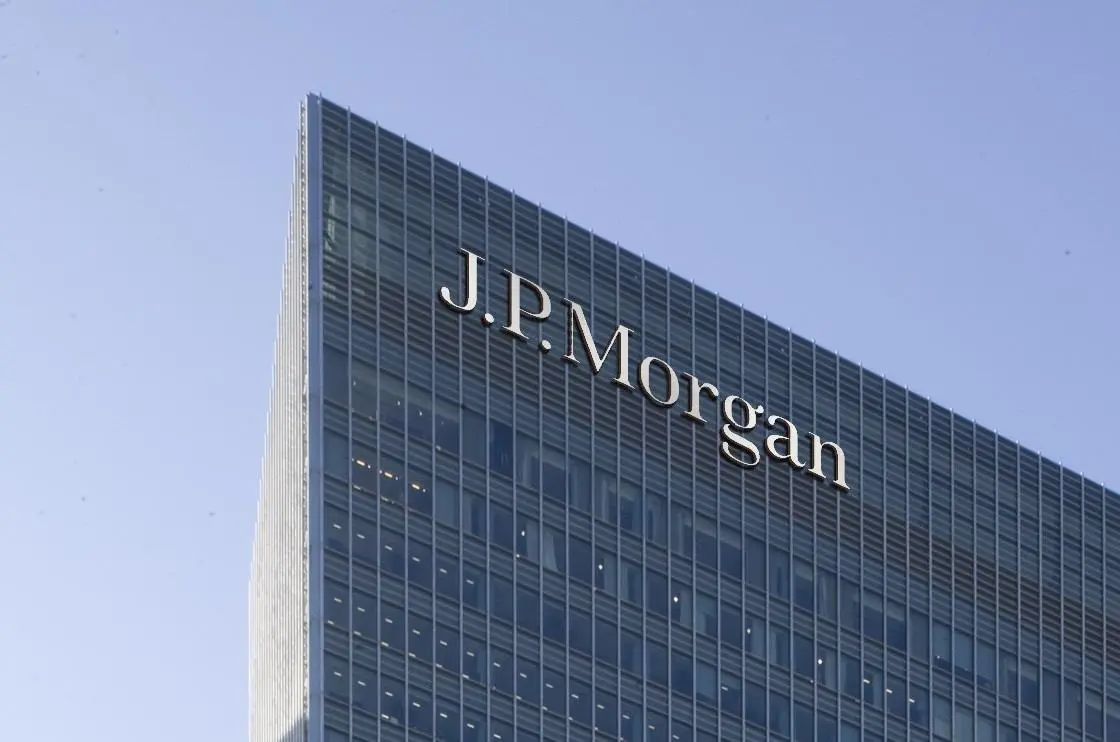
U.S. banking giant JPMorgan Chase has announced a sweeping series of updates to its approach toward energy and environmental issues. The pivot includes rebalancing its long-term strategy to ensure that emissions reductions in its financing activities are weighed carefully within the broader economic context of energy affordability, security, and reliability.
While candidly acknowledging that "financed emissions are an imperfect metric," the bank has simultaneously decided to retain and extend its financed emissions targets for key carbon-intensive sectors. Furthermore, the financial institution revealed it has reached nearly the halfway mark toward its ambitious goal to finance or facilitate more than $2.5 trillion to help advance sustainable development by 2030. Reaching $1.2 trillion at the end of 2025, the progress was notably aided by a strategic broadening of eligibility criteria for green finance.
The latest policy updates arrive several years after JPMorgan Chase launched its initial suite of sustainable finance goals in 2021. Those original milestones included the ambition to facilitate $2.5 trillion toward sustainable development—with $1 trillion specifically targeted to green initiatives supporting climate action—alongside its first set of 2030 carbon intensity-based financed emissions targets for several high-emitting sectors.
Over the ensuing years, however, the political and economic landscape has shifted dramatically. Alongside its Wall Street peers, the bank has faced intense and mounting political pressure, particularly from Republican politicians across various U.S. states over its sustainability approach and corporate investment goals. This pressure ultimately led major financial institutions to pull back from high-profile climate-focused initiatives, most notably exemplified by JPMorgan Chase’s departure from the Net-Zero Banking Alliance.
In a newly published post outlining the bank’s evolved operational approach, Heather Zichal, Head of the Center for Energy and Environment and Global Head of Sustainability at JPMorgan Chase, highlighted the surging global increase in energy demand. Zichal pointed to the immense power requirements needed to run factories, deploy artificial intelligence systems, electrify the broader economy, and expand global energy access. She described meeting that skyrocketing demand while balancing what she termed the "Four Forces"—affordability, security, reliability, and sustainability—as one of the defining economic opportunities of our modern era.
Reflecting on the evolution of the bank’s climate journey, Zichal noted that JPMorgan Chase is proud to have helped shape the broader banking industry’s approach to climate issues, recalling that it was the first U.S. bank to publish detailed financed-emissions targets and an Energy Supply Financing Ratio. Since setting those initial targets, the bank has consistently maintained that its approach would naturally evolve as market conditions changed and better information became available, allowing the institution to continually test its framework against real-world experience.
Zichal explained that the updated strategy was heavily influenced by hard-earned lessons gathered since the bank initially established its targets. She noted, for instance, that emissions simply cannot be considered in a vacuum, and that any transition strategies failing to account for affordable, secure, and reliable energy supplies are unlikely to endure over the long term. She reiterated that financed emissions are not a flawless metric, citing persistent challenges regarding underlying data quality, methodology limitations, and the necessity of factoring in a broader array of economic indicators.
Drawing from these operational lessons, Zichal announced that JPMorgan Chase has developed a comprehensive series of core principles to guide its future approach. These principles emphasize a primary focus on scaling finance effectively, approaching the global energy system holistically by supporting clients in balancing affordability, security, reliability, and sustainability, leveraging the bank’s immense platform to support viable market and policy solutions, and leading strictly with data transparency.
Despite acknowledging the inherent limitations of focusing solely on financed emissions, JPMorgan Chase revealed in its newly released 2025 Sustainability Report that it has updated its sector carbon intensity targets. Crucially, the bank has extended the target horizon out to 2035, aligning its trajectory with the latest sector pathways outlined in the International Energy Agency’s Net Zero by 2050 scenario.

Under the revised framework, key targets include a 47% emissions intensity reduction goal by 2035 for the oil and gas sector, marking an adjustment from the prior 45% goal set for 2030. For electric power, the bank established a 79% reduction target, compared with its previous 69% goal for 2030, while auto manufacturing targets were shifted to a 65% reduction, up from the prior 48% goal for 2030.
Alongside these recalibrated sectoral targets, JPMorgan Chase provided a detailed progress update on its overarching $2.5 trillion sustainable finance goal. The bank announced that it has updated the eligibility parameters of its green objective to include a much wider range of low-carbon energy supply activities. These newly included categories feature zero- and low-carbon power generation at diversified power companies, nuclear energy-related activities, electricity networks, grid modernization projects, and electric vehicle charging infrastructure.
Financially, the institution reported that it financed or facilitated $217 billion toward its sustainable development target in 2025. While this figure represents a decrease from the $250 billion recorded in 2024, it remains roughly flat when compared to the levels achieved in 2023 and 2022, bringing the bank’s cumulative progress to $1.2 trillion. Within its specific green finance objective, JPMorgan Chase financed or facilitated $96 billion in 2025, closely mirroring the $97 billion achieved in 2024. This performance brings the bank more than halfway toward its 2030 goal, standing at a cumulative $520 billion. Notably, however, the newly broadened eligibility criteria contributed $145 billion to the aggregate total.
In tandem with its updated corporate strategy, JPMorgan Chase also announced the launch of its brand-new Center for Energy and the Environment. Positioned as the bank’s dedicated hub for expertise on the four forces shaping energy and environmental outcomes, the newly formed center will officially incorporate the Center for Carbon Transition and Corporate Sustainability—which was originally launched by the bank back in 2020—under a unified institutional platform.
Summarizing the strategic shift, Zichal emphasized that the modifications made to the bank’s environmental targets are deeply rooted in the practical lessons learned over the preceding five years. Company executives believe these evolutionary changes will sharpen the institution’s overall strategy, enabling it to mobilize capital more effectively, address the energy system as a cohesive whole, and utilize its vast financial platform to help overcome structural barriers that financing alone cannot solve.