



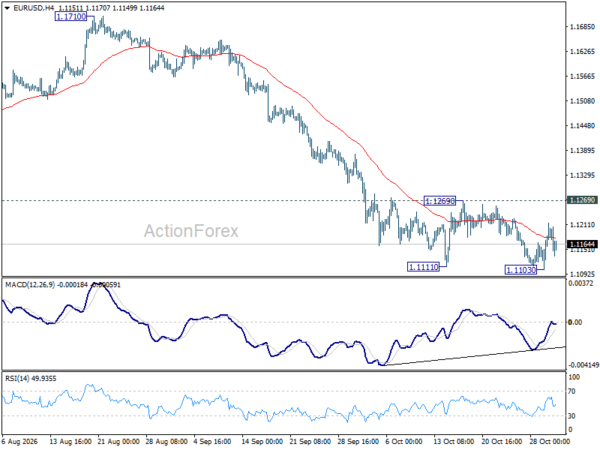
The EUR/USD currency pair experienced a brief dip down to the 1.1103 level before staging a swift recovery, keeping traders on edge as broader market dynamics unfold. While the immediate intraday price action managed to claw back some of those losses, the broader technical outlook for the pair remains neutral to bearish heading through the week. Market participants continue to monitor key resistance and support boundaries, with further downside movement widely anticipated as long as critical upside barriers remain completely intact.

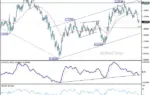
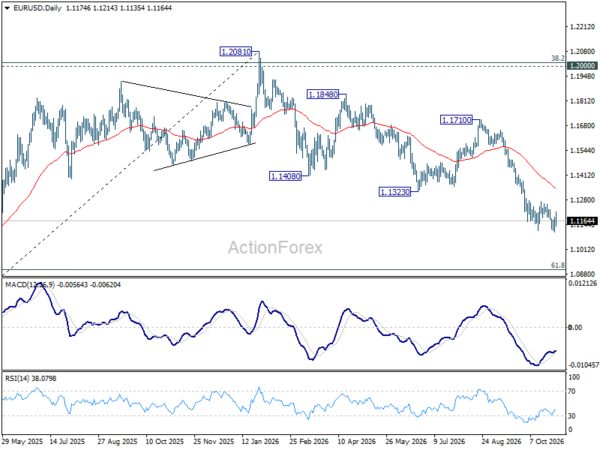
In the current short-term landscape, the trajectory of the currency pair heavily hinges on specific technical thresholds. Analysts following the pair note that as long as the 1.1269 resistance level holds firm, the path of least resistance points toward continued depreciation. A decisive breakdown below the immediate support zone around 1.1103 to 1.1111 would not merely represent a minor fluctuation; rather, it would trigger an extension of the larger downward impulsive wave that originated from the medium-term peak of 1.2081. Should this bearish scenario play out, the currency pair is projected to slide further toward the 1.0904 Fibonacci retracement level, which marks a significant historical benchmark for the pair’s valuation.
Conversely, a shift in near-term momentum remains entirely possible should market conditions surprise to the upside. For the current bearish bias to be invalidated, the currency pair would need to achieve a firm and sustained break above the 1.1269 resistance barrier. Such a development would signal to market participants that a short-term bottoming process has successfully taken place. In the event of this bullish reversal, traders could anticipate a much stronger corrective rebound targeting the 55-day Exponential Moving Average (EMA), which currently sits around the 1.1337 mark. Until such a breakout occurs, however, cautious sentiment dominates the trading floors.
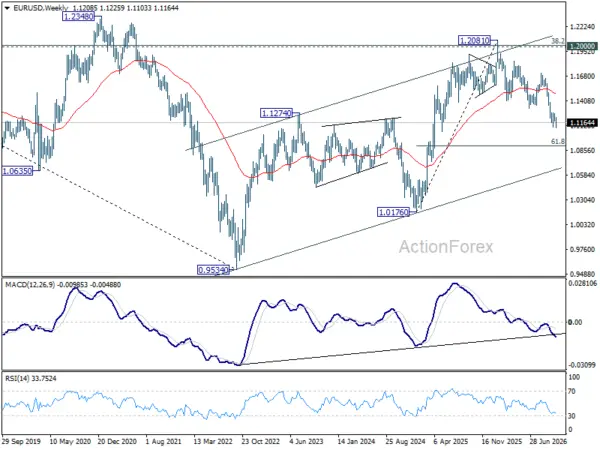
Expanding the analytical lens to a broader medium-term perspective, the recent price developments carry deeper implications for the euro against the greenback. The ongoing downward correction from the 1.2081 medium-term top increasingly appears to be actively reversing the preceding bullish recovery phase that began at the 2025 low of 1.0176. Furthermore, technical indicators suggest this bearish pressure could potentially overwrite the broader advance originating all the way back from the 2022 multi-year low of 0.9534.
As market structures evolve, the aforementioned 1.0904 level looms large as the next major logical target. This price corresponds directly to the 61.8% Fibonacci retracement of the entire intermediate rally spanning from the 1.0176 low up to the 1.2081 peak. Consequently, market strategists emphasize that overall trading risks remain firmly skewed to the downside. As long as the robust overhead resistance situated at 1.1710 remains unbreached, any sudden upside rebounds or corrective rallies are expected to face renewed selling interest from market participants guarding against the prevailing trend.
Looking even further ahead into the long-term charts, foreign exchange analysts are casting their focus toward the 55-month Exponential Moving Average (EMA), which currently tracks near 1.243. A sustained and definitive break beneath this major monthly indicator would deliver a profound structural message to the global currency markets. Specifically, it would argue strongly that the significant multi-year recovery rally which commenced at the 0.9534 low in 2022 has fully completed its life cycle.
According to this long-term wave interpretation, that preceding recovery would be classified as a complex three-wave corrective move that ultimately stalled out at the 1.2081 ceiling. This peak notably occurred following a sharp rejection near the 38.2% retracement of the monumental historical decline from the 2008 high of 1.6039 down to the 0.9534 low, a zone calculated at 1.2019 and sitting in close proximity to the psychologically significant 1.2000 milestone. Therefore, a breakdown of these foundational moving averages would ensure that the overarching long-term structural downtrend originating from the historic 2008 highs remains fundamentally intact and unchallenged.