



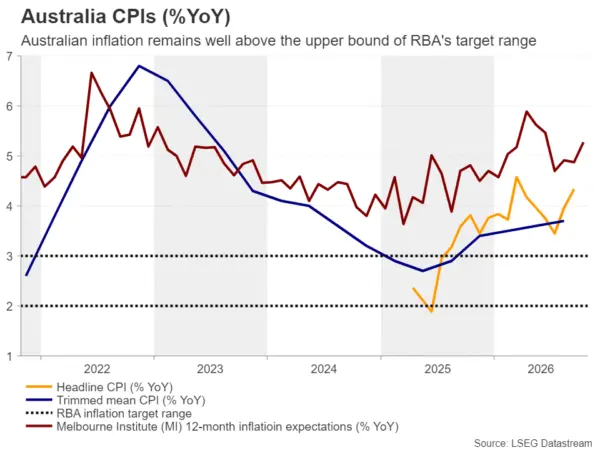
The US dollar traded higher against most of its major peers over the week, kicking off the period on a solid footing as currency markets braced for what many anticipated would be a hawkish Federal Open Market Committee (FOMC) decision on Wednesday. Although market participants were entirely convinced that a benchmark interest rate hike was off the table for this specific gathering, traders remained on high alert for clues and hints regarding whether they were justified in nearly fully pricing in a 25-basis-point rate hike for the upcoming December meeting.
Investors proved correct in anticipating no monetary policy action at this current gathering, yet the central bank’s decision to hold rates steady carried a tone that was noticeably less hawkish than many had braced for. The policy statement itself certainly possessed a distinctly hawkish flavor; policymakers upgraded their official description of ongoing economic activity from "solid" to "strong," while steadfastly retaining their cautionary warning that domestic inflation remains uncomfortably elevated. Furthermore, internal divisions within the committee were clearly visible, with two dissenting policymakers voting directly against the consensus to push for an immediate quarter-point increase.
Nonetheless, during the subsequent press conference, Federal Reserve Chair Kevin Warsh struck a note of caution, signaling a stance of deliberate patience. Warsh emphasized that additional economic data and broader information inputs would be critically necessary before the central bank commits to its next policy move. The immediate market response was a measured retreat in US Treasury yields alongside a noticeable pullback in the US dollar, as the prospect of a December rate hike suddenly appeared far from sealed.
NFP to Prove Decisive on Whether the Fed Will Hike in December
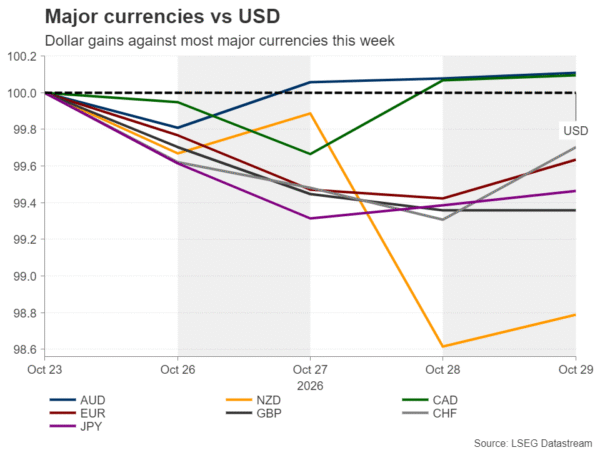
Despite the Fed chair’s call for patience, the implied probability of a December rate hike remained elevated at around 80 percent. This dynamic means that if next week’s vital economic data releases—most notably the closely watched nonfarm payrolls report—come in stronger than expected, investors could easily seal the deal for a December move. Strong data might also prompt markets to price in additional basis points worth of rate hikes heading further into 2027. Currently, interest rate futures indicate that market participants anticipate the federal funds rate will sit roughly 70 basis points higher by the end of next year.

Labor market indicators present a mixed yet shifting picture. Nonfarm payrolls largely disappointed during the September report, with overall employment growth slowing dramatically to just 29,000 jobs added compared to 133,000 in August, thereby missing the consensus forecast of 90,000. However, offsetting that disappointment, the flash S&P Global composite PMI indicated that hiring across both the manufacturing and services sectors expanded at its second-fastest pace since 2022. When combined with lower prints for initial jobless claims throughout the month, the overall risks for next week’s employment release appear tilted heavily to the upside.
Additional labor market barometers due earlier in the week are poised to frame expectations. The ISM manufacturing PMI on Monday, the ISM services index on Wednesday, and the ADP private employment report—also scheduled for Wednesday—will likely provide crucial supplementary details on how the US labor market fared through the month of October.
US Midterms: Red Wave, Blue Sweep, or Stalemate?
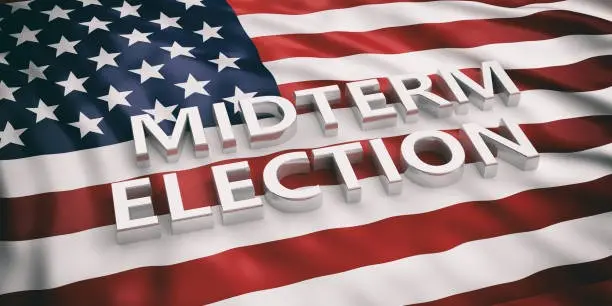
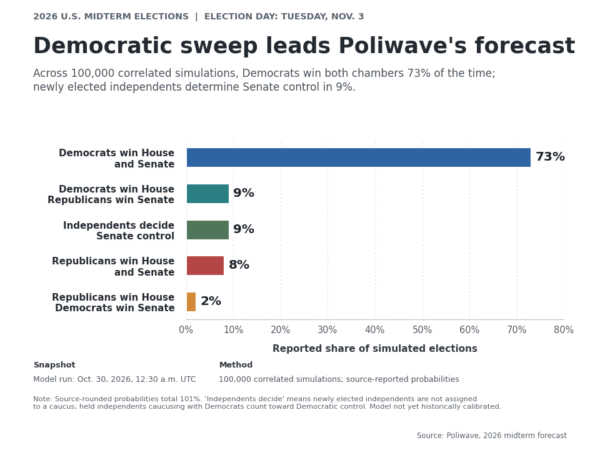
Nonfarm payrolls are far from the only high-stakes event dominating next week’s macroeconomic agenda. On Tuesday, American citizens will head to the polls to cast their ballots in the critical midterm elections. Investor anxiety centers squarely on whether control of the US Congress will shift away from unified Republican oversight toward a divided government. While Democrats are widely expected to capture a majority in the House of Representatives, whether they can successfully wrestle control of the Senate remains a remarkably close call.
The potential policy outcomes carry distinct implications for governance and financial markets. A split Congress featuring a Democratic House and a Republican Senate would grant Democrats expanded investigative powers and the leverage to push for heavier regulatory compliance across the banking, cryptocurrency, and technology sectors. Simultaneously, the executive branch under President Trump would retain critical veto power and executive authority over tariffs, immigration, and foreign policy, thereby heavily limiting sweeping legislative changes. Alternatively, a complete Democratic sweep would dramatically strengthen congressional oversight, allowing Democrats to block key presidential nominees and control vital committee chairmanships, though a presidential veto would still constrain ultimate policy enactment.
Conversely, a continued Republican sweep maintaining unified control could significantly reduce near-term budgetary friction, providing strong support for defense spending and broader deregulation themes while simultaneously reinforcing existing concerns regarding protectionist tariffs and widening fiscal deficits.
Market reactions across asset classes are expected to hinge heavily on the electoral outcome. A Democratic sweep could weigh negatively on US equities due to expectations of intensified regulatory scrutiny, while Treasury yields and the US dollar could slide on the prospect of tighter fiscal policy and slower economic growth. A Republican sweep might similarly pressure Wall Street as renewed anxieties emerge that the administration could pursue aggressive protectionist trade policies. However, in that scenario, Treasury yields and the greenback are likely to rise, driven by fears that fresh tariffs could stoke persistent inflation and force the Federal Reserve into more aggressive rate hikes next year.
Perhaps the most market-friendly outcome for Wall Street would be the scenario of a Democratic House paired with a Republican Senate. Such a division would create legislative gridlock, successfully restricting major tax, spending, and regulatory overhauls. Under this political stalemate, equities could edge higher as policy uncertainty fades, allowing investors to refocus their attention squarely on corporate earnings. Furthermore, Treasury yields and the dollar could ease somewhat as Democrats leverage their legislative power to counter some of Trump’s most aggressive protectionist trade initiatives.
RBA to Hike, but the Aussie Needs More
Looking beyond US borders, international central banks are also taking center stage, with the Reserve Bank of Australia holding a policy meeting on Tuesday followed by the Bank of England on Thursday.
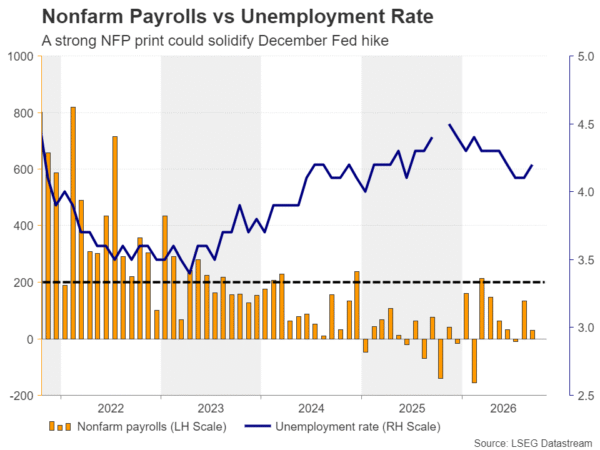
The Reserve Bank of Australia previously raised interest rates by 25 basis points at its September 29 meeting amid mounting concerns over persistently elevated domestic inflation, signaling at the time that policymakers remained prepared to tighten further if necessary. Monthly Consumer Price Index data for September, released on October 28, showed headline inflation accelerating to 4.3 percent year-on-year from 4.0 percent in August, while the trimmed mean rate ticked up to 3.6 percent from 3.5 percent. With both crucial inflation metrics hovering well above the upper bound of the RBA’s target range of 2 to 3 percent, financial markets have assigned an aggressive 85 percent probability to another 25-basis-point rate hike at Tuesday’s gathering.
Despite the high expectations for an immediate rate increase, pricing indicates only a 50 percent chance that the RBA will follow up with another hike in 2027. Consequently, for the Australian dollar to sustain any meaningful upward momentum following the policy announcement, a mere rate hike may not suffice. Policymakers will likely need to deliver a convincingly hawkish forward guidance statement to persuade market participants to price in additional policy tightening for the year ahead.
First BoE Hike Since August 2023
Shifting focus to the United Kingdom, the Bank of England kept monetary policy unchanged in September, though that decision revealed a growing hawkish split among officials, with three members formally voting in favor of a rate increase. Although that decision marked the sixth consecutive policy hold, a 25-basis-point increase is now fully priced in by rate traders for the upcoming meeting.
UK headline inflation accelerated to 3.5 percent year-on-year in September, pushing further above the central bank’s official 2 percent objective and cementing the case for what would be the Bank of England’s first rate increase since August 2023. Given that the hike is already fully anticipated by markets, the British pound’s reaction is less likely to be driven by the rate change itself and more by the internal breakdown of the vote, the updated economic forecasts, and the central bank’s forward guidance regarding further monetary tightening. A unanimous committee vote for higher rates, combined with upwardly revised inflation projections and a clear commitment to additional policy action, could provide strong support for sterling.
EZ Inflation Awaited After ECB’s Wait-and-See Stance
In the Eurozone, the flash consumer price inflation data for October, scheduled for release on Wednesday, carries greater significance than usual following the European Central Bank’s decision to maintain a wait-and-see stance. ECB President Christine Lagarde noted during her press conference that policymakers actively debated whether an immediate rate hike was warranted before ultimately opting to hold steady.
Although central bank officials remain visibly concerned about upside risks to inflation stemming from potential energy supply shocks related to the Middle East, they simultaneously emphasized considerable downside risks weighing on regional economic growth. Consequently, policymakers explicitly reiterated that they are not pre-committing to any predetermined rate trajectory, leaving all options open for the December policy meeting. Euro-area money markets currently price in roughly a 50 to 65 percent probability of a rate hike in December, meaning another inflation print pointing toward sticky price pressures could drive those expectations higher and offer some relief to a struggling euro.
New Zealand and Canadian Jobs, Earnings Season Continues
In the broader global economy, New Zealand is set to release its third-quarter employment report during the Asian trading session on Wednesday. Simultaneously, coinciding with the release of the US nonfarm payrolls report, USD/CAD traders will digest Canada’s employment data for October.
Meanwhile, corporate earnings season continues to offer high-impact catalysts for equity markets. Apple, Palantir, and ON Semiconductor are scheduled to report their financial results after the closing bell on Monday, followed by Advanced Micro Devices (AMD) on Tuesday and Qualcomm on Wednesday. Amid lingering market anxieties regarding the massive capital expenditures and heavy borrowing undertaken by major technology giants to finance ambitious artificial intelligence projects, any disappointing corporate guidance or earnings figures could trigger significant volatility across Wall Street.