



The US dollar has suffered a painful and decisive decline, extending its losses into a second consecutive session following its sharpest daily drop in over a month. While currency markets typically react to strong macroeconomic indicators by bidding up the domestic currency, the greenback’s recent trajectory has defied conventional playbook rules. Instead of finding support from robust domestic economic data, the dollar has been dragged down by a sharp contraction in Treasury bond yields, shifting investor focus toward safe-haven shifts, shifting capital flows, and broader cross-asset dynamics spanning from technology stocks to overseas monetary policy shifts.
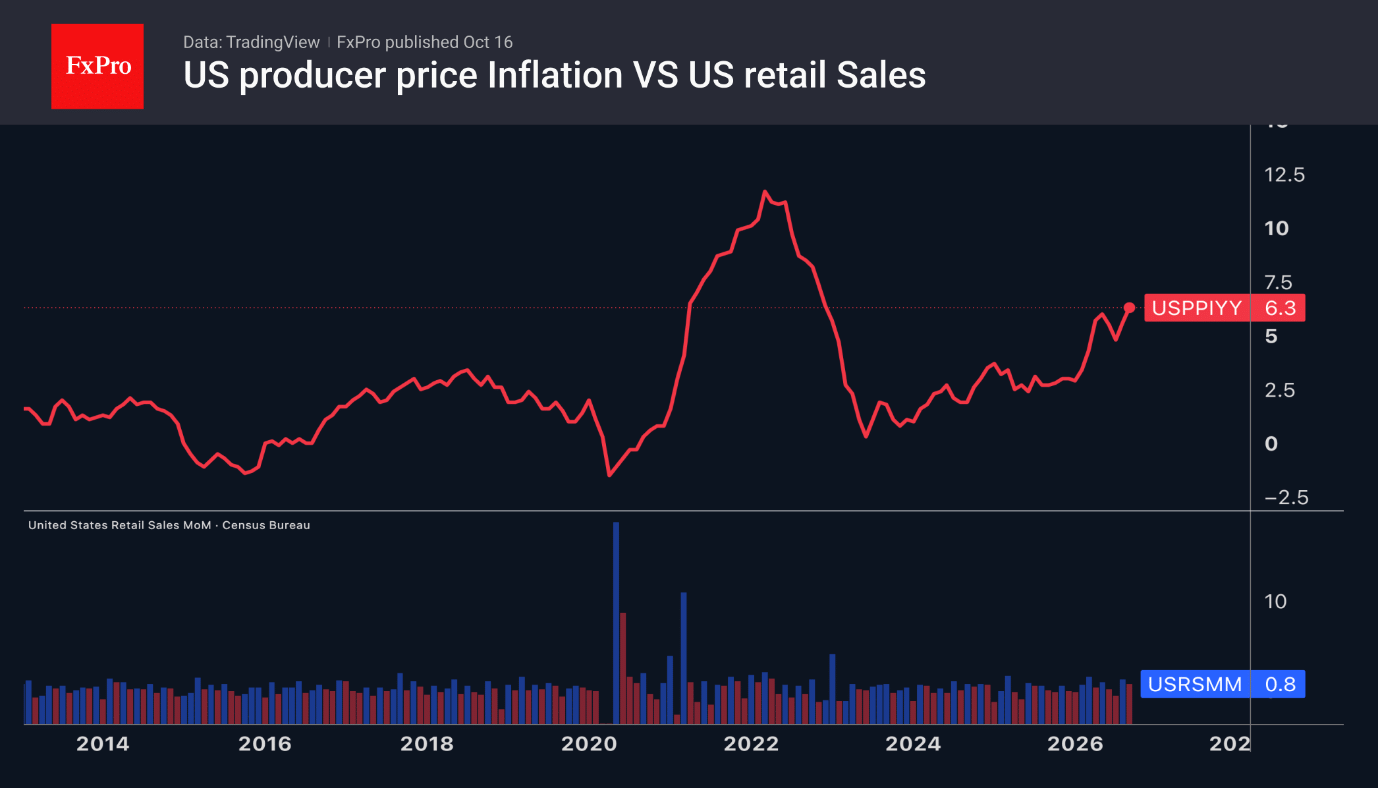
The fundamental disconnect between domestic economic prints and currency performance became glaringly apparent as a wave of upbeat macroeconomic data crossed the wires. September retail sales surged by 0.8% on a month-on-month basis, clocking in at twice the pace forecasted by economists and signaling that consumer demand remains remarkably resilient. Concurrently, inflationary pressures showed signs of accelerating at the producer level. The Producer Price Index (PPI) jumped by 1.3% in September, marking its fastest monthly rate of increase in four years. On an annual basis, the PPI growth rate climbed to 6.3%, reaching its highest level since December 2022 and demonstrating that pipeline price pressures refuse to subside quickly.
At first glance, this potent combination of surging consumer activity and mounting factory-gate inflation would traditionally suggest that the Federal Reserve needs to accelerate its monetary tightening cycle to keep the economy from overheating. However, monetary policy expectations remained deliberately clouded during high-level international discussions. Speaking at the International Monetary Fund meetings in Bangkok, Kevin Warsh declined to discuss the broader economic outlook or provide clear signals regarding the future trajectory of interest rates. In the absence of definitive forward guidance from key monetary figures, the futures market responded cautiously, slightly raising the implied probability of a rate hike at the upcoming October Federal Open Market Committee (FOMC) meeting to 28%.
Yet, this modest repricing of interest rate probabilities proved entirely insufficient to insulate the currency. The true catalyst behind the US dollar’s persistent weakness lay within the fixed-income market, specifically driven by a pronounced decline in Treasury bond yields. Institutional and retail investors harbor few doubts regarding the underlying strength of the broader US economy, but sentiment within equity and debt markets has begun to pivot. Market participants are increasingly demanding tangible returns on their massive investments in artificial intelligence and next-generation technologies. As a wave of profit-taking and caution prompted a sell-off in high-flying technology shares, the resulting market jitters immediately boosted demand for government-backed debt as a reliable safe-haven asset. Simultaneously, institutional capital began rotating aggressively out of the corporate bond market and safely into the government bond market, driving up Treasury prices and pushing yields down.
This downward pressure on yields temporarily intensified as the broader equity market absorbed a notable pullback in the Nasdaq-100 index ahead of the third-quarter corporate earnings season. However, because this market dip was accompanied by broadly positive corporate profit forecasts, astute investors recognized an excellent opportunity to buy the dip. Consequently, the major stock index executed a solid rebound from its intraday lows, a recovery that ultimately helped stabilize Treasury bond yields and provided a floor for the battered US dollar.
This stabilization in US yields effectively halted an aggressive bear market attack on the USDJPY currency pair. Recent reports published by the US Treasury indicate that Japan has officially emerged from its prolonged era of structural deflation, a milestone development that should theoretically exert a strong, positive structural impact on the Japanese yen. Nevertheless, these fundamental macroeconomic declarations provided significantly less support to the Japanese currency than the overarching global decline in US Treasury yields, leaving the currency pair navigating a delicate balancing act between domestic policy evolution and foreign bond market fluctuations.
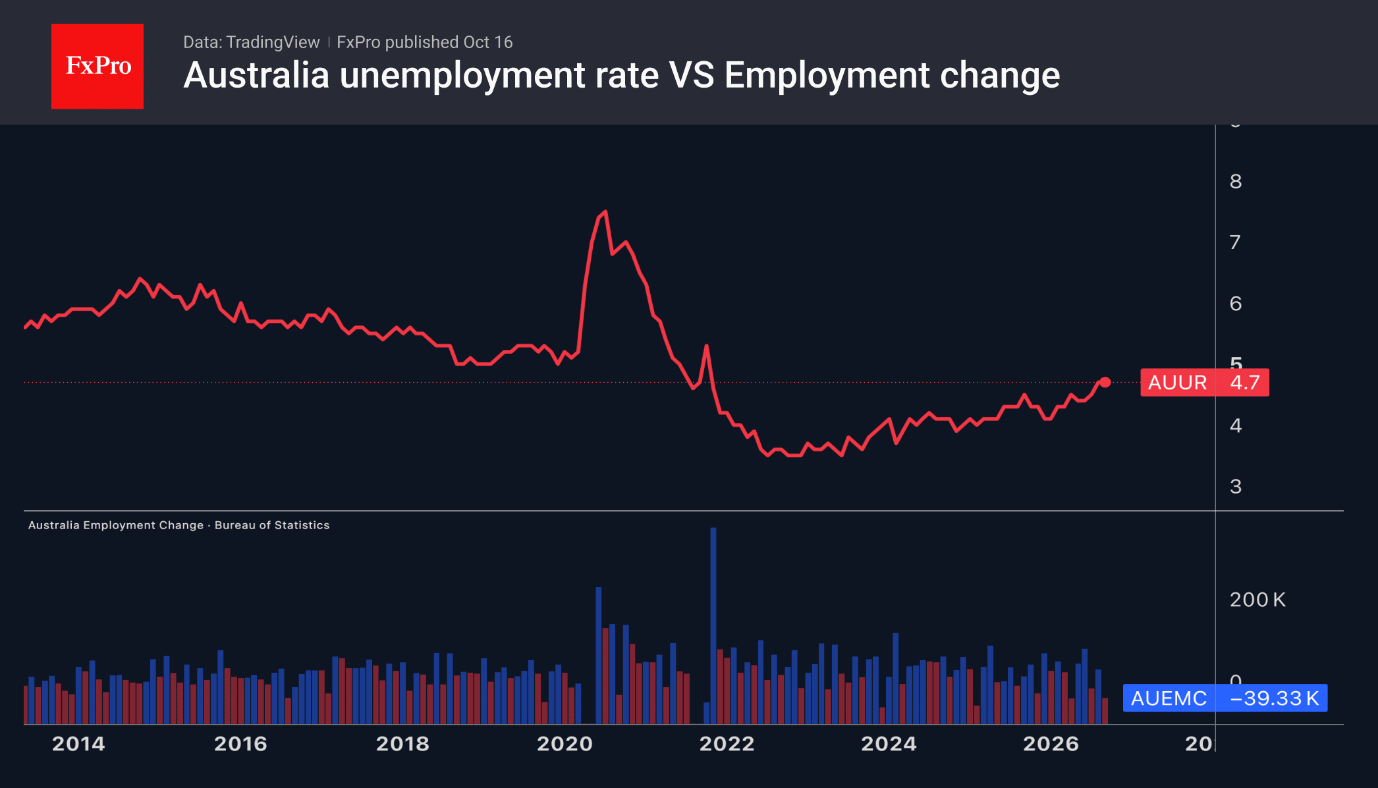
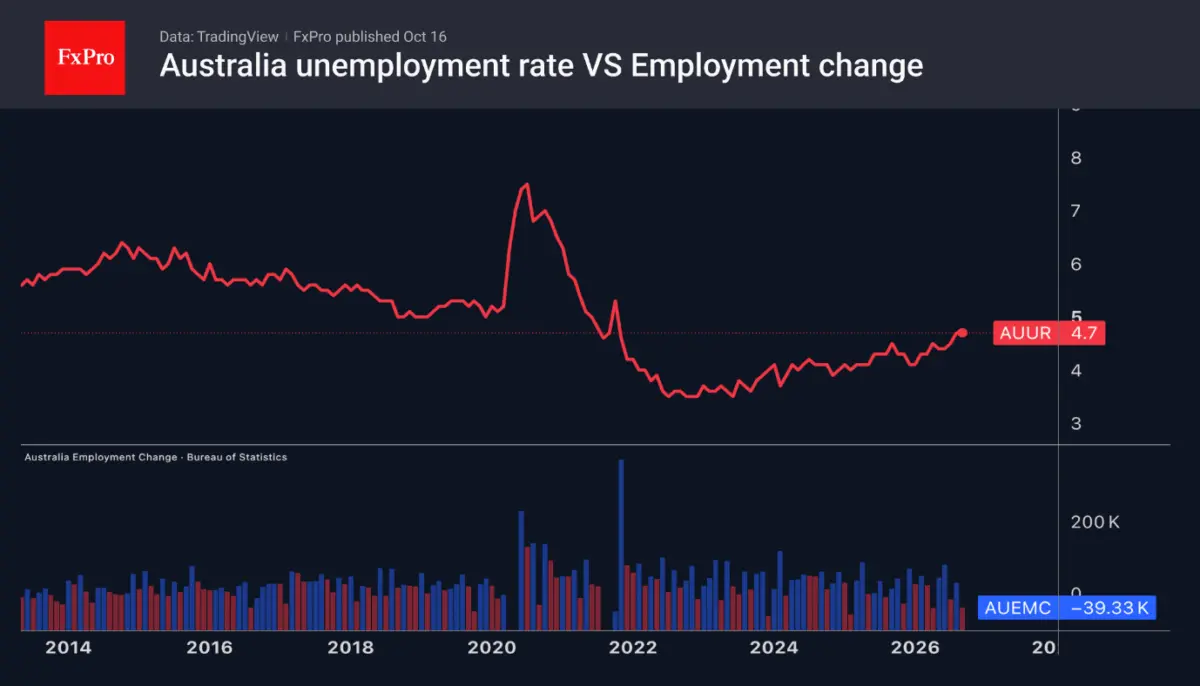
Meanwhile, developments across the Pacific added further volatility to the global currency landscape as weak labor market data out of Australia caught traders off guard. The Australian economy shed an unexpected 40,000 jobs in September, while the national unemployment rate ticked higher from 4.6% to 4.7%. This unexpected labor market softening provided clear, tangible evidence that the Reserve Bank of Australia’s aggressive monetary tightening campaign—which has seen the key interest rate raised by a cumulative 100 basis points to 4.6% since the beginning of 2026—is finally succeeding in cooling down domestic economic momentum.
The immediate domestic and international reaction to the Australian employment figures was swift and pronounced. The market probability of the Reserve Bank implementing further policy tightening at its upcoming November meeting was abruptly halved, tumbling from 34% down to 17%. Furthermore, expectations for a subsequent rate hike in December suffered an equally steep descent, falling from 60% down to 40%. This drastic reassessment of the central bank’s policy path triggered a sharp sell-off in the AUDUSD currency pair, driving it down to fresh three-month lows on Thursday. However, the sudden and widespread weakening of the US dollar on Friday acted as a counterbalance, allowing the currency pair to recover lost ground, return comfortably to its previous established trading range, and even post a modest net gain compared to where it stood at the very beginning of the month.