




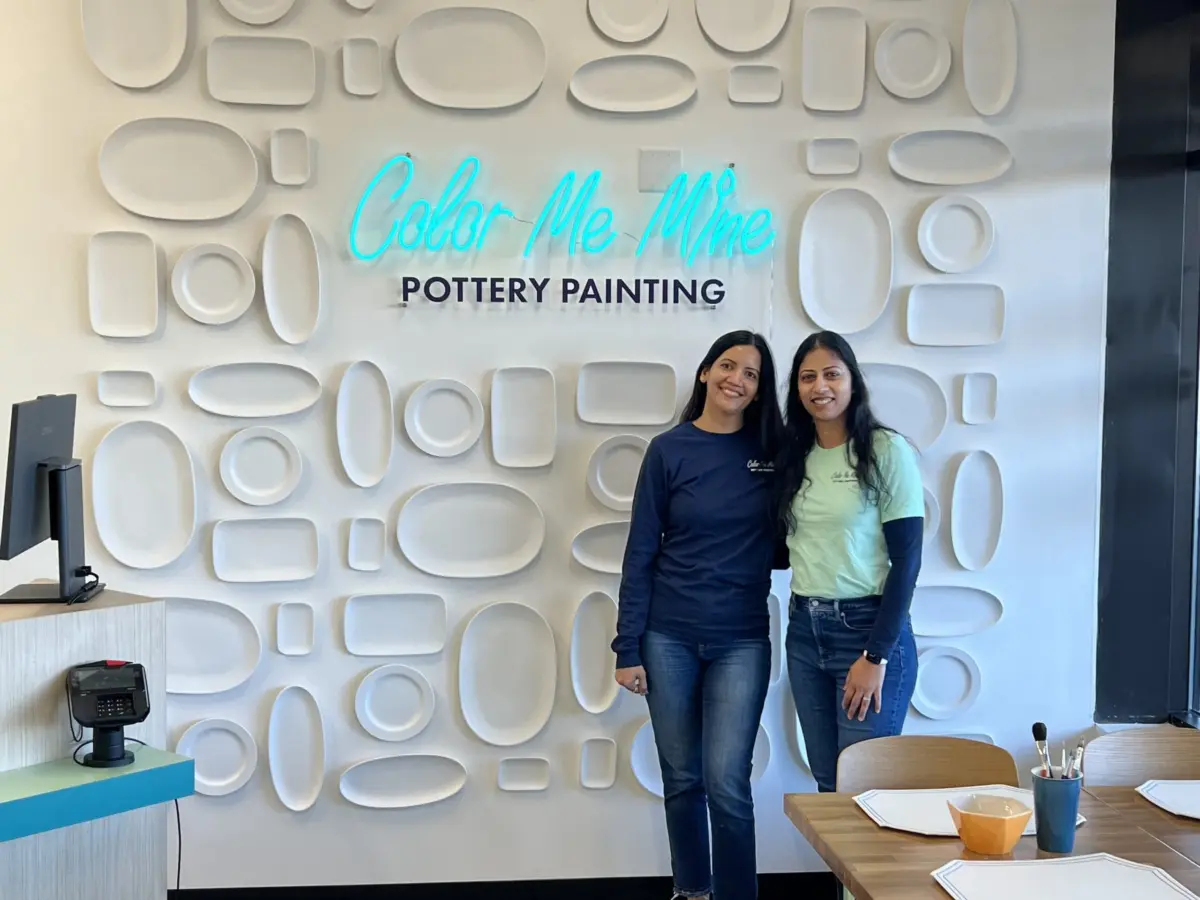
EDINA, Minn. — A few months ago, a customer walked into Antima Jain and Pooja Choudhary’s Edina pottery-painting studio, Color Me Mine, with a deeply personal mission and a meticulously laid plan to propose to his girlfriend.
Color Me Mine operates on a straightforward yet engaging creative concept: customers walk in, browse a wide selection of unglazed pottery pieces—ranging from practical mugs and dinner plates to decorative bowls and specialized dishes—and spend time painting them according to their own design. Once the artistic process is complete, the studio takes over, glazing and firing the pottery in high-temperature kilns to give it a durable, glossy finish. Typically, this turnaround process takes about seven days before customers return to collect their finished works of art.
This particular customer, however, was operating on a tighter timeline dictated by romance. He wanted to paint a jewelry tray inscribed with the pivotal question, “Will you marry me?” and utilize the custom-made ceramic piece as the centerpiece for his proposal. Understanding the significance of the moment, Jain and Choudhary readily agreed to expedite the processing, ensuring his custom piece emerged from the kiln well ahead of the standard seven-day window.
Beyond adjusting their operational schedule to accommodate the proposal, Jain and Choudhary also stepped in to help cultivate the exact romantic atmosphere the customer envisioned within the studio walls. The gesture left a lasting impression. Sometime later, the engaged couple returned to the studio to hand-deliver a save-the-date card that made a special mention of the Edina location. For the two business partners, the moment served as a powerful reminder of the broader community impact they were striving to make. It reinforced their belief that they were building much more than a retail storefront; they were creating a physical space where local residents could connect, slow down, and forge memories that would last a lifetime.
A Lot in Common
That foundational sense of connection and shared values is also the bedrock of Jain and Choudhary’s professional partnership. The two women met 11 years ago through a mutual friend at a social gathering in Minnesota. At the time of their meeting, both had immigrated to the United States from India, were actively raising young children, and shared a deep appreciation for creative arts and hands-on projects.
“We started talking and realized we have so many things in common, and just like each other’s company,” Choudhary recalls of their initial meeting. “We started meeting up.”
As fate would have it, they lived just a three-minute drive away from each other, making regular socialization easy to maintain amid their busy family schedules. As their children grew older and more independent, the longtime friends began exploring the possibility of launching a business venture together. When they officially began their entrepreneurial search in 2023, they evaluated several different business models, including various franchise opportunities, before visiting a nearby Color Me Mine studio to observe operations firsthand.
“We just loved the whole vibe,” Jain says, reflecting on that initial visit. “It was such a clean environment, very organized, very colorful. It just felt calming. We both had the same impression.”
They ultimately decided to pool their personal funds, investing approximately $300,000 to bring their own Color Me Mine franchise location to life, opening its doors in March 2025. Yet, before formalizing their business partnership and committing capital, the friends established a crucial guiding principle: their friendship would always come first. They made a mutual pact that whatever operational challenges or disagreements arose along the way, they would rely on open communication rather than allowing the pressures of business ownership to fracture their relationship.
Their Immigrant Stories
Before taking the plunge into franchise ownership, both women built distinct paths after relocating to the United States from India.
Jain first arrived in the U.S. in 2003, accompanying her husband on a professional work project. After spending several years dividing their time between India and the United States, they permanently settled in America in 2012. Back in India, Jain earned a bachelor’s degree in commerce and spent time working as a preschool educator. After moving to Minnesota, she took a part-time role at Kumon, balancing her professional life while raising her children. Now that both of her children are grown and attending college, she found herself with the ideal window of time to invest in a business venture she could genuinely enjoy.
Choudhary’s journey to the United States followed a slightly different path. Her husband was already living in the U.S. when they married, and she joined him shortly after their wedding. She pursued higher education, earning a master’s degree in electrical engineering. Over the years, she and her family lived in various states before ultimately relocating to Minnesota around the same time Jain arrived. Alongside her primary responsibilities at the pottery studio, Choudhary continues to manage a secondary residential investment property business. At the time of their studio’s launch, she was balancing business ownership with raising two daughters, one in high school and the other finishing middle school.
Deciding to Franchise
Venturing into the world of retail and experiential entertainment was not without its anxieties, particularly given their lack of prior experience in the pottery sector.
“We didn’t have experience running this kind of business, and that was the scary part: How were we going to do it?” Choudhary notes.
Opting for a franchise model provided the necessary middle ground between total independence and corporate backing. It offered a turnkey operational blueprint while still allowing the co-owners significant autonomy over the day-to-day management of their Edina studio.
“Everything was laid out for us. The guidance and support have helped a lot,” Jain explains. She points out that the franchisor has continued to roll out operational enhancements even after their first year in business, such as implementing a unified point-of-sale system across the national network. “We haven’t regretted choosing a franchise.”
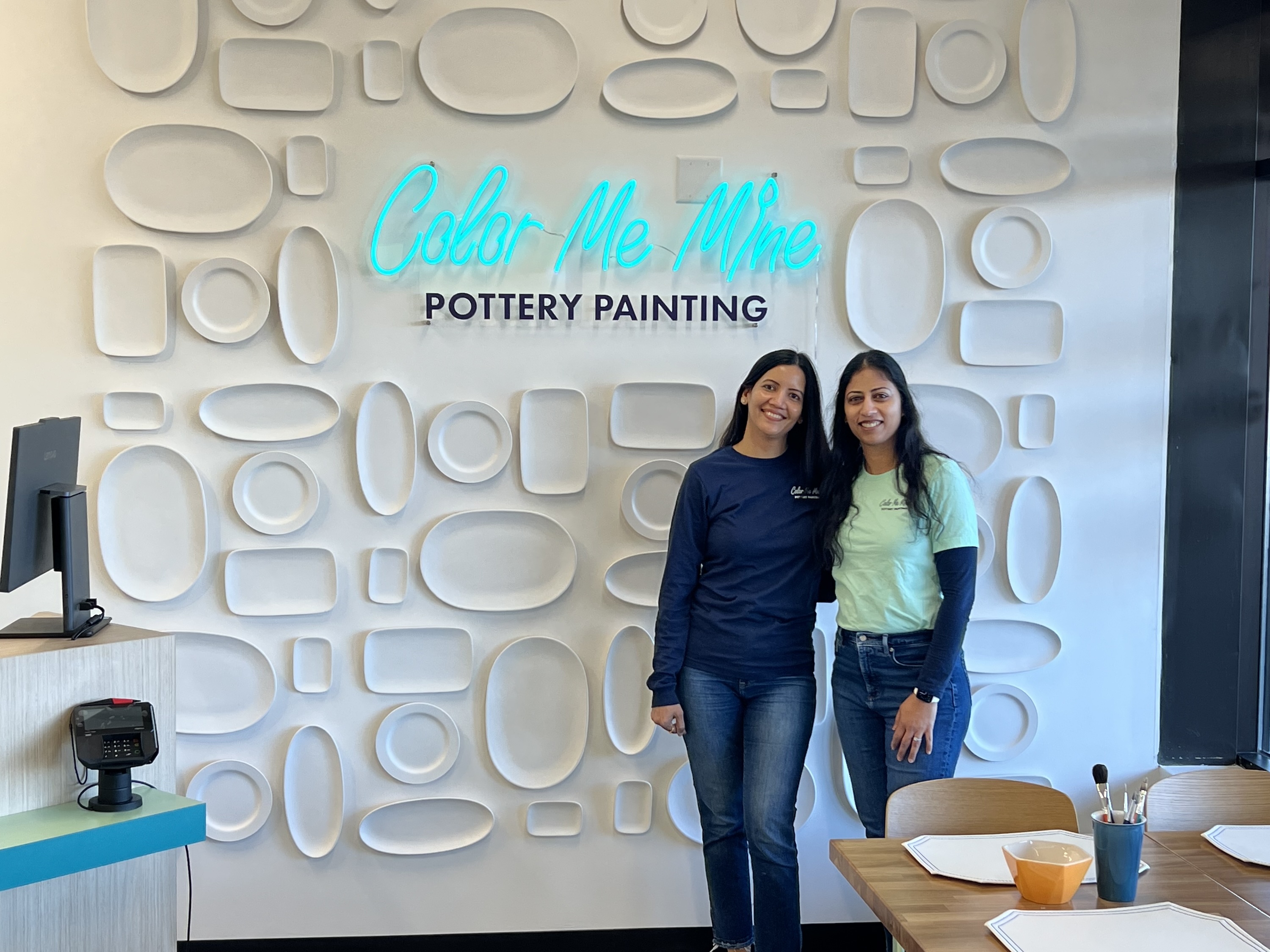
Finding the right physical storefront required a collaborative effort with corporate leadership and local real estate professionals. The franchisor outlined a designated operating territory, and the co-owners enlisted an agent to help scour the market. After reviewing numerous potential spaces, they selected their current Edina location, which benefits significantly from nearby green spaces, parks, and retail shopping centers. The corporate team provided valuable oversight during the site selection process, coaching the partners on key metrics like high visibility and foot traffic potential.
Funding the venture relied entirely on personal capital rather than commercial debt. The total startup costs hovered in the low-$300,000 range, which Jain and Choudhary funded by drawing directly from their personal accounts. Splitting the financial investment evenly made the venture far more approachable and solidified their commitment as equal partners.
Acquiring Customers
To build momentum and drive foot traffic in a competitive local market, the co-owners adopted a multifaceted community outreach strategy.
Jain notes that joining the local chamber of commerce proved instrumental in spreading brand awareness among local residents and business owners. The studio actively participates in nearby art festivals and hosts themed celebrations for major holidays like Mother’s Day and Father’s Day. To encourage repeat business, they implemented recurring promotional campaigns and hand out discount cards alongside finished pieces, incentivizing customers to return within a month of their initial visit. They also utilize targeted digital advertising recommendations provided directly by the franchise network.
Community engagement goes beyond standard marketing tactics. Choudhary explains that the studio regularly donates to local charitable organizations and participates in school fundraising initiatives, efforts that have helped embed the business into the fabric of the local community.
The Realities of Ownership
Despite careful planning, day-to-day operations have presented unexpected hurdles, chief among them being staffing.
“Hiring. I never thought keeping a full staff would be such a challenge,” Jain admits. Because the studio primarily employs part-time workers—predominantly high school and college students—turnover is an ongoing reality. While the co-owners fully support their employees’ academic priorities, the continuous cycle of recruiting, hiring, and training new team members demands constant administrative attention.
In the absence of a full-time general manager, the co-owners divide the workload between themselves. A typical day involves a busy blend of studio supervision, glazing, payroll management, social media maintenance, calendar scheduling, and general online administration.
Beyond staffing, the hardest part of the job remains an occasional, highly delicate operational failure: kiln mishaps. While extremely rare—affecting an estimated less than 1% of all fired pottery—pieces occasionally crack or warp during the intense firing process after a customer has spent hours meticulously painting them. Delivering that news to a disappointed customer is a task both owners dread.
To mitigate the disappointment, the studio offers an immediate remedy: they provide a free replacement piece and waive the studio fee, allowing the customer to return and paint a new item at no extra cost. “We try to do whatever we can to make the experience better,” Choudhary says.
Planning Ahead and Protecting the Partnership
Maintaining harmony within a business partnership requires intentional effort, especially when managing the high-stress environment of a retail storefront. Choudhary emphasizes that establishing ground rules early on has been vital to safeguarding their friendship.
“We knew things would happen because we were new to this. We agreed to keep an open dialogue and talk if something wasn’t working,” Choudhary says. “We’re doing this because we’re friends. If we weren’t going to stay friends, there would be no point in having the business together.”
Jain echoes that sentiment, describing their bond as familial. While acknowledging that disagreements are inevitable in any business partnership, she affirms that her choice of partner remains unwavering.
Looking forward, the co-owners have ambitious growth targets in mind. Jain expresses a desire to eventually expand their footprint by opening a second studio location. They also harbor competitive aspirations within the broader franchise network, aiming to secure a permanent spot among the top five performing locations in system-wide sales. While they have successfully broken into the top 25 and climbed as high as sixth place for a single month, cracking the top five remains a primary objective.
“We have similar goals and the same vision for the studio,” Choudhary concludes. “That alignment is what makes the partnership special. Most of the time, we’re thinking along the same lines.”