




This abrupt reversal has triggered widespread debate across financial markets. Analysts and investors are asking whether the great precious metals bull market has officially run its course, or if the current environment represents another brutal, albeit temporary, correction nested within a much larger, enduring upward trend. To answer that, observers are weighing multiple moving parts, from the Federal Reserve’s latest interest-rate decisions and stubbornly persistent inflation to the shifting dynamics of the gold-to-silver ratio and broader macroeconomic pressures.
The Markets Take a Hit
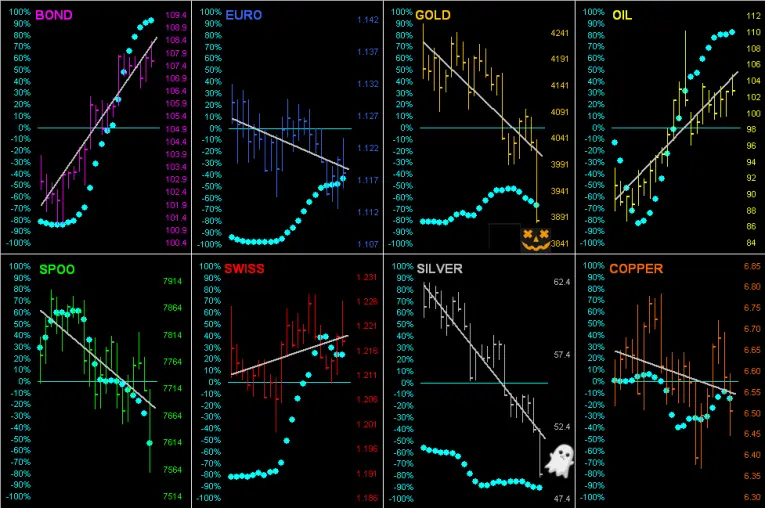
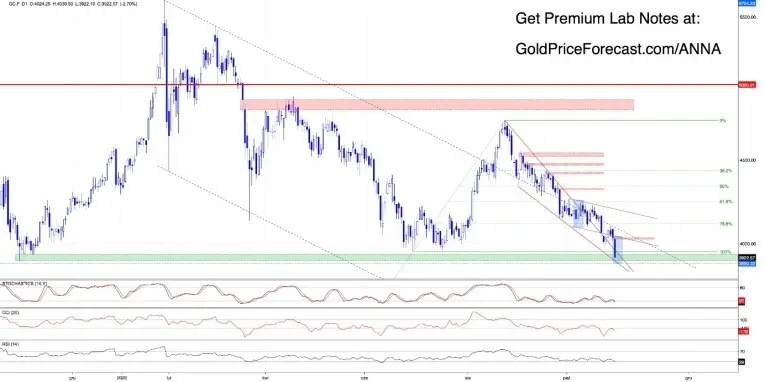
The damage to precious metals portfolios has accumulated swiftly over recent trading sessions. Gold initially managed to hold onto positive territory for the week through Wednesday, but the momentum evaporated abruptly when the yellow metal dropped roughly 1% in Thursday’s session. Losses accelerated further, pushing gold below the $4,000 mark. It currently changes hands at $3,909 an ounce, marking a decline of 2.4% for the week and hitting a four-month low.
Silver, meanwhile, has experienced an even steeper descent, trading at $49.80 an ounce as it hovers on the brink of surrendering a price level that served as major market resistance for decades prior to last year’s historic breakout. For the week, the white metal has shed nearly $5, or 8.7%. Over the past three weeks alone, silver has plummeted by nearly $12, underscoring the severity of the ongoing liquidation.
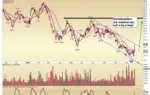
The technical outlook for both metals has turned decidedly bearish. Gold has decisively breached several key price support levels, meaning it would now need to climb back to approximately $4,065 to demonstrate tangible signs of stabilization. Silver continues to carve out a pattern of lower highs and lower lows, making the defense of the $50 threshold critical for near-term market sentiment.
The Federal Reserve and the Inflation Dilemma
At the core of the immediate pressure facing precious metals is the monetary policy stance adopted by the Federal Reserve. Following its policy meeting this week, the central bank voted to leave benchmark interest rates unchanged in a range between 3.75% and 4%. Although a dissenting minority of two officials favored another quarter-point hike, the majority opted to pause and await further economic data.
However, with inflation data refusing to cool sufficiently, financial traders are pricing in roughly a 75% probability that the Fed will resume hiking rates at its December meeting. Recent economic reports have offered little reassurance. Consumer price acceleration in September was fueled by rising gasoline costs and broader increases across various goods and services, placing a heavier burden on household budgets.
Compounding these inflationary pressures, oil prices surged about 4% following renewed Houthi attacks in Saudi Arabia, immediately stoking fears of fresh disruptions to global energy supply chains. Simultaneously, the latest jobless claims report revealed a surprisingly robust labor market, stripping away one of the primary justifications the central bank might have used to pivot toward an economic rescue stance.
These collective factors reinforce market expectations that interest rates will remain higher for longer. For gold and silver, this environment creates a persistent headwind because higher yields on interest-paying assets generally diminish the relative appeal of holding non-yielding precious metals.
Yet, a closer examination of this dynamic reveals a profound irony. Gold is experiencing heavy sell-offs precisely because inflation is heating up and prompting the Federal Reserve to consider higher interest rates. In effect, market participants are dumping a traditional hedge against declining purchasing power because the very threat that asset is designed to protect against is becoming more deeply entrenched.
Navigating the Fed’s Policy Trap
Financial markets rarely behave with strict rationality over short horizons, and the Federal Reserve itself appears caught in a difficult structural trap. As analysts like Mike Maharrey have noted, the central bank requires higher interest rates to bring persistent inflation under control, yet it desperately needs lower rates to keep the United States’ colossal national debt burden manageable.
With the national debt rapidly approaching the $40 trillion threshold, Washington can ill afford an era of indefinitely elevated borrowing costs. The central bank faces an increasingly narrow path where it must choose between aggressively fighting inflation or keeping the government’s borrowing apparatus functioning smoothly. Attempting to accomplish both mandates simultaneously has become extraordinarily difficult.
In a structural shift announced this week, Federal Reserve Chairman Kevin Warsh revealed that beginning next year, the central bank will set aside portions of its regular meeting calendar exclusively for long-term strategic reviews rather than immediate interest-rate adjustments. By 2028, the Fed plans to narrow its rate-setting gatherings to six per year, dedicating two additional meetings to broad strategic discussions. While proponents argue that giving policymakers more time for long-term thought could improve institutional outcomes, altering the meeting schedule does little to resolve the underlying monetary imbalances driving the current economic climate.
The Gold-to-Silver Ratio Tells a Story
As the broader market absorbs these pressures, attention is also shifting toward the expanding gold-to-silver ratio. This traditional metric measures how many ounces of silver are required to purchase a single ounce of gold. When the ratio climbs, it indicates that silver is depreciating in value relative to gold.
During silver’s dramatic surge to a peak above $120 an ounce in January, the ratio compressed to roughly 46-to-1. However, as silver prices have retreated, the ratio has steadily climbed back to approximately 78-to-1, demonstrating that silver has lost significant ground against gold even while gold itself has trended downward.
Historically, periods of extreme underperformance in silver have sometimes laid the groundwork for powerful market rebounds. During the liquidity crunch and market panic of 2020, for example, the ratio briefly spiked past 120-to-1 before silver embarked on a massive rally that gained more than 150% over the subsequent months. While historical precedents do not guarantee future outcomes, they highlight how sharply the valuation relationship between the two precious metals can reverse.
Physical Market Dynamics and Industrial Demand
There are, however, tangible economic reasons why silver is currently underperforming gold. Central banks continue to accumulate gold reserves aggressively, a level of official-sector buying that silver does not share. Furthermore, silver carries a heavy industrial demand component, making it far more sensitive to broader anxieties surrounding global economic growth.
Physical availability has also shifted significantly. Following the severe delivery squeezes and inventory shortages that propelled prices higher last year, stock levels in London vaults have recovered substantially. Data from Metals Focus indicates that London silver inventories reached a four-year high of approximately 932 million ounces at the end of September.
At the same time, institutional investors have been liquidating positions in silver exchange-traded products, returning metal to the open market, while retail investment demand has cooled markedly following the speculative frenzy earlier in the year. Consequently, the immediate physical market lacks the extreme tightness that characterized silver’s dramatic run-up, leading analysts to suggest that the market could remain under pressure and potentially transition from a structural deficit to a supply surplus by 2027.
Despite this near-term softening, the longer-term structural picture remains complex. Silver has endured five consecutive years of structural supply deficits, during which total demand outstripped combined mine and recycling supply by more than 700 million ounces. Although higher prices have encouraged substitution and conservation efforts in certain industrial applications, silver remains an irreplaceable component across a vast array of modern technologies.
Market analysts suggest that once investors begin anticipating a definitive end to aggressive monetary tightening, silver could rapidly resume its outperformance relative to gold due to the relatively compact size of its market.
The Case for Physical Metals Endures
Neither gold nor silver has established a definitive market bottom, and near-term volatility remains a distinct possibility. However, the fundamental monetary imbalances that initially drove both metals to record highs remain unresolved. Government spending continues at a rapid pace, the national debt mounts, and the purchasing power of fiat currency steadily erodes.
Although the Federal Reserve opted to pause its rate hikes this week, the machinery of government borrowing and spending continues to operate unabated. Precious metals have a long history of enduring brutal corrections, but the actions of central bankers and fiscal policymakers provide little evidence that fiat currencies are becoming safer stores of value. That underlying reality continues to underpin the long-term investment case for physical precious metals, even through challenging weeks of market liquidation.