


Precious metals faced renewed selling pressure across the board, defying a weaker U.S. dollar, declining Treasury yields, and lower crude oil prices that would typically provide a supportive backdrop for bullion. Market participants noted that when gold falls on a trading day featuring macroeconomic conditions that should theoretically boost its value, sellers remain firmly in control of the tape, signaling underlying bearish momentum.
At the time of writing, the USD Index edged down 0.2 percent to 101.97, while the benchmark 10-year Treasury yield softened to 5.00 percent, pulling back slightly from a 5.04 percent close on Wednesday. Crude oil prices also retreated by more than 1 percent. Despite these traditional tailwinds, December gold futures traded near $4,033 per ounce, while the SPDR Gold Shares (GLD) exchange-traded fund declined 1.4 percent. Silver experienced a sharper downturn, dropping to $52.03 to print a new low for 2026, and the VanEck Junior Gold Miners ETF (GDXJ) fell 3.3 percent, highlighting pronounced weakness across mining equities.
The Fed Held Rates Steady as Key Economic Data Met Expectations
Monetary policy decisions and macroeconomic releases from the United States and Europe helped frame the broader financial landscape. The Federal Open Market Committee maintained its target interest rate range at 3.75 percent to 4.00 percent on Wednesday, passing the decision through a 10-2 vote. Federal Reserve Governor Lisa Cook and Cleveland Fed President Beth Hammack dissented from the majority, advocating for a quarter-point rate increase. Fed Chair Jerome Warsh refrained from offering explicit forward guidance regarding a potential December move, stating that he does not believe in forward guidance absent exigent circumstances or a crisis. Nevertheless, federal funds futures continued to price in approximately an 80 percent probability of a rate hike by December.
Domestic economic data released alongside the policy decision aligned closely with market projections. The U.S. economy expanded at an annualized rate of 3.4 percent in the third quarter, accelerating from 2.2 percent in the second quarter and exceeding the 3.2 percent growth rate anticipated by economists. Meanwhile, the core Personal Consumption Expenditures (PCE) price index for September rose in line with forecasts, posting a 0.3 percent monthly increase and a 3.1 percent rise compared to the same period a year earlier, ticking up from August’s 3.0 percent annualized reading.
In Europe, the European Central Bank kept its deposit rate unchanged at 2.5 percent against a euro area inflation rate of 3.8 percent recorded in September. Additionally, ECB President Christine Lagarde announced her decision to step down on February 7, 2027, cutting her scheduled term short by approximately nine months.
Gold Fails to Sustain Rebound Near the 38.2% Fibonacci Retracement
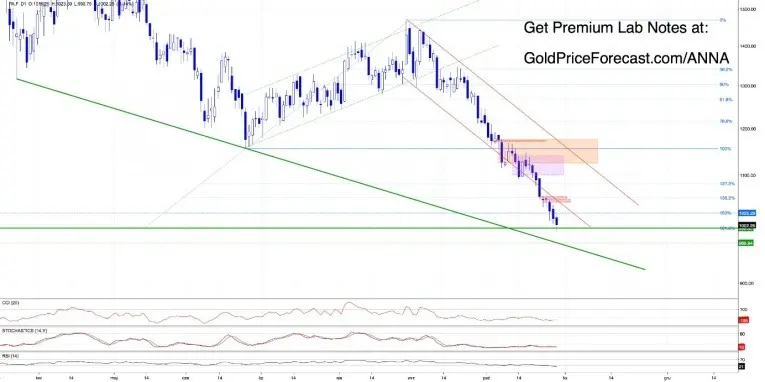
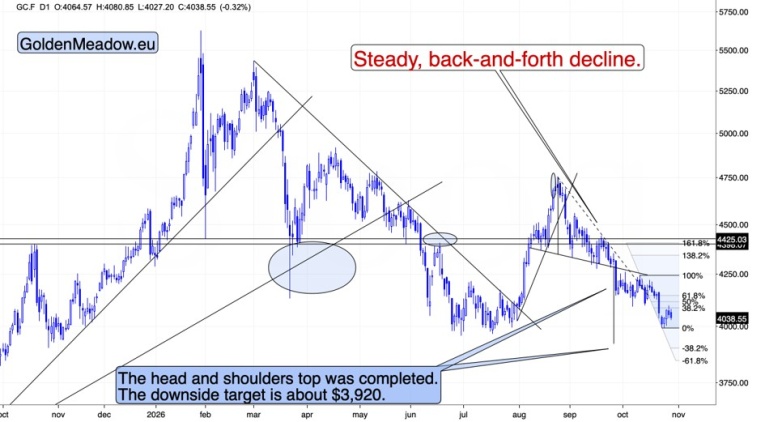
Gold’s recent attempt at a recovery proved short-lived. During Wednesday’s session, December gold futures advanced as high as $4,097.20 per ounce, pushing slightly above the 38.2 percent Fibonacci retracement level of the market’s recent downward leg before encountering aggressive selling and reversing course.
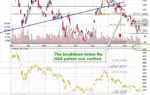
Market positioning reflected this rejection, with gold trading roughly $64 below the previous day’s intraday peak. Technical analysts pointed out that a head-and-shoulders top formation on daily charts has now been completed, establishing a measured downside price target in the vicinity of $3,920 per ounce.
A Weaker Dollar Fails to Inspire Bullion Buyers
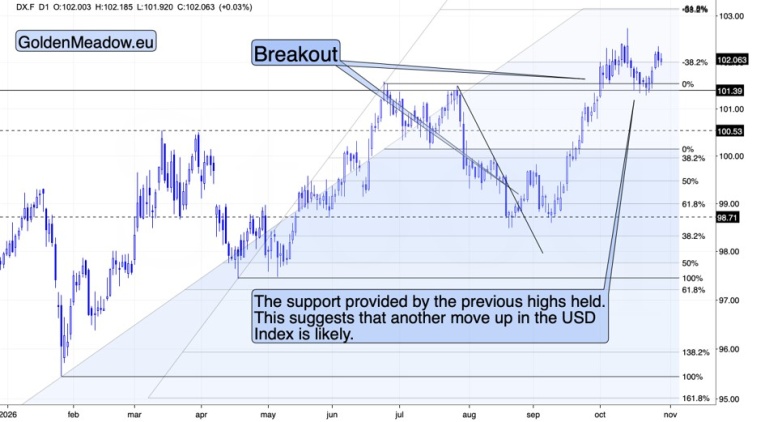
The U.S. dollar gave up ground during the session, potentially offering breathing room for dollar-denominated commodities, yet the positive correlation failed to materialize for bullion. The USD Index slipped to 101.97, down from its Wednesday close of 102.19, while remaining elevated near its 2026 highs. Throughout the ongoing October pullback, the index has managed to hold above prior resistance levels that have since inverted to serve as technical support.
Because the historical relationship between gold and the U.S. dollar is negative, a softening greenback typically acts as a catalyst for higher gold valuations. Similarly, declining bond yields reduce the opportunity cost of holding non-yielding assets like precious metals. The fact that gold declined despite concurrent weakness in both the dollar and benchmark yields underscored the prevailing strength of institutional selling pressure.
Silver Plunges to New 2026 Lows
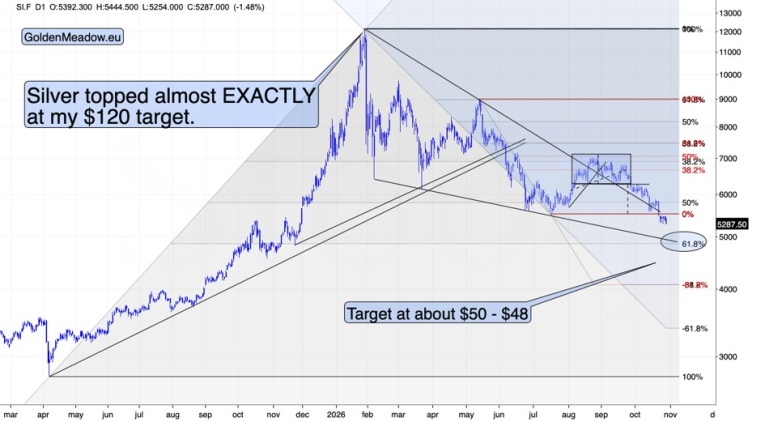
Silver continued to act as a high-beta indicator, leading the broader precious metals complex lower and outstripping gold’s losses. Silver prices tumbled to $52.03, marking a fresh low for 2026 and registering the lowest level for the active December contract since November 2025. The iShares Silver Trust (SLV) slumped 3.9 percent on the day, translating to a downward velocity nearly three times greater than that experienced by its gold equivalent, the GLD.
This latest leg down followed multiple sessions of technical warnings regarding confirmed breakdowns. With consecutive daily closes below key prior lows already established, the latest session confirmed a deeper downward trajectory. Having traded near $59.42 in early October, silver prices have since retreated by roughly 11.9 percent, compared to a relatively modest 3.0 percent decline in gold over the same timeframe.
Mining Equities Give Back Recent Gains
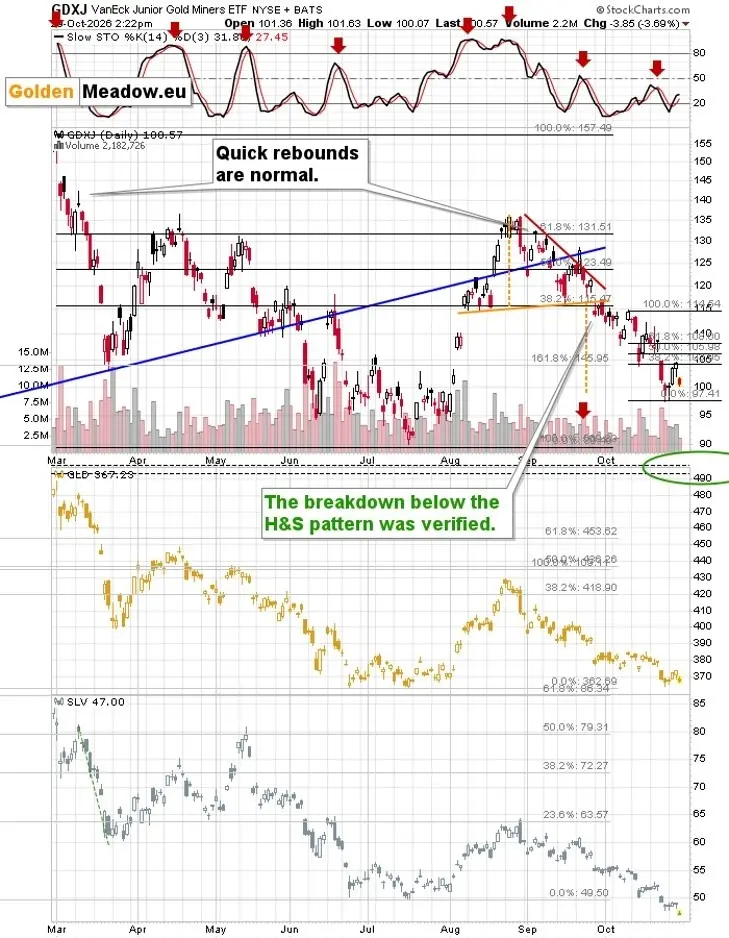
Mining equities erased the modest ground gained over a three-day relief rally, surrendering a significant portion of their recent recovery. The GDXJ junior miners ETF, which had climbed from $99.35 late last week to $104.42 by Wednesday, retreated to approximately $101, translating to a 3.3 percent daily loss that significantly outpaced the 1.4 percent pullback in the GLD ETF.
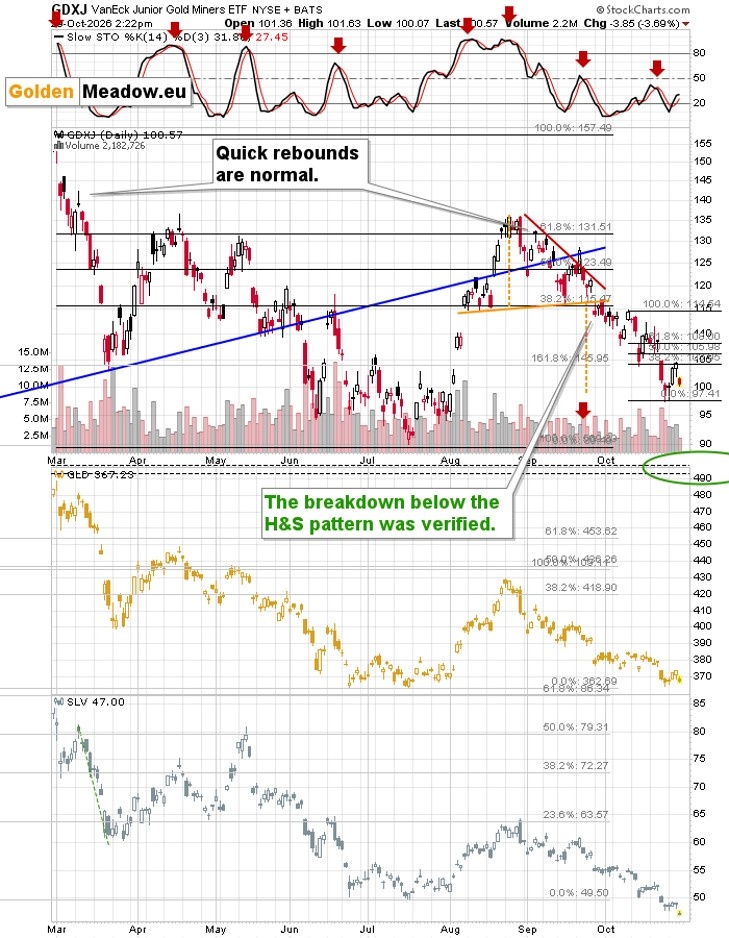
Market observers noted that until mining stocks begin demonstrating relative strength by rising on down days for gold—or at least suffering shallower losses than the underlying metal—the corrective phase within the sector is likely to persist. The steep losses recorded by junior miners, falling at more than twice the rate of physical gold, reinforced expectations of continued downside momentum.
Crude Oil Retreats on Diplomatic Openings Involving Iran
Crude oil futures traded lower amid reports of potential diplomatic engagement involving Iran. Crude benchmarks dropped roughly 1.3 percent, bringing December West Texas Intermediate (WTI) near $101.40 per barrel and December Brent near $114.20 per barrel.
Media reports indicated that Vice President JD Vance dispatched a letter to Mohsen Rezaei, secretary of Iran’s Supreme National Security Council, aimed at exploring the revival of peace talks, with President Trump confirming approval of the humanitarian outreach regarding medical supplies. Reports also suggested that regional allies were advised to prepare for potential strategic contingencies following the November midterms, though Tehran had not yet issued a public response.
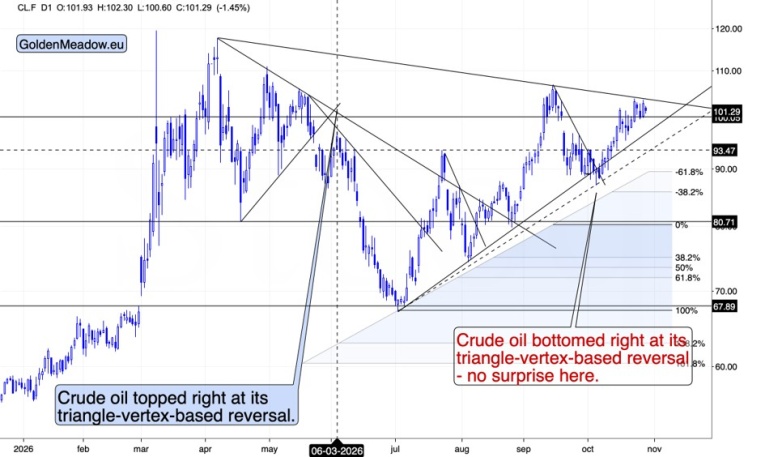
From a technical perspective, crude oil prices encountered resistance along a declining trendline, though the prior week’s close at $103.27 represented WTI’s third-highest weekly settlement of the year. In the context of precious metals, the energy market exerts influence primarily through inflation expectations and interest rates, where higher energy costs feed into broader price pressures. However, with both oil and gold moving lower in tandem, macroeconomic sentiment appeared driven by broader liquidation dynamics.
Broader Equities Slide as Technology Shares Retract
Broader equity markets finished lower, weighed down by sharp losses across the technology sector. The S&P 500 declined 0.5 percent, while the tech-heavy Nasdaq Composite dropped 1.5 percent, pressured significantly by a double-digit percentage decline in shares of Alphabet following its corporate earnings report. Silver historically exhibits a higher sensitivity to broader equity market fluctuations than gold, a dynamic reflected in the session’s performance where silver losses outpaced the contraction seen in the Nasdaq Composite.
The confluence of steady Federal Reserve policy, in-line economic indicators, a softer U.S. dollar, lower bond yields, and declining energy prices presented an environment where precious metals historically found reasons to rally. Instead, prices moved lower across the complex, leaving silver at new yearly lows and junior mining equities under severe pressure as sellers maintained command of the market.