



Global gold mine production reached an unprecedented milestone in the third quarter, setting a modern record for the industry. Yet, in a counterintuitive twist that has captured the attention of commodities analysts and market observers worldwide, total global gold supply actually contracted by 1 percent during the same period.
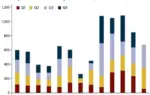
According to comprehensive data compiled by the World Gold Council, mines globally produced an astounding 1,071 tonnes of gold in the third quarter. This figure represents the highest third-quarter mine output recorded in the council’s historical data series, which dates back to the year 2000. On a year-on-year basis, global gold mine production is currently up by 2 percent, placing the sector firmly on track to achieve an all-time annual production record by the close of the year.
The surge in output was spearheaded by several of the world’s foremost gold-producing nations, which reported substantial increases in their quarterly extraction volumes. Canada emerged as a primary driver of this growth, with domestic mines posting an impressive 22 percent increase in gold output compared to the previous year. Industry analysts attribute this sharp upward trajectory to a combination of production coming online from recently commissioned mining projects, alongside elevated and efficient output from existing, established operations.
Similarly, Indonesia reported a formidable 21 percent increase in its national gold production. According to the World Gold Council, this notable expansion was driven primarily by improved ore grades and significantly higher production volumes at PT Amman Resources’ sprawling Batu Hijau operation. Other major mineral-rich nations followed suit, with Chile and Ghana registering robust production increases of 19 percent and 13 percent, respectively, further reinforcing the robust physical output coming out of the ground.
Rising Production Costs Outpace the Industry
While mining operations around the world are successfully extracting greater quantities of the precious metal, the financial toll of digging it out of the earth is escalating at an alarming pace. The economic realities of modern mining are catching up with producers as operational overheads soar.
Average all-in sustaining costs, commonly referred to in the industry as AISC, climbed to a record-shattering high of US$1,930 per ounce during the second quarter. This represented a sharp 8 percent increase quarter-on-quarter and a staggering 22 percent surge in costs over the preceding twelve months.
Data from the World Gold Council indicates that this marks the steepest annual rate of increase in all-in sustaining costs witnessed by the industry since the first quarter of 2013. Market analysts have pointed out that price inflation within the mining sector is currently accelerating at a rate vastly outstripping the historical five-year average of 5 percent.
Industry executives and market specialists note that gold miners have faced intense cost pressures from multiple directions over the past year. Elevated energy prices, more expensive mining consumables, and rapidly climbing sustaining capital expenditure costs have all converged to squeeze profit margins, even as physical output expands.
Unraveling the Paradox: If Mines Produced More Gold, Why Did Supply Drop?
The central question puzzling market analysts following the third-quarter data release is straightforward: if primary mine production increased significantly, how did total global gold supply manage to fall?
The answer lies in two critical components of the broader gold supply chain: secondary market recycling and producer de-hedging activities.
Global recycling volumes experienced a notable downturn in the third quarter, dropping by 8 percent to 314 tonnes as spot gold prices experienced a temporary dip. According to the World Gold Council, regional recycling trends presented a mixed picture during the quarter. While recycling volumes remained elevated in Europe and the United States, volumes in the majority of other global regions declined in tandem with lower prevailing market prices.
The World Gold Council noted that expectations of higher gold prices over the medium to longer term also played a significant role in depressing recycling levels among ordinary consumers and holders of the metal. Anecdotal evidence suggests that individuals holding physical gold anticipate a robust price recovery. Furthermore, in countries burdened by weak local currencies, citizens continue to view gold as a vital financial shield against ongoing economic turmoil and currency depreciation, making them reluctant to part with their holdings.
In India, one of the world’s most prominent consumer markets for gold, recycling activity remained noticeably subdued. Quarterly volumes in the country were largely flat, but registered a 12 percent decline on an annual basis. WGC analysts attribute these weak recycling numbers to a combination of lower local gold prices, a cultural and financial preference for pledging existing gold as collateral for loans rather than selling it outright, and an increasing trend among consumers of trading in old jewelry for newly crafted pieces.
Market experts emphasize that exchanging old jewelry for new jewelry has no net impact on overall physical supply, and crucially, traditional recycling data fails to capture these retail trade-ins.
A similar contraction was observed in China, where recycling volumes fell 12 percent quarter-on-quarter and dropped 20 percent compared to the same period in the previous year. A newly enforced 7 percent value-added tax on jewelry sales in the region has actively incentivized consumers to trade in old jewelry rather than liquidate it for cash, further dampening official recycling metrics.
In stark contrast to the trends seen in Asia, recycling activity moved in the opposite direction in Western markets. Volumes rose by 12 percent annually in Europe and climbed by 8 percent in the United States, demonstrating regional divergence in consumer behavior.
World Gold Council analysts stated that these diverse recycling trends reinforce their underlying view that secondary supply activity is far more sensitive to recent, short-term price movements than to traditional year-on-year comparisons. Although the average gold price during the third quarter remained 23 percent higher than its level in the third quarter of the previous year, it actually retreated by 5 percent from the preceding quarter. Consequently, recycling volumes followed this most recent downward price direction, declining by 2 percent quarter-on-quarter and 8 percent year-on-year, a pattern consistent with market behaviors observed in recent quarters.
The Impact of Producer De-Hedging
Adding further downward pressure to the global supply equation was the ongoing phenomenon of producer de-hedging, which subtracted 17 tonnes from the total gold supply during the third quarter.
For decades, many gold mining companies have utilized hedging strategies—entering into formal financial contracts to sell a portion of their future mineral output at a predetermined, fixed price. This practice provides gold producers with a greater degree of revenue certainty and shields corporate balance sheets against sudden, unexpected drops in global gold prices. However, the trade-off is clear: if market prices subsequently rise well above the agreed hedge price, the mining company forfeits those potential additional profits.
The reduction in hedging activity observed in the third quarter is expected to drive down total outstanding global producer hedge positions from 109 tonnes at the conclusion of the second quarter to approximately 92 tonnes.
According to commentary from the World Gold Council, this continued contraction in hedging is entirely consistent with producers demonstrating a very limited appetite to lock in future selling prices, particularly given that their existing hedge books are positioned well below current spot market levels. Miners are clearly preferring to maintain unhedged exposure to capture the benefits of prevailing market strength.
Looking forward to the remainder of the year and into 2026, analysts at the World Gold Council anticipate that total global gold supply will contract slightly. While primary mine output remains firmly on track to establish a brand-new historical production record, expectations are that lower recycling volumes will persist through the fourth quarter, keeping a lid on total available supply.
Despite ongoing macroeconomic challenges—including persistent inflation and emerging signs of softening employment figures in certain major economies—analysts report that there is still virtually no evidence of widespread, distress-driven selling among retail gold holders. While a modest uptick in recycling could materialize should the fourth quarter witness a strong price recovery, the underlying risk of a sudden, sharp flood of recycled gold hitting the market currently appears low.