
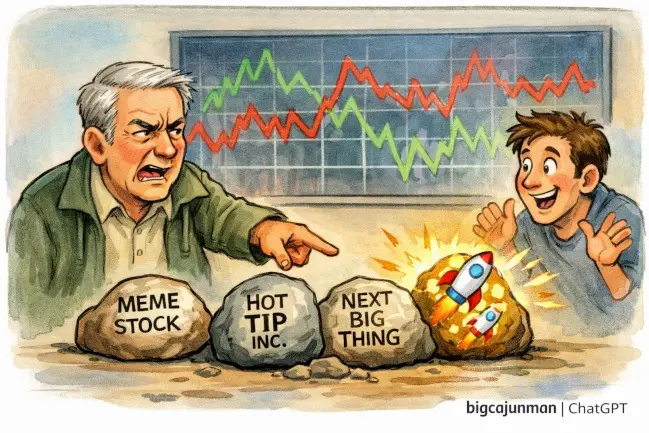
Reflecting on the digital landscape of the late 2000s evokes a starkly different era of the internet. Back then, RSS feeds were frequently breaking, Blogger reigned supreme as the publishing platform of choice, and digital creators nurtured the naive optimism that they might accidentally stumble into wealth through sheer cleverness and online wit. Fast-forward to the current era in 2025, and the technological landscape has fundamentally shifted. RSS has effectively become a digital fossil, relegated to the archives of internet history. Surprisingly, online government services have evolved to mostly work without a hitch. Yet, amidst all these technological transformations, one foundational truth about human behavior and wealth remains constant: the vast majority of financial advice is merely confidence packaged in an attractive font.
Since launching a new site layout and platform, a wave of new readers has naturally emerged with a familiar set of inquiries. Chief among their questions is the perennial request for personal investment direction: where should one put their hard-earned money? The answer offered is refreshingly blunt. The author readily admits to having no definitive idea and suggests they should be placed near the absolute bottom of any reliable list of financial advisors. While they maintain links to genuinely brilliant minds whose work serves as research for their own portfolio decisions, they readily self-identify as the athletic equivalent of a historically low batting average player in professional sports when it comes to picking stocks. Occasional opinions on market trends may be voiced, but readers are explicitly warned against risking their savings solely on the basis of casual commentary—a path bound to lead to disappointment.
Online Government Efficiency
Amidst the complexities of personal finance and digital transitions, everyday administrative tasks have occasionally found a way to streamline themselves. During the recent Christmas holidays, a welcome discovery was made regarding modern bureaucratic efficiency. The Ontario Government now allows citizens to seamlessly renew their car registration online, with the physical renewal sticker conveniently delivered directly through the mail. Having put this provincial digital service to the test, the verdict is overwhelmingly positive. The entire operational process functions smoothly, securely, and without unnecessary bureaucratic hurdles.
The only minor grievance to be found in the experience involves multi-vehicle households. Because the system currently handles registrations on a singular basis, managing two cars requires executing two entirely separate transactions. It would undoubtedly represent a user-friendly upgrade if the digital portal allowed motorists to bundle multiple vehicle renewals into a single shopping cart checkout. Nevertheless, the successful modernization of routine government paperwork stands as a rare bright spot in digital administration.
RESP Status and Steady Growth
When it comes to long-term savings vehicles, Registered Education Savings Plans continue to expand steadily. This portfolio growth is largely attributed to a conservative, risk-averse strategy focused strictly on purchasing exchange-traded funds rather than chasing speculative market trends. Within Canadian personal finance circles, RESPs are frequently praised as an exceptional vehicle because government grants essentially amount to free money for children’s future education, provided contributors stay disciplined and avoid unnecessary market exposure.
Parallel to tracking long-term educational funds, daily tracking of personal financial discipline continues on a micro level. Current metrics show a commendable streak at the workplace, with three consecutive days logged without spending a single dollar, bringing total work-related expenditures for the week to a flat zero.
Navigating the technical migration away from legacy platforms has not been entirely seamless, however. Apologies are due to loyal readers who experienced disruptions due to an incorrectly configured RSS feed following the move from Blogger. Subscribers should not be receiving full-feed syndication, and the technical mishap was entirely unintentional. The author has offered humble apologies for the configuration error that briefly buggered up the feed settings, noting that transitioning away from older publishing ecosystems comes with a persistent learning curve.
The Honest Truth About Investing Skills
To ensure absolute clarity—repetition being a necessary virtue when dealing with hard-earned capital—it bears repeating that the author is by no means a professional investing expert. If such expertise were genuinely possessed, it would hardly be shared freely with the general public out of sheer altruism. At best, the perspective offered comes from a grizzled veteran of bad assumptions and mediocre timing. Countless hours of reading, numerous trials, and a sufficient volume of personal financial missteps combine to qualify the author as experienced, though experience should never be confused with actual genius. True financial intelligence is recognized in others, and the author makes a deliberate effort to surround themselves with genuinely smart people for as long as their patience holds out.
Readers seeking guaranteed get-rich-quick schemes, proprietary algorithmic stock picks, or insider market manipulations will quickly realize they are in the wrong place. On the other hand, those who appreciate homespun rhetoric, candid admissions of human error, and realistic discussions about wealth management will find plenty of reason to keep returning. The digital landscape may have modernized, but the core philosophy of acknowledging one’s limitations remains unchanged.
Overconfidence: The Real Financial Killer
The psychological dangers of market participation often stem less from bad luck and more from misplaced arrogance. The finest perspective on this phenomenon ever encountered appeared on a snarky calendar quote, which advises that before anyone attempts to beat the odds, they must first ensure they could survive the odds beating them. Decades ago, market participants approached the stock market with a healthy dose of respect for its volatility, but that stoic, grounded perspective has largely evaporated in the modern era.
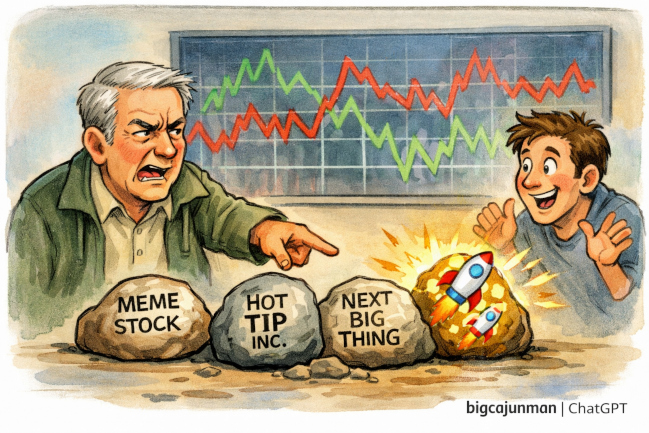
Today, individuals rarely lose their capital simply because fortune turned against them; rather, they suffer financial losses because they operate under the dangerous illusion that they possess superior intellect compared to the rest of the global marketplace. This overconfidence manifests through classic behavioral symptoms, driving amateur investors to take outsized risks, ignore fundamental valuations, and chase fleeting trends fueled by social media hype. Overconfidence remains the primary mechanism that entices everyday people into financial ruin.
Final Thoughts and Modern Market Risks
If any significant variable has shifted between the original publication of these thoughts years ago and the modern financial climate, it is that investing has become aggressively and perilously accessible. Modern smartphone applications, zero-commission trading platforms, and wall-to-wall social media financial commentary have created an environment where it is easier than ever to execute a trade impulsively and regret it immediately. While the foundational rules of prudent capital management have not altered in the slightest, the sheer speed at which an investor can execute a catastrophic mistake has multiplied exponentially. The high-speed destruction of personal wealth is far too effortless in the contemporary digital age, an environment exacerbated by the aggressive rise of the modern online betting and speculative trading industries.