



Marking a major personal and professional milestone, the creator behind the popular personal finance platform the Financial Independence Podcast recently reflected on a decade of post-Financial Independence (FI) life. Looking back on ten years since leaving the traditional workforce, the host shared profound insights regarding gratitude, the changing landscape of technology, the evolution of lifestyle spending, and the psychological hurdle of navigating life without rigid, long-term financial goals.
Reflecting on the journey, the overarching sentiment is one of deep gratitude. Being able to spend entire days with his children, witness their milestones firsthand, and remain an active, everyday presence in their lives is an outcome he values above all else. At the same time, the financial safety net he built over the years has insulated him from unexpected economic disruptions, such as the rapid rise of artificial intelligence. As a former software developer, he noted that while he once assumed he could easily return to the tech industry as a backup plan, the emergence of advanced coding tools like Claude Code has fundamentally transformed the software development market. Observing how these tools drastically impact productivity and market demand, he admitted he would feel considerable anxiety if he still relied on a developer’s salary to survive and invest. Knowing his portfolio safely carries his livelihood has removed that pressure entirely.
The discussion quickly turned to the mechanics of saving, challenging the conventional wisdom of lean FIRE—a lifestyle designed around bare-bones spending to escape an unliked job as quickly as possible. Having accidentally transitioned into a form of "fat FIRE" over the years, he now advises others, particularly software developers currently in stable, high-paying roles, to reconsider rushing into a minimalist retirement. He suggests staying in the workforce slightly longer to build a larger cushion, noting that the modern job market is far less predictable than it was a decade ago. Furthermore, he emphasized that embracing a more robust financial cushion unlocks a surprisingly enjoyable and mentally liberating lifestyle.
For him, the shift toward fat FIRE was not characterized by extravagant purchases like private jets or luxury yachts, but rather by a profound psychological transformation. Knowing his portfolio easily covers an upper-middle-class standard of living has completely eliminated financial friction from his daily routine. He no longer considers the price of everyday items, whether that means purchasing premium morning coffee without hesitation or taking his family out to dinner with appetizers, cocktails, and desserts without worrying about the bill.
This realization led to a broader understanding of personal consumption: financial resources are rarely the true limiting factor in daily life. Instead, constraints are dictated by time, personal energy, and the specific stage of life a family is in. Dining out every single day is unappealing because managing young children at restaurants can be stressful, and fine dining loses its appeal when a simple pub meal with burgers is universally more enjoyable. Similar limitations apply to travel and home improvements, where physical space and the logistical hassle of transit naturally cap expenses. Recognizing that he can spend as freely as he wants without breaking his budget has freed up an immense amount of mental energy and reduced long-term stress.
These realizations mirrored lessons learned from past conversations with financial author Ramit Sethi, whose advice initially made little sense during the early accumulation phase. Concepts such as "Why spend less when you can spend more?" and embracing the highest-quality item in a category because of infrequent purchasing habits finally resonated. Because his desire for material goods is inherently limited, purchasing top-tier, exceptionally well-designed items that last longer and provide genuine utility adds immense value without creating clutter. Similarly, learning to accept waste and move past sunk costs—such as cutting short expensive trips to Italy and Canada when a vacation has naturally peaked—has proven to be a liberating financial strategy.
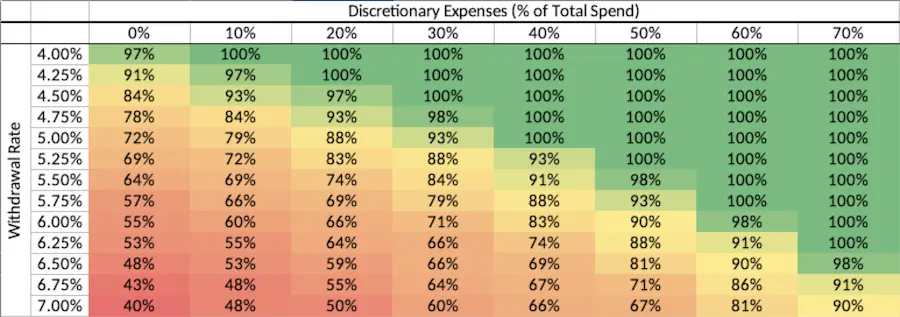
Rather than viewing lifestyle creep as a dangerous trap, he argues that asset-driven lifestyle creep is remarkably sustainable. When a growing portfolio organically increases annual spending power through steady compounding, the resulting upgrades provide the same psychological thrill as a corporate bonus, but with the permanence of inflation-adjusted, lifelong security. This philosophy directly inspired the creation of his software project, Wealth Machines, which helps individuals identify and safely deploy excess wealth to enhance their present-day lives rather than hoarding every dollar for a distant future.
Simultaneously, his approach to investing has evolved from obsessive tax optimization to radical simplicity. Techniques like backdoor Roth contributions and individual stock picking, once staples of his financial strategy, have been discarded to eliminate administrative overhead and mental clutter. By consolidating his holdings into a few core funds, managing his finances requires minimal effort. Recently, he even introduced a degree of risk mitigation by shifting approximately ten percent of his portfolio into 30-year Treasury Inflation-Protected Securities (TIPS). Locking in historically high real yields near three percent establishes a predictable spending floor that will mature precisely when he reaches traditional retirement age and faces mandatory minimum distributions from tax-deferred accounts.
With daily spending optimized for contentment and portfolios running smoothly on autopilot, his focus has shifted toward long-term residential stability. Entering peak spending years alongside growing children and healthy extended family members, he and his wife are actively exploring the possibility of relocating to a dream home base. The primary objective is to create "gravity"—a desirable, walkable community with excellent weather and ample space for visiting family and friends, designed to foster deep roots and ensure that their children will naturally want to return as they grow older.
Ultimately, reaching this stage of financial independence has brought an unexpected psychological challenge: the absence of a driving, long-term financial goal. Having achieved the milestones that once motivated his career, he finds himself navigating uncharted territory where the focus is entirely on enjoying the present day rather than planning for the next financial horizon. By shifting his mindset from optimizing future outcomes to maximizing current experiences—such as playing tennis for health and enjoyment rather than enduring cardio he despises—he continues to embrace the freedoms that a decade of post-FI life has provided.