



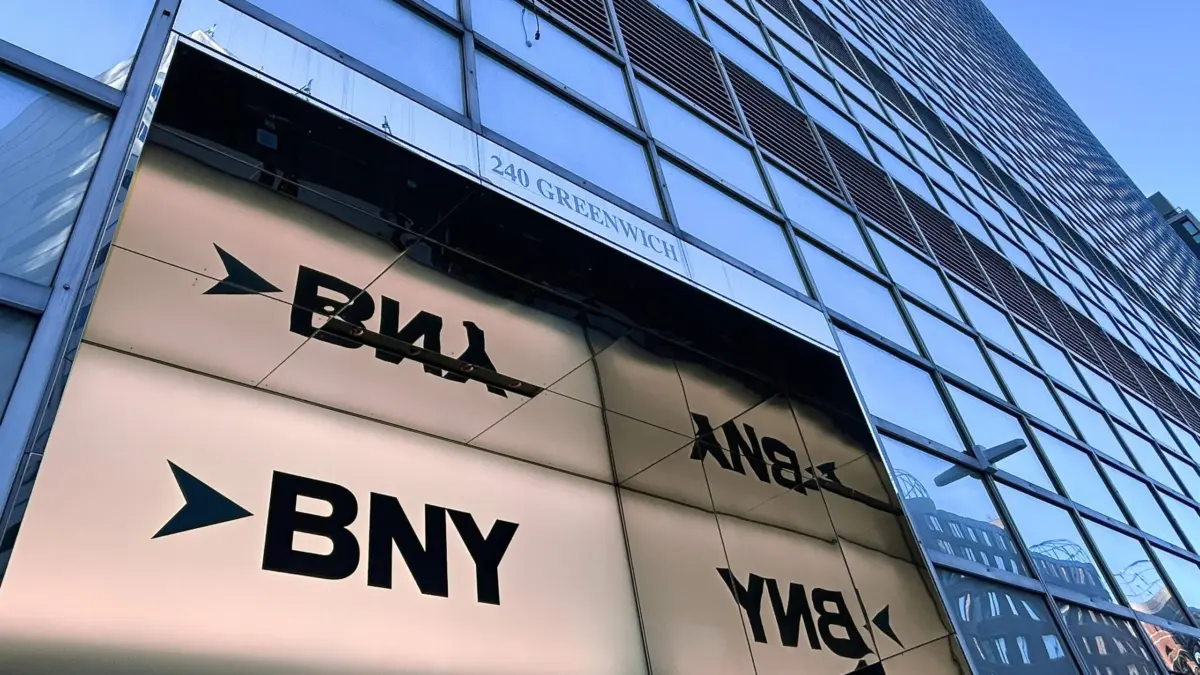
In a major milestone for the integration of distributed ledger technology into traditional finance, BNY—the world’s largest custody bank—and market-making giant Citadel Securities announced on Tuesday that they have successfully completed a transaction utilizing tokenized U.S. Treasuries. The collaborative effort highlights how blockchain-based government bonds can fundamentally alter how trading firms manage their balance sheets, offering a glimpse into a future where assets move frictionlessly between settlement and financing channels.
The transaction centers on the mechanics of collateral, a critical yet historically cumbersome component of global financial markets. Every single day, massive banking institutions, hedge funds, and trading firms rely on U.S. government bonds as secure collateral to back short-term loans, clear derivatives, and fund active trading strategies. However, the physical and administrative reality of moving these vital bonds between disparate accounts, custodians, and traditional settlement infrastructures often introduces friction. These operational lags can tie up high-quality assets for hours or even days, rendering them temporarily inert when firms could otherwise be putting them to work to optimize liquidity and capture market opportunities.
This successful test arrives as Wall Street broadly intensifies its exploration of tokenization—the process of issuing digital representations of traditional financial assets on a blockchain. Over the past few years, some of the most influential asset managers and financial institutions in the world, including BlackRock, Franklin Templeton, and JPMorgan Chase, have enthusiastically embraced tokenized investment funds, money market instruments, and securities. These heavyweights share a collective conviction that distributed ledger technology possesses the unique capacity to drastically shorten settlement cycles, automate administrative processes, and dramatically enhance the mobility of capital across global markets.
Putting Tokenized Treasuries to Work
The primary objective of the groundbreaking transaction between BNY and Citadel Securities was to demonstrate in a live operational environment how tokenized government bonds could seamlessly transition from the initial settlement phase directly into financing workflows. By bridging this operational divide, the firms aim to pave the way for institutions to reuse high-quality collateral much faster than legacy systems currently permit, thereby freeing up crucial cash and liquidity for additional trading activities.
"Efficient movement of high-quality collateral is fundamental to well-functioning markets," said Dan Doherty, digital assets operations lead at Citadel Securities, in a statement addressing the announcement. Doherty further emphasized that eliminating persistent operational delays across the entire trade lifecycle has the potential to significantly enhance the overall efficiency and resilience of institutional financial markets.
The implications of such technological advancements stretch far beyond individual firms. In modern high-frequency and multi-asset trading environments, seconds can dictate profitability. When collateral is trapped in transit between a clearinghouse and a financing desk, trading desks face missed opportunities or must allocate additional capital to cover margin requirements. By digitizing the underlying asset into a tokenized format, the asset itself becomes programmable and instantly transferable, reducing counterparty risk and administrative overhead simultaneously.
Expanding Digital Capabilities and Operational Hours
Building upon the momentum of this successful collaboration, BNY outlined broader strategic initiatives designed to bolster blockchain-based market infrastructure. The custody giant announced that it plans to introduce an expanded suite of digital cash and tokenized deposit capabilities. These forthcoming tools are specifically engineered to support and accelerate blockchain-based settlement and financing ecosystems, ensuring that institutional clients have access to robust, round-the-clock liquidity solutions.
At the same time, BNY is actively modernizing its legacy infrastructure to bridge the gap between traditional finance and the emerging digital asset landscape. The bank revealed that it expects to extend the operating hours of its traditional settlement systems—particularly for Federal Reserve-eligible securities and U.S. triparty transactions—with the explicit goal of accommodating European and Asian trading hours as early as next year. Triparty transactions represent a vital corner of the financial plumbing, functioning as a specialized form of short-term financing where a neutral custodian bank meticulously manages and optimizes collateral arrangements between borrowers and lenders.
Industry analysts note that extending settlement windows while simultaneously introducing tokenized alternatives creates a powerful two-pronged approach to market modernization. While legacy systems are adapted to handle global trading hours more effectively, tokenized assets offer a native "always-on" architecture that bypasses traditional banking hour limitations entirely.
"By using a tokenized representation of a U.S. Treasury across both settlement and financing, we are enabling a more connected, efficient, and always-on financial system," said Carolyn Weinberg, chief innovation and market transformation officer at BNY, in an accompanying statement.