


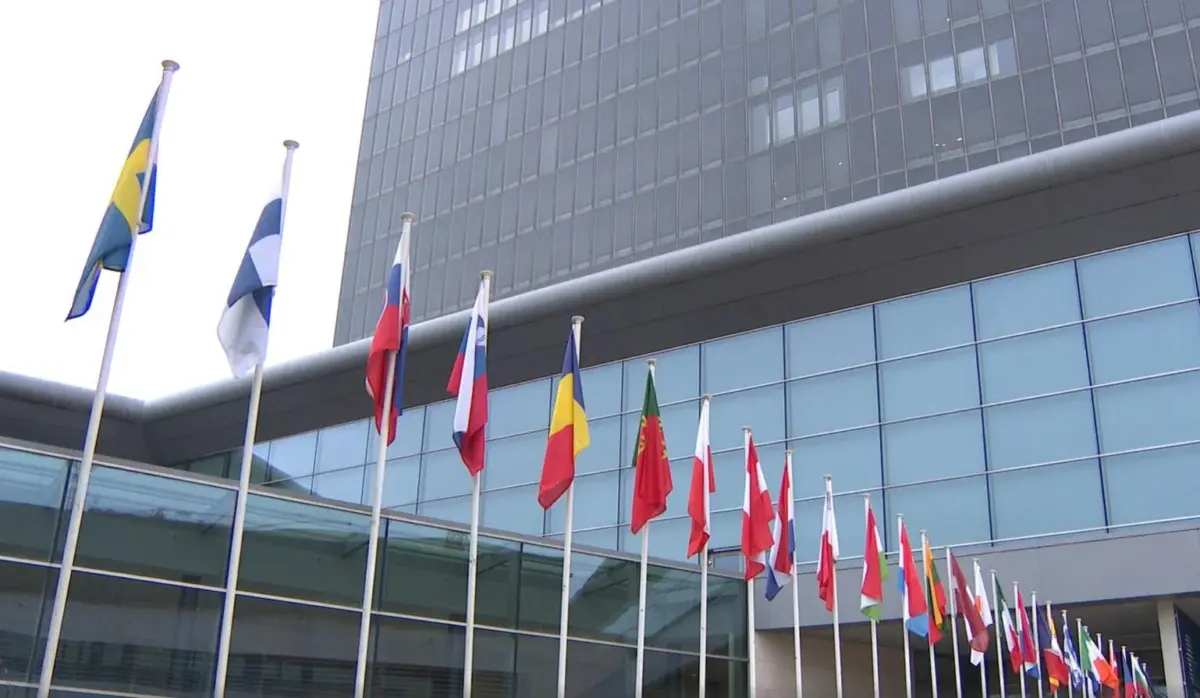
Member states within the European Council have announced that they have formally agreed to postpone methane monitoring and reporting rules for oil, gas, and coal importers by one year. The decision supports a proposal initially put forward by the European Commission, which was designed to avoid adding undue pressure to the European Union’s security of energy supply amidst ongoing geopolitical and economic challenges.
This new agreement establishes the Council’s official negotiating position on the legislative proposal. While member states have signaled an intention to seek an early agreement with the European Parliament to ensure that the proposed postponement takes effect before the end of the year, the adopted position highlights a significant gap with the European Parliament’s stance. Lawmakers in Parliament are pushing to delay the implementation of the new rules by three years, reflecting a broader debate over how to balance urgent climate action with the practical realities of strained global energy markets.
The European Commission’s broader regulatory framework aims to push back requirements for fossil fuel importers under a landmark 2024 law. That legislation was specifically crafted to enable the European Union to dramatically reduce methane emissions originating from the energy sector, helping the bloc reach its overarching climate goals and improve overall air quality across member nations. Rapid reductions in methane emissions are widely viewed by scientists and policymakers as one of the most effective near-term actions that can be taken to help achieve the global climate goal of limiting global warming to 1.5 degrees Celsius.
Methane is an extremely potent greenhouse gas, possessing as much as eighty times the warming power of carbon dioxide over a short-term horizon, and oil and gas facilities consistently rank among the largest industrial sources of these emissions globally. The 2024 law set robust rules for measuring, reporting, and verifying methane emissions, establishing protocols for finding and repairing leaks, and limiting the practice of venting and flaring. Furthermore, it represents the world’s first comprehensive piece of legislation designed to regulate methane emissions specifically tied to the imports of oil, natural gas, and coal.
Under the original timeline of the 2024 legislation, the strict requirements for monitoring, reporting, and verification for natural gas, oil, and coal importers were set to begin in 2028. However, in October, the Commission proposed a one-year delay. Officials cited an urgent need to help avoid placing additional pressures on the security of supply for imported fossil fuels within the current complex geopolitical context.

When adopting its distinct position, however, the European Parliament stated that it is pushing to delay the mandatory requirements until 2031. Parliamentarians noted that major energy importers have repeatedly warned that they may not be able to secure a sufficient volume of fully compliant supplies, especially with international energy markets already facing severe strains and volatility.
In an official statement released to announce the Council’s agreement, the institution described the Commission’s proposal as a targeted, pragmatic measure designed to address the direct impact of the current geopolitical climate on global supply chains, energy security, and retail energy and fuel prices. At the same time, the Council’s adopted position includes an important safeguard. It features a strict requirement compelling the European Commission to assess by September 30, 2027, whether the necessary structural elements for the successful implementation of the reporting obligations have actually been met.
This assessment will look closely at whether there are a sufficient number of qualified third-party verifiers available to independently assess the conformity of industry emission reports. Additionally, it will examine whether the European Union has successfully put in place comprehensive implementing rules governing the secure transfer of information regarding methane emissions between original producers and final importers, as well as whether equivalent third-party verification and monitoring procedures are functioning effectively in third countries outside the EU.

Darragh O’Brien, Ireland’s Minister for Climate, Energy and the Environment, emphasized the pragmatic nature of the Council’s decision while discussing the ongoing market pressures.
"There are significant pressures on global energy markets, which are driving up energy prices across the EU," O’Brien stated. "More than ever, we need secure and reliable energy supplies in Europe. The Council’s agreement today proposes a pragmatic approach forward, addressing the pressures in the energy market, while maintaining the EU’s global leadership in reducing methane emissions."