



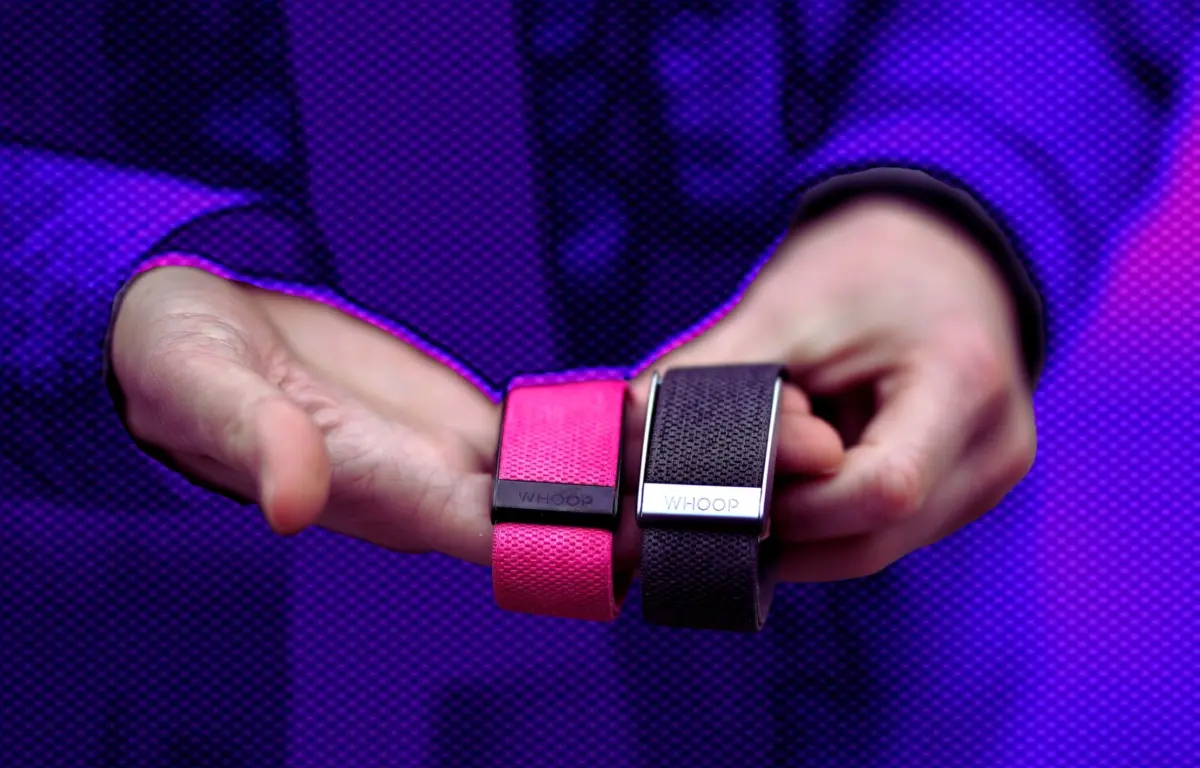
Fitness technology company Whoop is expanding its focus beyond physiological monitoring, introducing a dedicated social network designed to connect users through verified biometric data rather than artificial algorithms.
The company, widely known for its screenless wrist-worn fitness trackers, officially rolled out the feature, which it has dubbed "Whoop Humans." According to the company’s official press release, the new platform is being marketed as "the most verifiably human social network" currently available on the market.
Will Ahmed, the founder and chief executive officer of Whoop, emphasized the philosophical shift behind the product rollout at a time when digital landscapes are increasingly dominated by automation and synthetic content.
"In a world that’s becoming increasingly artificial, we’re building something deeply human," Ahmed said in the press release. "Every account represents a real person with a verified heartbeat. They have real goals, challenges, and achievements. That’s what makes Whoop Humans different, and it’s a big area of investment for us."
How Whoop Humans Operates Within the App
The mechanics of the new social network are integrated directly into the existing Whoop companion application. Members of the platform now have the option to connect with friends, family members, and other verified users within the Whoop ecosystem. Through these connections, participants can share various workout summaries, sleep tracking data, and recovery milestones in a post format.
Furthermore, users can interact with one another by writing comments and expressing reactions directly within the app interface.
Whoop designed the network with specific community and wellness objectives in mind. The feature is intended to serve as a digital space where customers can actively cheer on each other’s athletic and health progress, while also providing a mechanism for peers to check in on one another if biometric data indicates unusual stress, fatigue, or poor recovery.
The feature rolled out globally on the application, and participation remains entirely optional for all members, allowing privacy-conscious users to ignore the social features if they prefer to keep their health data private.
Mika Bublitz, a Whoop member who has tested the new ecosystem, noted that the social network provides a practical way for peers to offer encouragement during difficult moments or low-energy days.
"Sometimes people don’t tell you when they’re not feeling their best," Bublitz said. "If I see a friend’s Recovery is low, I can check in and say, ‘Hey, it’s okay to take it easy today.’ That’s what I like about Whoop Humans. It gives us another way to look out for each other."
Rapid Growth and the Popularity of Screenless Fitness Wearables
The launch of Whoop Humans arrives as the company experiences a period of significant expansion. According to internal data provided by Whoop, the community has grown to include more than three million members who actively wear the company’s devices. Additionally, engagement metrics released by the company indicate that members open the Whoop application more than eight times per day, demonstrating strong retention and daily interaction among its user base.
The core product driving this engagement is the Whoop membership model. The company sells annual memberships priced between $199 and $359, which include the physical wrist-worn hardware. Unlike traditional smartwatches that feature bright, interactive touchscreens and notifications, Whoop trackers are entirely screenless. They continuously monitor critical health indicators, including sleep architecture, resting heart rate, and daily stress levels, with a primary emphasis on helping users optimize their recovery, health, and overall athletic performance. The hardware is also designed for convenience, boasting a battery life that lasts up to two weeks on a single charge.
Ahmed has spent more than a decade steering the company through the competitive consumer technology landscape, noting the lengthy trajectory required to achieve widespread adoption.
"It took a very long time to be an overnight success," Ahmed said during an appearance on the All-In Podcast. Reflecting on the exponential scaling of the user base, he noted that it took the company approximately 12 years to reach its first million members. Following that milestone, growth accelerated dramatically, adding the second million members in roughly 18 months, and reaching the three-million mark just six months later. At the time of the podcast recording, Ahmed projected that the company would close out the year with approximately four million active members.
External scientific research has also highlighted the tangible behavioral impacts associated with continuous use of the hardware. Research published last year in the academic journal Sensors analyzed 12 weeks of data from nearly 12,000 Whoop members. The study concluded that individuals who wore the fitness tracker on a daily basis engaged in more than 90 additional minutes of exercise per week compared to baseline measurements. Moreover, daily wearers logged an average of roughly 20 extra minutes of sleep per night, translating to over two hours of additional sleep each week.
Increasing Competition in the Screenless Wearable Market
As Whoop continues to scale its operations and build out community-focused features like Whoop Humans, the market for screenless health tracking is drawing attention from major technology conglomerates.
Google entered the sector earlier this year by introducing a screenless fitness wearable called the Fitbit Air, priced at approximately $100. Meanwhile, industry reports indicate that Apple is also in the process of developing a similar screenless wearable device to challenge emerging form factors popularized by companies like Whoop and Oura.
With the introduction of verified social networking capabilities, Whoop is attempting to differentiate its hardware ecosystem by tethering raw biometric metrics directly to interpersonal human connections, creating a distinct community moat amid a crowded field of fitness technology competitors.