




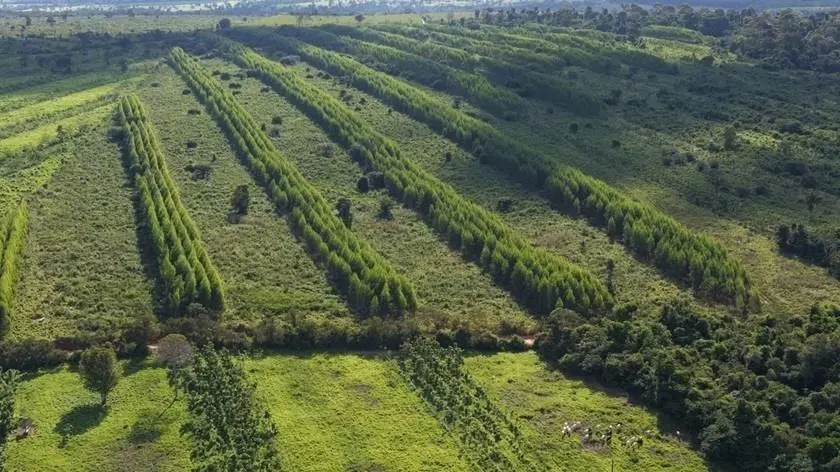
San Francisco-based carbon removal innovator Working Trees has announced a significant milestone in corporate sustainability and climate finance, securing a series of long-term offtake agreements with global technology leader Google and professional services giant McKinsey. Under the new partnerships, Working Trees will generate and supply 320,000 carbon removal credits derived from innovative "silvopasture" projects designed to support nature restoration, sustainable farming, and local economic resilience in Brazil.
The transactions were facilitated through the Symbiosis Coalition, a high-profile advance market commitment (AMC) collaboration initially launched in 2024. The coalition was established with a bold, collective commitment from major corporate buyers to contract up to 20 million tons of nature-based carbon removal credits by 2030. By pooling demand and providing long-term financial certainty, the Symbiosis Coalition aims to send a strong, reliable market signal that accelerates the development of high-impact, science-based ecological restoration projects capable of driving meaningful progress toward global climate goals.
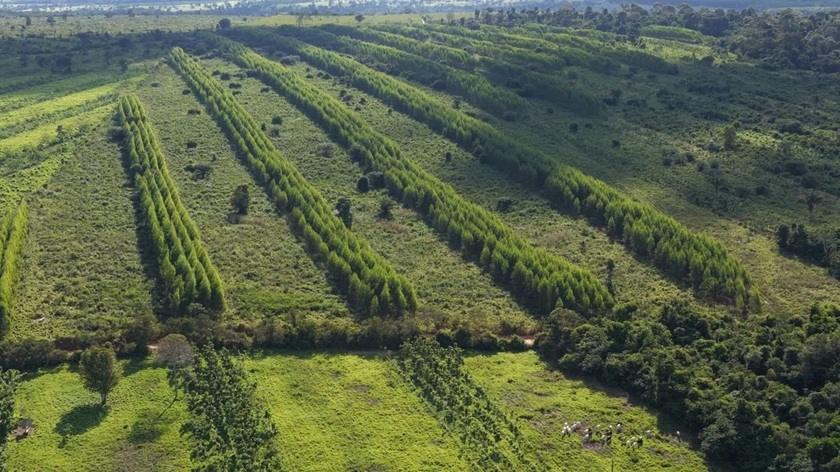
The core of the initiative relies on silvopasture, a specialized and sophisticated form of agroforestry that deliberately integrates trees into active livestock grazing land. This method helps mitigate the mounting pressures of deforestation, actively restores degraded soil health, enhances agricultural productivity, and sequesters atmospheric carbon dioxide all at once. According to scientific estimates cited by the Symbiosis Coalition, widespread adoption of silvopasture holds the immense potential to remove between 300 million and 1 billion metric tons of carbon dioxide annually on a global scale, positioning it as one of the most powerful yet underutilized natural climate solutions available today.
Julia Strong, Executive Director of the Symbiosis Coalition, underscored the strategic importance of the collaboration and the unique promise of the selected agricultural model. She noted that silvopasture remains heavily underused within the broader landscape of nature-based carbon removal, emphasizing that what makes the Working Trees venture particularly exciting is its exceptional capacity for scalability. By sequestering carbon effectively, the initiative simultaneously revitalizes the very land that vulnerable rural communities rely on for their daily livelihoods and economic survival.
Founded in 2021, Working Trees has carved out a distinct niche in the climate technology sector by developing nature-based carbon removal projects explicitly tailored to restore degraded pastureland through the integration of trees into established cattle-grazing operations. The enterprise works in close partnership with local landowners and farmers to implement operational silvopasture systems. These systems are carefully engineered to pull carbon dioxide out of the atmosphere, foster healthier soils, revive local biodiversity, and elevate agricultural yields, all while allowing traditional livestock grazing to continue uninterrupted.

Under the terms of the newly finalized agreements, Google and McKinsey have committed to purchasing a combined 320,000 metric tons of carbon removal credits from Working Trees over a sustained 10-year period. In return, Working Trees will channel the incoming financial support directly into large-scale ecological restoration efforts. Specifically, the funding will target the restoration of 8,700 hectares of degraded and semi-degraded pastureland. This targeted intervention forms a vital component of a much broader, sprawling 50,000-hectare overarching project that spans across the southeastern Amazon and the ecologically rich Cerrado region located in central Brazil.
Randy Spock, Head of Carbon Removal at Google, highlighted the groundbreaking nature of the alliance and its alignment with sustainable corporate practices. He described the partnership as a significant leap forward for high-integrity, natural climate solutions, noting that cattle grazing represents one of the most dominant land uses globally. By systematically integrating trees directly onto active pastures, Spock explained, Working Trees demonstrates that society does not have to choose between food production and ecological restoration. Instead, it represents a scalable, technology-driven approach that delivers dual benefits for global carbon removal efforts and the day-to-day livelihoods of local farming communities.
The ambitious project is structured to revitalize the landscape by systematically planting organized rows of both native and commercial timber trees directly onto existing cattle pastures. This thoughtful design permits ongoing livestock grazing while simultaneously drawing down atmospheric carbon dioxide. The newly introduced trees are expected to deliver a wide array of compounding benefits, including providing essential shade for grazing cattle, improving soil moisture retention and overall soil health, enriching local biodiversity, and bolstering the ecosystem’s overall resilience against increasingly frequent droughts and agricultural diseases.

To ensure long-term economic and environmental viability, the restoration framework thoughtfully combines native plant species with commercial timber species. The native flora provides crucial ecological benefits, supports regional wildlife, and yields additional resources for both cattle and landowners. Meanwhile, the commercial timber species—featuring resilient varieties such as African Mahogany and Teak—are anticipated to generate substantial long-term revenue streams for local farmers. This financial incentive is designed to encourage landowners to actively maintain and protect the trees well into the future, thereby securing the permanence and integrity of the carbon removal project over decades.
Isabelle Schuhmann, Global Director of Environmental Sustainability at McKinsey, echoed these sentiments regarding the critical role of corporate environmental strategy. She emphasized that scaling high-integrity, nature-based carbon removal is an essential pillar of McKinsey’s overarching sustainability journey. By backing the innovative silvopasture model pioneered by Working Trees, Schuhmann noted that the firm is proudly supporting a highly replicable framework for sustainable land use, successfully unlocking massive carbon sinks while simultaneously strengthening the long-term economic resilience of local communities in Brazil.