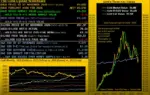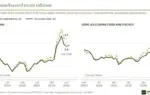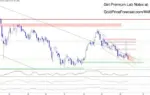




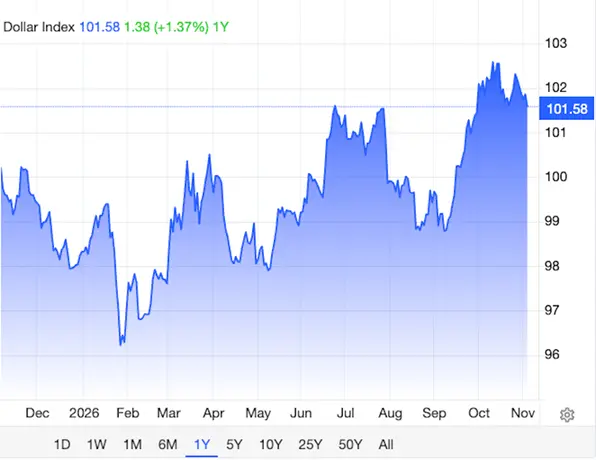
Gold prices climbed roughly 2.6% to reach $4,035 an ounce, putting the precious metal on track for its largest single-day gain since mid-August. The sharp upward movement came as the US dollar tumbled following a sweeping Democratic victory in the midterm elections, which secured the party control of both chambers of Congress. Investors simultaneously looked ahead to the week’s critical US nonfarm payrolls report for further guidance on the broader macroeconomic policy outlook, following the Federal Reserve’s decision to leave interest rates unchanged during its October policy meeting.
The Democratic victory, which flipped control of the legislative branch, sent the US dollar plunging to a more than one-month low. Market participants rushed to assess the potential economic and regulatory impact of the shift, particularly concerning tighter artificial intelligence regulation and its effect on medium-term economic growth. At the same time, persistent inflationary concerns and elevated oil prices kept markets on edge as traders awaited Washington’s next moves regarding the ongoing US-Israeli military campaign in Iran. According to data from the CME FedWatch Tool, futures traders currently price in a 79% probability that the Federal Reserve will implement a rate hike at its upcoming December meeting.
Political gridlock has quickly emerged as the most widely anticipated outcome of the "Blue Wave" that washed over much of the Republican-held political landscape. This term describes a governance structure where the executive branch, led by the President, and the legislative branch, controlled by Congress, are managed by opposing political parties, creating significant structural hurdles to passing new laws or advancing major legislative agendas.
Midterm elections take place precisely halfway through a president’s four-year term. Historically, the political party holding the White House frequently sheds seats in Congress during these mid-cycle contests. When control of the House of Representatives, the Senate, or both chambers flips to the opposing party, it creates a deeply divided government.
According to analysis from AdvisorHub published prior to the election results, a Democratic sweep of both chambers would inevitably mean more aggressive congressional oversight and tougher political fights over regulatory policy. In either governance scenario, the pace of new legislation would likely slow to a crawl, which serves as the fundamental definition of legislative gridlock.
Furthermore, a Democratic win in either chamber signals impending funding battles. A divided government has historically made new spending packages considerably more difficult to pass. With the national debt burden sitting at $40 trillion alongside a massive fiscal deficit, financial analysts note that there is little legislative appetite for expansive new spending packages regardless of which political party holds nominal power. That underlying fiscal strain has already acted as a significant driver in this year’s bond market selloff, much to the chagrin of Treasury Secretary Bessent.
The looming debt ceiling represents the first real institutional checkpoint to watch. Although fiscal showdowns have unfortunately become a regular occurrence in Washington, the baseline expectation among market analysts is a combative standoff that risks tipping the federal government into a shutdown in early 2027.
Taking a contrary analytical position, commentary from The Conversation suggests that a Democratic-controlled Congress could actually translate to reduced political gridlock rather than more. The reasoning stems from an examination of past US Congresses, which indicates that while losing both chambers guarantees more direct opposition to the president, it can simultaneously reduce partisan friction between the House and the Senate. Historical figures demonstrate that opposition-controlled Congresses have historically passed roughly as many laws as unified ones, and frequently more critical, high-importance legislation than Congresses where the opposition controlled only a single chamber.

However, achieving internal legislative agreement between the House and the Senate represents only half the battle. Even if Democrats successfully shepherd legislation through both chambers of Congress, President Trump retains the constitutional authority to veto any bill. Overriding a presidential veto requires a two-thirds supermajority vote in both the House and the Senate, a threshold far beyond the Democrats’ current legislative majorities.
Before the election results were finalized, Trump warned that he would block all legislation presented to him by a Democratic Congress. On election night, however, he softened his public tone, telling journalists that his administration would work with the Democrats while simultaneously vowing to deploy his presidential veto against measures he deemed "insane."
This political dynamic hints at an under-discussed dimension of gridlock: potential infighting within the Democratic Party itself, specifically between moderate factions and the rapidly expanding Democratic Socialists of America (DSA). Founded in 1982 through a merger of the Democratic Socialist Organizing Committee and the New American Movement, the organization was originally led by activist Michael Harrington. The group experienced a massive resurgence in membership following the 2016 presidential campaign of Senator Bernie Sanders and the election of Donald Trump, eventually growing past 100,000 members with active local chapters spanning all 50 states.
Recent reporting from Fox News highlights that the DSA is poised to claim victory in roughly two-thirds of the Tuesday elections in which it officially endorsed a candidate, cementing the radical offshoot as an increasingly powerful force within the broader Democratic Party. From Berkeley, California, to New York City, preferred candidates of the hard-left group secured key victories, underscoring how the faction is steadily pushing the mainstream party further toward progressive economic populism.
Substantial political gridlock could easily materialize if the DSA and its progressive allies demand sweeping policy concessions that moderate Democrats refuse to accept, particularly on contentious foreign policy issues such as Israel. Intra-party factionalism is equally likely to emerge from newly elected moderate and centrist Democrats in traditional red states, who will heavily influence the party’s overall direction and likely push back against the aggressive economic populism championed by the expanded socialist wing, according to analysis from Al Jazeera.
House Democratic Leader Hakeem Jeffries and Senate Leader Chuck Schumer now face a delicate legislative balancing act. If party leadership attempts to appease the DSA left flank, they risk alienating the moderate members who are vital to maintaining their fragile majority. Conversely, if party leadership sidelines the socialist bloc, the DSA faction can withhold their crucial votes on key legislative packages, as noted in commentary from The Washington Post.
In the face of potential congressional gridlock, market participants are closely examining the implications for precious metals like gold and silver. Total legislative gridlock typically acts as a major catalyst for both metals, historically providing a robust tailwind for their market prices. When a divided government paralyzes Washington, the resulting price action is driven by three primary economic mechanisms: an increased safe-haven appeal for hard assets, a weakened US dollar, and divergent industrial demand trends impacting silver.
Gridlock introduces immense legislative uncertainty, particularly around high-stakes issues like federal budget deadlines, debt ceiling showdowns, and potential government shutdowns. When investors grow anxious that the government cannot pass basic budget legislation, risk aversion rises sharply. Because gold and silver are globally recognized as safe-haven assets carrying no default risk, capital routinely flows out of riskier equities and into precious metals.

Furthermore, gridlock usually suppresses plans for major new legislative agendas, sweeping corporate tax overhauls, or massive domestic stimulus packages. The standard market reaction to a divided government is a downward correction in the US Dollar Index and declining Treasury yields. Because precious metals are globally priced in US dollars, a weaker greenback makes gold and silver significantly cheaper and more attractive to international buyers holding alternative currencies.
While gold reacts almost entirely as a monetary asset and a safe-haven store of value, silver faces a dual reality. Silver is heavily utilized across global manufacturing, electronic components, and clean-energy solar technologies. If congressional gridlock ultimately delays crucial infrastructure spending bills or rolls back clean-energy tax incentives, industrial demand for silver could experience temporary headwinds. Historically, however, when institutional and retail investors flood into silver as a hedge against broader political risk, this investment-driven surge easily overpowers any short-term dips in industrial manufacturing demand.
Much like precious metals, the broader stock market historically tends to view political gridlock and a divided government as a stabilizing positive force, as it effectively eliminates the uncertainty of radical policy shifts or aggressive tax overhauls passing through Washington. When political power is split, investors can accurately price in the policy status quo rather than attempting to guess how sudden legislative overhauls might impact corporate profit margins. According to tracking data from AdvisorHub, the S&P 500 has historically posted strong average returns in the twelve months following midterm elections, frequently exceeding 14% overall and averaging closer to 23% under a split-Congress scenario.
Critical to the near-term trajectory of the gold and silver markets is the ongoing war in Iran, which has driven up global inflation metrics and pushed interest rates higher to the direct detriment of precious metals prices. The Democratic congressional victory cannot unilaterally halt military operations in Iran simply by seizing control of the legislative branch. President Trump retains executive authority as Commander-in-Chief and holds absolute veto power over congressional legislation. Overriding a presidential veto requires a two-thirds supermajority in both the House of Representatives and the Senate, a threshold the Democrats do not possess.
Although Democrats hold 54 seats compared to the GOP’s 44 in the Senate, the party needs 60 votes to reliably overcome a potential Republican filibuster, which could easily be deployed to block legislative restrictions or anti-war measures. Moreover, the newly elected Congress is not officially sworn into office until January 3, 2027, leaving a two-month transition period during which the executive branch can continue uninterrupted military operations.
Once formally seated, the Democratic-led Congress can attempt to restrict or cut off funding for military actions in Iran, though doing so still requires assembling enough votes to bypass presidential vetoes and Senate filibusters. In the interim, empowered Democratic committee chairs can launch high-profile congressional investigations, hold public hearings examining the strategy and financial costs of the war, and demand sensitive executive branch documents. The Senate can also leverage its constitutional confirmation powers to stall or block Trump’s cabinet, diplomatic, judicial, and national security nominees.
When Congress faces severe political gridlock, it creates a unique environment that routinely acts as a primary catalyst for higher gold and silver valuations. Precious metals markets view legislative paralysis not merely as a temporary pause, but as a direct trigger for broader economic and financial shifts that undermine the US dollar and depress real yields, driving investors toward tangible hard assets.