




Gold and silver are enduring a sharp market correction as the trading week draws to a close. While domestic futures traders aggressively dump metals over mounting fears of higher interest rates, buyers on the other side of the world are executing a completely different strategy by accumulating the real thing.
Gold is currently trading around $3,900 an ounce Friday morning, while silver has slipped a little below the $50 mark. Both precious metals have surrendered significant ground this week, effectively reversing the optimism and momentum that surrounded last week’s market rebound. Thursday’s trading session was particularly harsh for the yellow metal, which plunged to a one-year low before attempting to stabilize. By Friday morning, gold held steady, ticking up just a couple of dollars from the opening bell to check in at $3,897 an ounce, which still leaves it down nearly $200, or roughly 4.5%, for the week.
Silver, meanwhile, has continued to sell off despite gold’s relative resilience during Friday’s session. The white metal is actively giving back virtually all of the gains it secured during the previous week, plunging nearly $3 or 5.2% to sit at $49.86 an ounce as of the midday recording. The broader precious metals complex is feeling the pain as well. Among the platinum group metals, platinum has declined 3.0% to trade at an even $1,500 an ounce, while palladium has dropped 1.7% to change hands at $1,026.
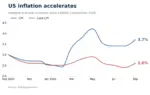
The immediate catalyst driving the widespread selling across the metals market is a familiar one to macroeconomic observers: inflation continues to run hot, and short-term traders are aggressively betting that the Federal Reserve will respond with further interest rate hikes. This sentiment has naturally created a stronger U.S. dollar and rising bond yields, both of which have added intense downward pressure on non-yielding assets like precious metals.
Friday’s wholesale inflation report provided little comfort to market participants hoping for a softer monetary policy outlook. Producer prices rose 6.5% from a year earlier, marking the largest annual increase recorded since November 2022. This dynamic highlights the ongoing frustration shared by precious metals owners and long-term investors. Inflation persistently eats away at the purchasing power of the dollar, yet gold is frequently penalized in the paper markets simply because traders anticipate that the central bank will attempt to fight those rising prices with tighter monetary policy.
That volatility is part of the territory. Gold does not move in a straight line, nor does it automatically tick higher every single time the cost of everyday goods increases at the grocery store or the gas pump. However, short-term market expectations for another rate hike do not resolve a much larger underlying question: Just how much financial strain will policymakers ultimately be willing to tolerate before they are forced to pivot back toward easier monetary policy?
Higher interest rates make the national debt significantly more expensive to carry. They squeeze everyday borrowers, place intense pressure on corporate balance sheets, and dramatically raise the federal government’s financing costs in Washington. While central bank officials can easily talk tough during press conferences, following through on restrictive policies becomes exponentially harder when the massive national bills finally come due.
This macroeconomic tug-of-war brings into sharp focus a broader structural trend highlighted this week by market analysts: the ongoing, massive movement of physical gold from West to East. Chinese demand for gold bars and coins climbed 7% during the third quarter alone, reaching 79 tonnes. Total retail buying in China through the first nine months of the year has already hit a record-shattering 393 tonnes.
In stark contrast, bar and coin demand inside the United States plummeted 40% from the same period a year earlier, dropping to just 8 tonnes and marking the weakest U.S. retail quarter since late 2019. The geographic divergence is striking, with Chinese investors aggressively building up their tangible holdings while American retail demand has largely withered amid persistent market noise.
At the same time, Asian financial centers are actively investing in the fundamental plumbing of the global gold market. Hong Kong has successfully launched a new gold settlement system, and Singapore announced strategic plans for enhanced vaulting services specifically designed to serve foreign central banks. These major developments signal a profound, long-term commitment to physical gold infrastructure in the East, even as many Western investors remain hesitant or distracted by daily market fluctuations.
This dynamic raises a compelling question for market observers: What happens if Western investors eventually regain their appetite for bullion while Asian buyers maintain their current pace of accumulation? While that scenario would not guarantee an immediate price rally, it could easily make today’s widespread market pessimism look shortsighted in hindsight.
Domestically, growing concerns are also surfacing regarding the structural resilience of the United States’ precious metals market infrastructure, particularly concerning the physical locations where metals are stored and delivered. These vulnerabilities are precisely why the bipartisan SILVER Act is steadily gaining traction in Congress, with industry backers actively working to secure its inclusion in the National Defense Authorization Act during the current legislative session.
The legislation was introduced in the Senate by lawmakers Jim Risch and Catherine Cortez Masto, with a companion bill introduced in the House by Congressman Russ Fulcher. Support for the initiative now spans both major political parties and both chambers of Congress, boasting 19 additional House and Senate cosponsors.
The underlying problem the bill seeks to address is straightforward yet critical: exchange-approved precious metals depositories are heavily concentrated in and around the New York City metropolitan area. A major regional disruption, whether natural or man-made, could severely interfere with physical deliveries and financial settlements.
To mitigate this systemic risk, the proposed legislation would establish objective approval standards and transparent application processes, allowing qualified depositories across all four continental time zones to fairly compete. Under the bill, every participating facility would still be required to meet rigorous security safeguards and regulatory standards.
Organizations such as Money Metals Depository, alongside a broad coalition of industry participants, are actively supporting the legislative effort. Proponents view the measure as a vital opportunity to reduce geographic concentration risk, expand healthy market competition, and strengthen the critical infrastructure that serves both financial markets and essential industrial sectors. Because these logistical vulnerabilities also touch upon broader national security concerns, attaching the SILVER Act to the defense bill offers a viable path forward, though securing its inclusion remains the next major hurdle for its advocates.
Synthesizing these various developments yields a clear overarching lesson for participants in the financial system. Physical metal matters immensely. Who actually owns the underlying metal matters. And the physical infrastructure that safely stores and securely delivers it matters just as much.
A paper futures trader can easily alter or liquidate a leveraged position in a matter of seconds. Conversely, building a secure vault, developing a robust settlement network, or accumulating a substantial physical bullion reserve requires a much longer-term view. Investors would undoubtedly benefit from adopting that same long-term perspective.
Nobody genuinely enjoys watching the fiat value of their holdings decline in the short term, and purchasing gold or silver does not completely eliminate near-term price risk. However, a difficult week of trading does not resolve the structural economic risks that initially lead rational people to own tangible wealth in the first place. The daily market quotation simply tells you what a counterparty is willing to pay for your ounces today, but your fundamental reasons for owning those ounces should extend far beyond the outcome of the next central bank meeting.