


Global financial markets opened the week digesting a robust US employment report that has fundamentally shifted near-term trading dynamics across asset classes. The blowout October payrolls data triggered a classic bear flattening of the US yield curve, bolstering the US dollar and setting the stage for a busy week dominated by upcoming inflation prints, mid-month Treasury auctions, and critical central bank
commentary.
Markets
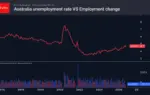
The October US payrolls report arrived with staggering strength, completely shattering expectations and reshaping rate trajectories. Employment grew by 165,000 jobs last month, crushing the consensus forecast of 70,000. Furthermore, the prior two months experienced substantial upward revisions totaling 84,000 jobs. Consequently, the unemployment rate ticked down unexpectedly from 4.2% to 4.1%, even as the labor force participation rate edged higher.
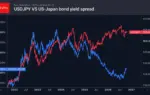
This overwhelming display of economic resilience delivered a textbook bear flattening of the US yield curve, with Treasuries outperforming German Bunds. Front-end rates climbed by 5 basis points, while long-term maturities in the 10-to-30-year bucket rose by a modest 1.1 to 2.2 basis points. Analysts noted that there is virtually nothing in the latest employment data that would give the Federal Reserve any cause for concern regarding the employment pillar of its dual mandate, firmly shifting the market’s focal point back toward inflation.
Attention now turns to the upcoming October consumer price index release scheduled for Wednesday. This particular report lacks the traditional year-on-year comparison due to missing data from last year’s government shutdown. Nevertheless, market participants will closely scrutinize the monthly prints to gauge underlying short-term price dynamics. Current consensus expectations project a 0.3% month-on-month headline inflation increase, which translates to a 5.3% three-month annualized figure. Similarly, core inflation is expected to post a 0.2% monthly rise, pointing to a 3.25% annualized pace over the same three-month window.
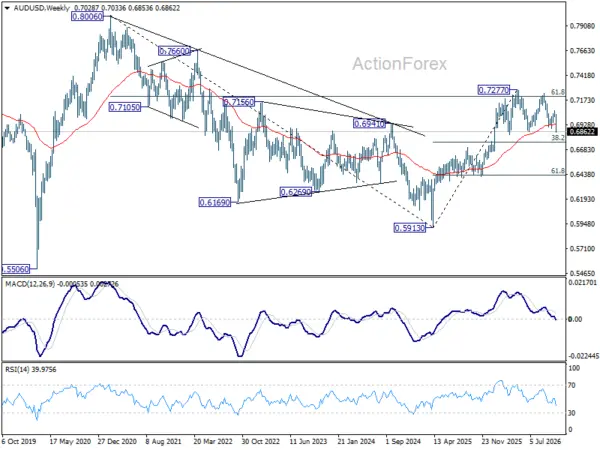
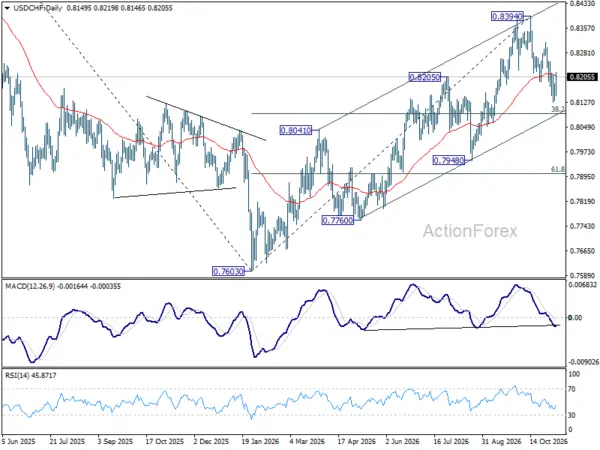
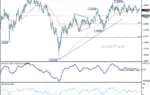
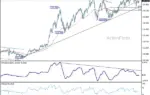
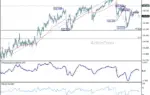
On currency markets, the US dollar flexed its muscles against a basket of global peers. The greenback drew strong support from widening interest rate differentials—fueled by the robust labor market report—alongside a tentative recovery in battered technology and artificial intelligence equities. Although lower energy prices offered a modest counterweight, with Brent crude dipping below $100 per barrel and natural gas hovering around €85 per MWh, they failed to prevent the EUR/USD pair from slipping back below the 1.12 threshold toward 1.114. The currency pair remains confined to the narrow sideways trading range that has defined its price action since October, while the US Dollar Index (DXY) closed near 102.3, marking one of its highest levels in recent weeks.
Aside from the stripped-down US CPI release, traders are casting their gaze toward the mid-month US auctions, which will feature offerings of three-, 10-, and 30-year government bonds. In the absence of other tier-one economic catalysts, broader market sentiment on Wall Street is expected to dictate direction for the remainder of the week. A notable rebound in technology shares propelled the Nasdaq into positive territory with a 1% gain, though the S&P 500 rose by a more subdued 0.3%, and the Dow Jones Industrial Average lagged with a 0.5% decline. This divergence suggests a tactical sector rotation rather than an environment of broad, outright buying. Meanwhile, Asian markets displayed a stronger risk-on appetite.

As the week progresses, a scattering of central bank speeches is adding further texture to trading conditions. Of particular note is a Financial Times interview with ECB president-candidate Klaas Knot. Alongside Spain’s Pablo Hernández de Cos, the Dutch central bank chief is one of the final contenders for the European Central Bank’s top post. Knot, historically recognized as a policy hawk during his earlier years at Frankfurt, would inherit the presidency during a fiscally challenging era.
In the interview, Knot indicated a pragmatic openness to market interventions, stating that he would not rule out targeted bond-buying programs or the design of a new tailor-made instrument if severe circumstances demanded it. He emphasized that intra-EMU sovereign spreads must be contained when driven by unwarranted and disorderly market dynamics, while firmly cautioning that monetary authorities cannot bail out unsustainable fiscal policies.
Knot carefully distinguished between routine market adjustments and systemic stress, noting that there is a clear difference between a fundamental repricing from one level to another and disorderly market dynamics characterized by excessive volatility and cross-market contagion. Furthermore, the Dutch policymaker warned that the ECB’s interest rate strategy could remain hostage to developments in the Middle East over the coming months. He suggested that a bit of extra tightening might become necessary if energy prices were to sustain their current elevated levels.
News & Views
Beyond macroeconomic policy and currency fluctuations, regional updates point to mounting economic headwinds and diverging inflationary paths across major economies.
In the United Kingdom, a joint monthly report on jobs published by KPMG and the Recruitment and Employment Confederation (REC) revealed that heightened uncertainty—stemming from both the political run-up to the national Budget and broader geopolitical tensions—alongside escalating operational costs, heavily dampened staff recruitment in October. Analysts warn that existing green shoots in the UK labor market could stall further if the Bank of England implements additional rate hikes and if inflation accelerates as anticipated.
The survey data showed that the number of permanent job placements across the UK declined for the first time in four months. Temporary billings also fell, breaking a six-month streak of consecutive growth. On a more stable note, the reduction in total new vacancies slowed to its most gradual pace in over two years. Conversely, candidate availability surged sharply, driven by widespread corporate reports of redundancies and a shrinking pool of open positions. Regarding compensation, employment agencies reported stronger increases in both starting salaries and temporary wages, though these rates of wage growth remained historically subdued.
Meanwhile, inflation in China continues to exhibit a largely subdued profile. The overall consumer price index remained unchanged in October, marking a 0.7% increase compared to the same period a year earlier, down from a 0.9% year-on-year rate in September. Detailed breakdowns highlighted a significant drag from tumbling food prices, which fell 2.7% year-on-year. Additionally, the pace of price increases softened across consumer goods, which rose 0.8% compared to 1% previously, and services, which ticked up 0.7% from 0.8%. The broader core category, excluding volatile food and energy components, similarly decelerated to 0.8% from 1%.
Conversely, factory-gate inflation in China moved in the opposite direction. Producer prices rose by 0.7% on a month-on-month basis, accelerating the annual rate from 5% to 5.7%, which marks the highest producer price inflation reading since June 2022. Government data indicated that surging costs in the energy sector and robust demand for AI hardware served as the primary drivers behind the sharp factory-gate acceleration.