




Global financial markets faced a turbulent landscape this week following a hotter-than-expected consumer price index (CPI) print in the United States, which immediately triggered a massive bear flattening move across the US yield curve. The unexpected surge in inflation data has fundamentally altered expectations for monetary policy, driving aggressive shifts in money market pricing, boosting the US dollar to multi-month highs, and sending ripples across international equity, commodity, and currency trading floors.
Markets
Tuesday’s hotter-than-expected CPI release served as the primary catalyst for significant volatility, causing a sharp bear flattening move in the US yield curve. The two-year Treasury tenor closed 17.6 basis points higher, with intraday gains reaching as high as 20 basis points during the height of the market reaction. Meanwhile, the longer end of the curve also saw substantial upward pressure, with the 10-to-30-year bucket adding between 7.4 and 10.8 basis points.
Federal Reserve officials had explicitly laid the groundwork for such an outsized market reaction prior to the CPI publication. Fed Governor Waller warned ahead of the release that if inflation metrics failed to show tangible improvement in October, he would strongly support implementing a lumpy 50-basis-point rate hike in December to protect the central bank’s hard-earned credibility.
That warning quickly materialized when the inflation figures crossed the wires. Both headline inflation, coming in at 0.4%, and core inflation, printing at 0.3%, topped consensus estimates. Interpolating these price index levels to estimate missing official year-over-year readings brings the figures to nearly 4% for headline and 2.8% for core. Furthermore, in-house nowcasts from KBC based on Tuesday’s outcome project that the October Personal Consumption Expenditures (PCE) price index—the Federal Reserve’s preferred inflation gauge, scheduled for release on November 25—will hit 3.8% for headline and 3.2% for core. Meanwhile, initial estimates for November CPI stand at 3.9% for headline and 3% for core.
Federal Reserve commentary following the data release reinforced a decidedly hawkish tone. Fed board member Logan indicated support for at least two additional 25-basis-point increases executed at a quicker, back-to-back pace. Conversely, Philadelphia Fed President and board member Paulson downplayed the data, dismissing the latest inflation figures as largely driven by temporary factors that would eventually resolve on their own, though she maintained her preference for a gradual policy tightening approach.
The sentiment was far more alarmed among other central bank officials. Chicago Fed President Goolsbee, a non-voter this year, bluntly labeled the report as "distressing, borderline disturbing." With additional Federal Reserve officials—including Hammack, Barr, Daly, and Williams—scheduled to deliver speeches, market participants harbor little expectation that policymakers will step in to rescue sliding Treasuries.
The US money market swiftly recalibrated its expectations, shifting away from an 85% priced-in probability for a regular December rate hike and actively contemplating Waller’s jumbo move scenario. Although the US bond market was closed for Veterans Day, providing a vital circuit-breaker that allowed the initial market dust to settle, Treasuries reopened lower in Asian trading. Yields ticked upward by as much as 3 basis points in the shortest maturities.
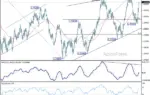
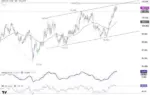
The US dollar wasted no time capitalizing on the shifting rate environment. Building on a strong performance earlier in the week, the greenback saw robust follow-through gains. In the process, the EUR/USD exchange rate decisively breached the key 1.1111 support level. The currency pair is currently testing intermediate support around 1.1065, a level corresponding with the May 2025 correction low, ahead of the much more significant 1.0882 threshold, which marks the 61.8% retracement of the 2025-2026 rally. Simultaneously, the DXY US dollar index pierced through its previous year-to-date high, with the current print near 103 marking its strongest level since April 2025.

Across the Atlantic, UK economic data offered some localized support for sterling. Third-quarter UK GDP growth accelerated from the previous quarter, printing a 0.7% quarter-on-quarter pace, or 1.9% year-on-year, exactly in line with market expectations. More importantly, the underlying economic decomposition was notably robust, highlighted by personal consumption expanding at nearly its fastest pace in four years, generating minor sterling strengthening during European morning trading.
In broader asset classes, US technology stocks were poised to surrender a portion of their previous day’s rally amid unverified market reports concerning potential leadership changes at Nvidia. Meanwhile, oil and natural gas prices appeared to have found a solid technical bottom following a sharp, two-week decline, mirroring a similar stabilizing pattern observed in European swap yields.
News & Views
Beyond domestic monetary policy and currency fluctuations, trade and housing developments drew intense scrutiny across European and British markets.
The Financial Times reported that European authorities are actively consulting with the automotive industry regarding proposals to postpone the impending 10% tariff on UK-electric vehicle sales. Sources familiar with the ongoing discussions indicate that the UK government is fully supportive of the proposed delay. The 10% levy is scheduled to take effect on January 1st, threatening trade flows because the vast majority of electric vehicles currently fail to meet the stringent post-Brexit tariff test requirements.
Under the existing post-Brexit trade agreement, these Rules of Origin were designed to ensure that a sufficiently high share of value originates within the EU, mandating that minimum UK or EU originating content for electric vehicles reaches 55%, with battery packs at 70% and battery cells at 65%. While these rules were originally implemented to foster an independent European battery supply chain, reduce strategic dependence on China, and bolster regional industrial capacity, they have created a rift among industry stakeholders. European car manufacturers and battery producers hold diverging interests in the debate; battery manufacturers are aggressively lobbying the European Commission to hold the line on the January 1, 2027 deadline, arguing that any sudden policy U-turn would severely undermine regional investments. Serious negotiations regarding a potential delay of these origin rules are widely expected to feature prominently during the upcoming EU-UK Summit scheduled in Brussels on November 20.
At the same time, domestic property market indicators in the United Kingdom continue to reflect mounting economic pressure. The results of the October RICS Residential Survey point to persistently subdued market conditions across the UK, as a renewed upward creep in mortgage interest rates weighs heavily on prospective buyer demand.
The survey’s new buyer enquiries indicator posted a net balance of -24%, completely unchanged from September and signaling a continuation of negative demand momentum. Concurrently, the net balance of agreed sales deteriorated from -18% to -24%, marking the weakest reading recorded over the past three months. Looking ahead, the 12-month sales outlook registered a net balance of -17%, representing the most pessimistic sentiment recorded since July 2023.
On the supply side of the housing market, the pipeline of new property listings is anticipated to slow down further in the coming months. Regarding house valuations, the aggregate series tracking price changes over the trailing three months posted a net balance of -36% in October, slipping slightly from -34%. Survey respondents anticipate a modest, continued easing in home prices over the next 12 months, indicated by a net balance of -17%. Conversely, within the lettings market, rental growth expectations strengthened further, driven by persistently constrained housing supply coupled with steadily rising tenant demand.