


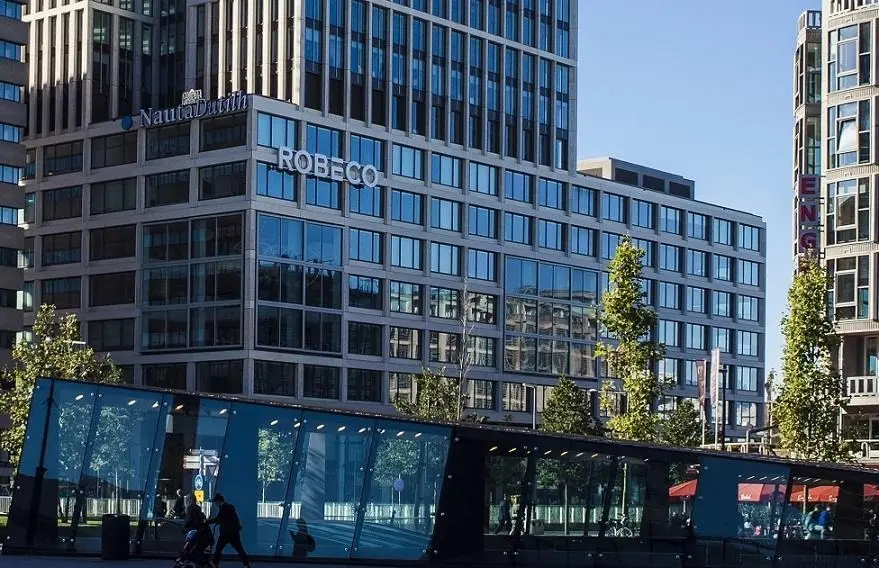
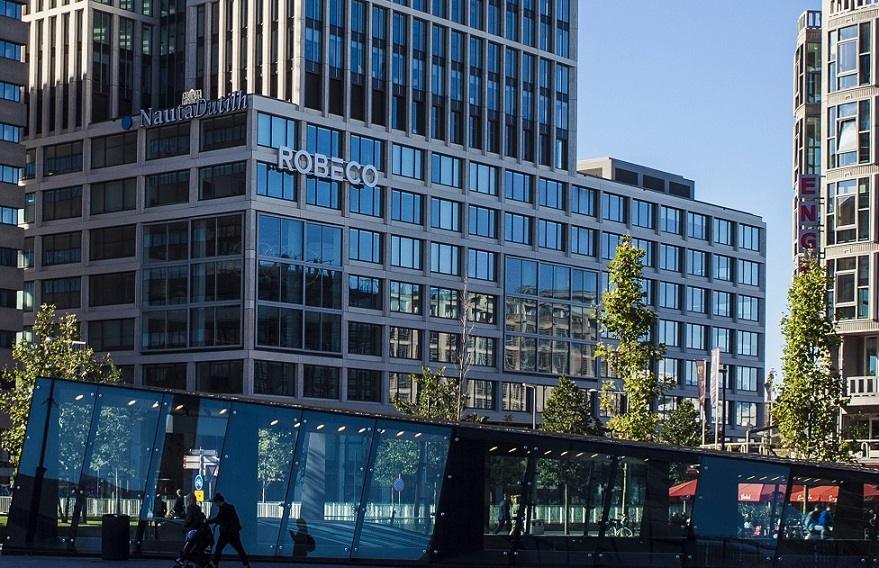
Climate change has climbed back up the strategic agenda for global institutional investors for the first time in three years, reversing a downward trend that began amid a wave of political backlash in 2023. A comprehensive new survey released by international asset manager Robeco reveals that more than eight out of ten investors globally now expect physical climate risks to directly impact asset prices over the coming decade.
The findings indicate a profound shift in financial markets, where extreme weather events and tangible economic realities are increasingly overriding political headwinds. Despite a noticeable reduction in direct government support for green initiatives in various jurisdictions, the vast majority of institutional and wholesale investors with net-zero commitments remain steadfastly dedicated to their targets. Furthermore, the report shows that most market participants expect to increase their capital allocations toward investments specifically designed to combat climate change over the next three years.
The Scope of the Robeco Global Investor Survey
To compile the detailed report, Robeco surveyed 300 institutional and wholesale investors spread across Europe, North America, the Asia-Pacific region, and South Africa. The participants managed widely varying portfolios, ranging from institutions with less than $1 billion in assets under management to mega-funds overseeing more than $1 trillion. In total, the survey represents a massive cross-section of global capital, accounting for more than $35 trillion in overall assets under management.
The depth of this capital pool gives the survey’s findings significant weight, offering a clear window into how the world’s most influential financial institutions are factoring environmental realities into their day-to-day decision-making processes. According to the data, investors are growing increasingly conscious of how global warming translates directly into financial risk.
When looking at a five-year horizon, 66% of surveyed investors expect physical climate risks to have a moderate or significant impact on asset prices. That apprehension deepens substantially when looking further out; over a ten-year horizon, 82% of investors anticipate physical climate risks to impact asset prices, with nearly half—46%—expecting that impact to be "significant."
This growing awareness is no longer confined to risk management departments; it is actively reshaping portfolio construction. The survey found that 63% of respondents expect physical climate risks to influence their strategic asset allocation over the next five years. Additionally, 57% anticipate these risks will alter how they select asset managers, and 59% expect climate factors to play a decisive role in stock picking.
Prioritization Stabilizes After Years of Decline
Alongside this acute awareness of physical risks, investor prioritization of climate change has officially stabilized after several years of steady decline. The survey revealed that 47% of investors now report that climate change is significant or central to their investment policy. This figure represents a slight uptick from 46% last year, marking the first time the metric has increased since the importance of climate to investment policy peaked at an impressive 75% in 2022.
Notably, the resurgence in prioritization was largely driven by a turnaround in North America. That region had previously spearheaded the downward trend in climate focus following intense political polarization and anti-ESG rhetoric. Despite this rebound, North American investors still trail the rest of the world, with only 27% currently placing climate at the center of their investment policies. Looking ahead, sentiment points toward broader integration, with 62% of global investors expecting climate change to become significant or central to investment policy within the next two years.
Lucian Peppelenbos, Climate and Biodiversity Strategist at Robeco, noted that escalating environmental disasters have forced market participants to confront reality.
"The increasingly alarming physical effects of global warming, such as the wildfires that forced over a quarter of a million people to evacuate in Europe, are certainly focusing minds," Peppelenbos said. "In one of the most striking results of the 2026 survey, a majority of investors say those effects will have a significant impact on asset prices and strategic asset allocation over the coming years. Climate has moved from a stated ambition to a pricing question, and a pricing question cannot be set aside when the mood turns."
Pragmatism Meets Unwavering Net-Zero Commitments
Even as investors elevate climate change as a core financial priority, they are displaying a high degree of pragmatism regarding the broader trajectory of global climate goals. The survey highlights a realistic—and somewhat sobering—outlook on the energy transition. Only 19% of respondents expect an orderly climate transition to take place over the next decade. Furthermore, 44% view the Paris Agreement’s benchmark goal of limiting global warming to 2°C as fundamentally unachievable under current conditions.
Yet, this pragmatic or pessimistic view of international policy milestones has not translated into an abandonment of corporate responsibility. The survey shows that institutional investors are largely sticking to their long-term climate targets. Among those surveyed, 22% reported having made a public commitment to achieving net-zero greenhouse gas emissions by 2050, virtually unchanged from 23% the previous year. Another 14% stated they were actively in the process of making a public commitment, matching the 2025 figure, while 31% are currently investigating making such a commitment, up from 26% last year.
For institutions that have already established net-zero goals, political backlashes and slowing government support have done little to derail their core missions. Among committed investors, 64% reported that the global slowdown in government support for net zero has not altered their goals or their overarching investment approach. Another 31% indicated they remain firmly committed to their targets but are actively reconsidering how they implement their investment approaches. Only 4% reported that they were reconsidering their net-zero commitments altogether.
Furthermore, investors appear to view the current political friction as a temporary phenomenon. Nearly two-thirds—or 63%—of respondents agreed that they expect the backlash against net zero to diminish over time. They reason that as the physical and financial risks of climate change become increasingly material, both governments and markets will be forced to realign their priorities.

Expanding Allocations to Climate Solutions
This realization is driving tangible financial movements. The Robeco survey found that 42% of investors plan to increase their capital allocations to investments or funds aimed explicitly at actively combating climate change over the next year. That figure jumps significantly over a three-year horizon, with 60% of investors planning to expand their exposure to climate-focused solutions.
Overall, 72% of organizations surveyed reported that they have either set a quantitative target for climate solution allocations or outlined a broad organizational aim to direct more capital toward these areas. This represents a substantial increase from 64% last year.
This growing appetite for climate solutions is underpinned by a widespread belief that the clean energy transition has achieved its own economic momentum. Approximately 71% of respondents agreed that the transition to renewable energy will continue to move forward regardless of political pushback or shifts in government policy. Interestingly, nearly half of the surveyed investors even anticipate that reduced climate commitments by some competitors or governments could actually unlock new investment opportunities around the renewable energy transition.
Summarizing the findings, Peppelenbos emphasized that the financial sector has entered a fundamentally new era of environmental investing defined by economic fundamentals rather than political sentiment.
"Our 2026 study illustrates what we call the new reality of climate investing," Peppelenbos said. "While investors remain committed to their net-zero goals, there is a growing realism that the transition is driven by hard economics and hard geopolitics. The drive for energy security is benefiting investments in areas such as renewables, battery storage and grids. The new climate reality is also a realization that physical risks are here now, not in a distant future. We believe this will increasingly drive investor sentiment in the next few years."