



Marking a major personal and professional milestone, a prominent voice in the financial independence community is celebrating ten years since leaving the traditional workforce behind. In a recent reflection on a decade of post-financial independence (FI) life, the creator behind the Financial Independence Podcast and the Mad Fientist brand opened up about the profound changes, unexpected financial realizations, and deep sense of gratitude that have defined the last ten years of early retirement.
Reflecting on the journey, the creator noted that while contentment and financial security are higher than ever, the future also brings a new kind of uncertainty. At the core of this milestone is an enduring sense of gratitude, particularly regarding family life and the ability to spend entire days witnessing children grow and hit developmental milestones. Beyond personal life, financial security has brought peace of mind regarding broader economic shifts, especially the rapid rise of artificial intelligence.
As a former software developer, the podcaster once assumed that returning to the tech workforce would always serve as a reliable financial backup plan if needed. However, after spending recent months deeply exploring modern AI tools like Claude Code to build projects and satisfy personal curiosity, that assumption has fundamentally changed. While the technology has proven to be an incredible medium for creative and lazy developers alike, it is acknowledged that AI will have a dramatic and disruptive impact on the software development job market. Relying on a traditional developer salary to survive and invest in the current climate would cause significant concern, making the safety of financial independence all the more appreciated.
Looking back at the trajectory of wealth accumulation, the creator expressed relief that an accidental transition into "fat FIRE"—a lifestyle allowing for higher, more robust spending—occurred organically rather than strictly adhering to a bare-bones "lean FIRE" plan. For individuals currently navigating the path to financial independence, particularly software developers in high-paying roles who are not entirely miserable, the advice is to reconsider rushing into early retirement on a razor-thin budget. Staying in a stable career slightly longer than initially planned provides a critical financial buffer against future labor market uncertainties and allows for a more enjoyable lifestyle once retirement finally begins.
While the phrase "fat FIRE" might evoke images of extreme luxury to outsiders, the reality is far more grounded in a shifted mindset rather than overt extravagance. The true transformation lies in the psychological freedom of knowing that a robust portfolio can comfortably cover an upper-middle-class lifestyle without the need to constantly monitor prices. Rather than engaging in hyper-expensive habits like flying private or purchasing yachts, the financial breathing room manifests in everyday choices—such as opting for the finest morning coffee or adding appetizers and desserts to family dinners without calculating the cost.
This realization has underscored a broader truth about spending: money is rarely the primary limiting factor in daily life; instead, constraints are dictated by time, energy, and the practical realities of family stages. Dining out with young children, for instance, naturally limits how often and where a family eats, making a relaxed neighborhood pub more appealing than a Michelin-starred fine-dining establishment. Similar limitations apply to travel and home purchases, where logistical hassle and physical space—rather than budget—define boundaries. This mindset shift mirrors conversations from years past with financial expert Ramit Sethi, whose philosophy of spending more on things that truly matter and making peace with financial waste began to make complete sense with time.
Embracing this philosophy meant deprogramming a lifelong obsession with absolute efficiency. For example, during recent extended travel adventures to Canada and Italy, the family made the conscious decision to cut trips short and return home early. Rather than forcing themselves to endure remaining days in an Airbnb simply because the reservation was paid for, they prioritized ending the experience on a high note with visiting relatives. This flexibility not only preserved their energy and happiness but often saved money by eliminating unnecessary lodging expenses.
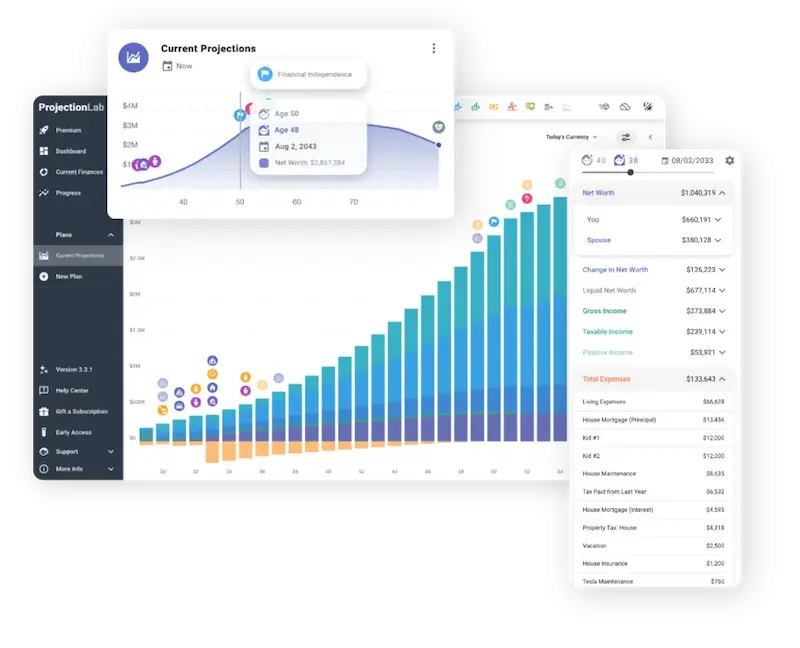
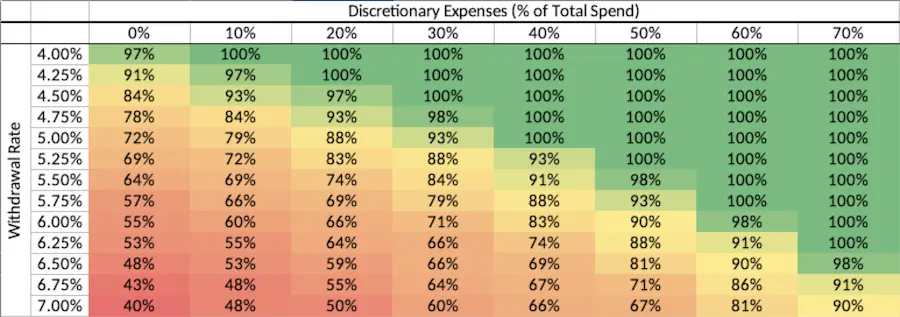
This evolution in spending habits reframes the concept of lifestyle creep. While traditional financial advice warns against lifestyle inflation after receiving a raise, the creator argues that asset-based lifestyle creep—fueled by a growing portfolio and sustained by the standard 4% rule—is entirely sustainable and deeply rewarding. Building software tools like Wealth Machines helped visualize this extra spending power, demonstrating that enjoying the fruits of a nest egg in the present day makes the long-term journey to financial independence vastly more fulfilling.
Simultaneously, the past decade has brought a strong preference for simplicity over complex financial optimization. Strategies that once defined the Mad Fientist blog, such as executing backdoor Roth IRA contributions, have been dropped to eliminate administrative chores and mental clutter from the to-do list. Investment portfolios have similarly been streamlined, replacing individual stock picking with a simple, diversified fund strategy that requires minimal management and maintenance.
To balance risk against a lifetime of market exposure, a deliberate portfolio adjustment was recently made by reallocating a portion of assets into 30-year Treasury Inflation-Protected Securities (TIPS). Locking in near-historic real yields of around 30-year TIPS provides a reliable, inflation-adjusted spending floor that will mature precisely when required minimum distributions from retirement accounts begin in later decades. With asset allocation settled and running largely on autopilot, the financial machinery requires little more than occasional rebalancing.
Despite feeling fully settled in day-to-day spending, actual expenditures still remain below the portfolio’s absolute capacity. This realization has sparked a new exploration: finding the optimal way to use surplus wealth to elevate family life even further during peak spending years. With parents, in-laws, and young children all healthy and present, the current life stage is recognized as the ultimate golden window. The primary candidate for deploying extra capital is establishing a permanent home base in a walkable, beautiful location with exceptional weather—a property designed with enough space to host visiting family and friends for extended stays.
The ultimate objective is to create "gravity" in a chosen community—a deeply rooted environment with rich local connections and an appealing atmosphere that naturally entices growing children to return even as they forge their own paths. As long-term Airbnbs and exploratory trips are undertaken to find this ideal East Coast location, input and recommendations from communities and individuals who have found their own ideal settlements are actively being welcomed.
Reaching this milestone also marks uncharted psychological territory. Having successfully achieved the long-term goals that initially motivated the pursuit of financial independence, the creator finds themselves without a grand multi-year milestone driving the horizon for the first time in adult life. Rather than looking solely toward tomorrow, the focus has shifted entirely to the present—exchanging disliked cardio routines like rowing for enjoyable games of tennis, and prioritizing daily memories with loved ones in alignment with the philosophies found in Bill Perkins’ Die With Zero.
As this ten-year chapter closes, the overarching sentiment remains one of profound appreciation. Financial independence successfully delivered the time and mental space promised a decade ago, removing every excuse and allowing personal ambitions to be fully realized. Now, entering the next phase of post-FI life without rigid long-term targets, the focus remains firmly on being a present husband, a dedicated father, and a grateful participant in the simple, everyday joys of life.